









 Home
 Share


A CV joint boot (drive shaft boot) seals the constant velocity (CV) joints on a passenger vehicle's drive axle, locking in specialized grease while blocking dust, grit, and water. Once torn, contamination increases internal joint clearance—causing abnormal turning noises, shaking during acceleration, or CV joint breakage. For aftermarket distributors, importers, and repair workshops, stocking OEM-specification CV joint boots across Rubber, TPEE, and Silicone materials reduces warranty comebacks and covers diverse climate and vehicle requirements.
Sourcing OEM-specification CV Joint Boots in bulk for passenger vehicles? Contact our team today for the MASUMA catalog, OE cross-reference lists, and wholesale quotation.
Contact Us01 What Is a CV Joint Boot and How Does It Protect the Drivetrain?
Mounted on the inner and outer CV joints of a passenger vehicle's drive axle, an OEM-specification CV Joint Boot (drive shaft boot) is a flexible bellows sleeve paired with specialized extreme-pressure grease and heavy-duty retaining clamps. As the axle rotates at high speeds through steering angles and suspension travel, the boot:
Blocks contaminants: Keeps out road water, mud, dust, and abrasive grit from precision bearing tracks.
Retains grease: Prevents centrifugal grease loss so internal bearings stay lubricated and cool.
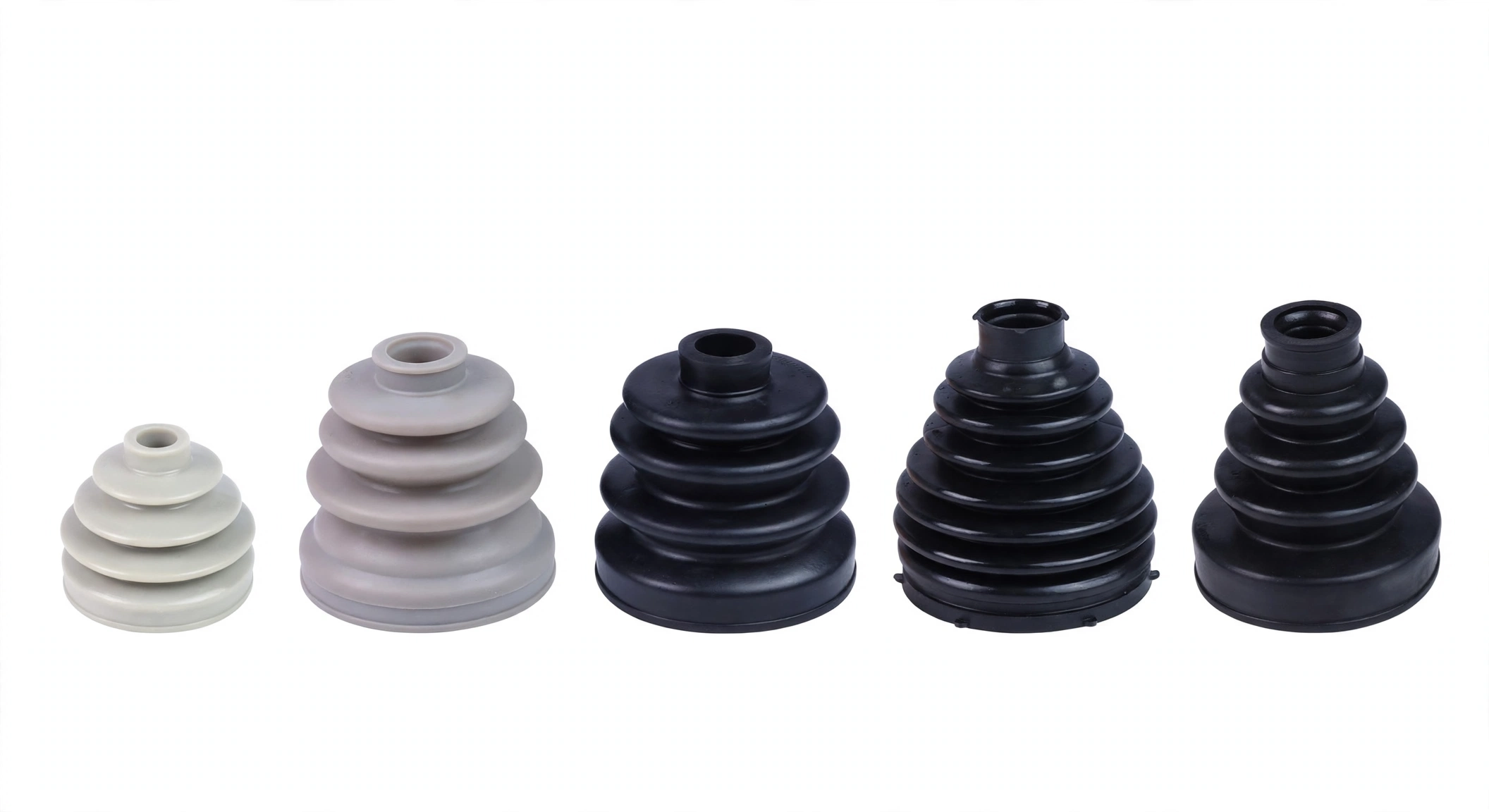
MASUMA CV joint boots across Rubber, TPEE, and Silicone materials
02 Rubber vs. TPEE vs. Silicone: Material Comparison for Aftermarket Buyers
MASUMA manufactures aftermarket CV joint boots across three material series for passenger vehicle applications:
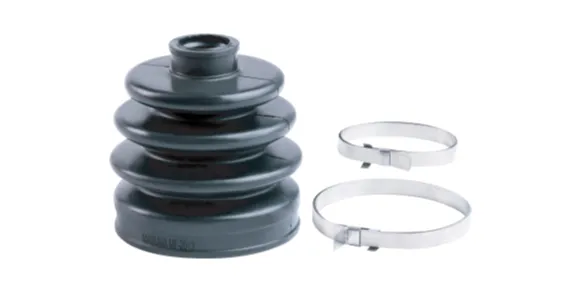
Waterproof, wear-resistant, and resistant to strong pressure. Flexible, easy to install, and high cost performance for high-turnover everyday aftermarket replacements.
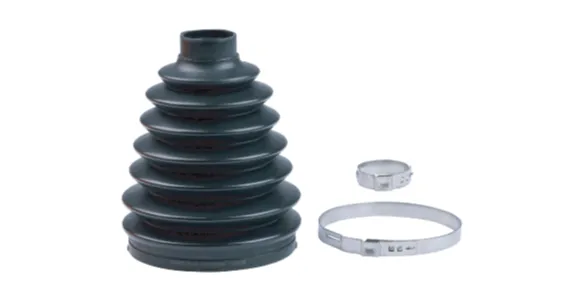
Thermoplastic polyester elastomer (Shore D30–82) combining elastomer flexibility with engineering plastic strength. Delivers high tensile and fatigue strength, a brittle point below -70°C (reliable down to -40°C), and resistance to oil, polar chemicals, water spray, and ozone (avoid prolonged strong UV exposure).
Video: Masuma TPEE Drive Shaft Boot Kit Unboxing | Durable, Heat-Resistant Drivetrain Protection
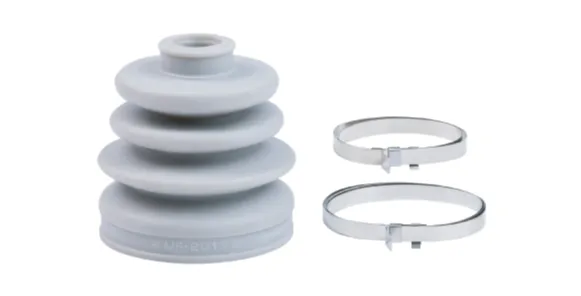
High-temperature stability, oxidation resistance, and eco-friendly properties with extended service life under severe heat, at a higher material cost and stricter installation care.
| Material Series | Key Specs & Resistance | Aftermarket Positioning & Notes |
|---|---|---|
| Rubber (MF-) | Waterproof, wear-resistant, resistant to strong pressure | Standard climates; high cost performance, high-volume replacement |
| TPEE (MF-28xx) | Shore D30–82; brittle point below -70°C (down to -40°C); oil, chemical & ozone resistant | Cold climates, high-load drivetrains; requires high-tension clamps |
| Silicone (MFS-) | High-temp stability, anti-oxidation, eco-friendly, long service life | High-heat environments; premium cost tier, strict installation handling |
03 Workshop Pitfalls That Cause Comebacks and Early Boot Failure
Using standard chassis grease: Generic grease lacks CV extreme-pressure protection and can cause chemical swelling or softening in certain boots. Always use the supplied CV grease.
Using light-duty clamps on TPEE boots: TPEE's higher hardness (up to Shore D82) requires heavy-duty ear-type clamps to prevent axial slippage and grease leaks under high-speed rotation.
Trapping excess air inside: Unreleased air expands when hot, accelerating bellows fatigue cracks and warranty claims.
04 Early Failure Symptoms
Grease splatter: Dark grease on the inner wheel rim, brake caliper, or control arm (earliest sign).
Cracks or loose clamps: Visible aging splits on the bellows or shifted clamps during chassis inspection.
Abnormal turning noises: Clicking or popping during turns after grit and water enter the joint.
Shaking during acceleration: Inner joint wear causing drivetrain vibration.
CV joint breakage: Severe outcome if a torn boot is left unaddressed.
(For steering and suspension linkage joints, explore our Ball Joint Dust Cover catalog and What Is a Ball Joint technical guide.)
05 Why Global Distributors & Workshops Choose MASUMA CV Joint Boots?
Superior dust, grit, and moisture protection: Seals out external contaminants while locking specialized grease inside the joint.
Extended CV joint and drive shaft service life: Helps prevent abnormal turning noises, acceleration shaking, and premature CV joint breakage.
Multi-material aftermarket coverage: Rubber (MF-), TPEE (MF-28xx), and Silicone (MFS-) options engineered to OE dimensions across Japanese, Korean, European, and American passenger vehicles.
Looking to expand your drivetrain aftermarket lineup? Contact our export team today for full OE cross-reference catalogs and wholesale pricing.
Contact Us Next Article