









 Home
Home
 Share
Share


Understanding the Car AC Condenser: Functions, Anatomy, and Maintenance Guide
The automobile air conditioning condenser is a crucial component in the car's air conditioning system. Whether you need a cool cabin during hot summer days or reliable system performance, the condenser plays an indispensable role. This article explores the functions, core anatomy, and essential maintenance tips for car AC condensers.
I. What Is an Automobile AC Condenser and Where Is It Located?
The automobile air conditioning condenser is a vital component responsible for cooling and condensing the refrigerant. It is typically installed in the engine compartment at the front of the vehicle.
Through heat transfer and exchange, the condenser transfers the heat released from the refrigerant in the car's compressor to the external air, causing the refrigerant to change from a gaseous to a liquid state, thus achieving the cooling effect.
II. Key Functions of the Automobile Condenser
1. Enabling the Refrigeration Cycle: By releasing heat, the condenser converts high-temperature, high-pressure refrigerant gas into a liquid state, providing the necessary conditions for the cooling cycle.
2. Dehumidification: In humid environments, the condenser helps absorb moisture from the air, condensing it into water droplets which are expelled through a drain pipe. This maintains dry air inside the vehicle, enhancing driving comfort and safety.
3. Providing Efficient Cooling: During hot summer months, the AC system uses the condenser to absorb heat from the air before sending cooled air into the cabin via the evaporator. Proper condenser operation also protects system integrity and improves overall vehicle reliability.
III. Anatomy of MASUMA Automobile Condensers
A high-quality condenser typically consists of the following main parts:
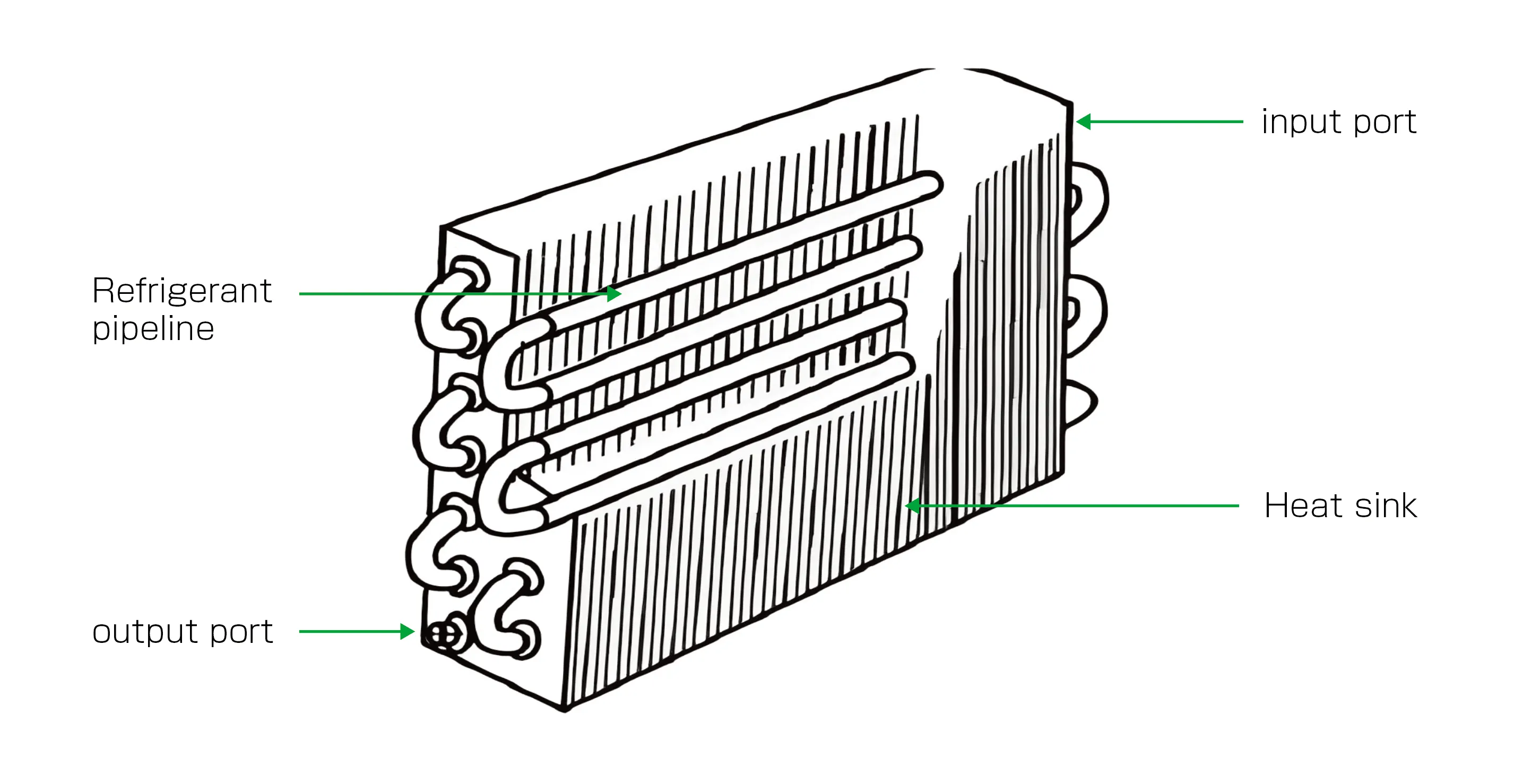
Core anatomy structure of an automobile condenser showing pipelines, cooling fins, and ports.
- Cooling Fins: The main heat dissipation components composed of parallel metal plates, usually made of aluminum for superior thermal conductivity. Their design maximizes surface area for enhanced heat exchange.
- Cooling Tubes: Piping systems connecting the cooling fins (typically made of copper or aluminum) that guide the refrigerant and transfer heat effectively. Multiple channels are often used to increase contact area.
- Condenser Fan: Located at the rear of the condenser to increase airflow and improve heat dissipation. During low-speed driving or when stationary, the fan plays a vital role by drawing in and expelling air.
- Drain Pipe: Positioned at the bottom of the condenser to smoothly expel condensed moisture, preventing internal accumulation.
- Inlet and Outlet Pipes: Connecting channels between the condenser, compressor, and evaporator that regulate refrigerant flow and cooling efficiency.
IV. MASUMA Expert Tips: Routine Condenser Maintenance
To extend the lifespan of your condenser and maintain optimal performance, follow these maintenance practices:
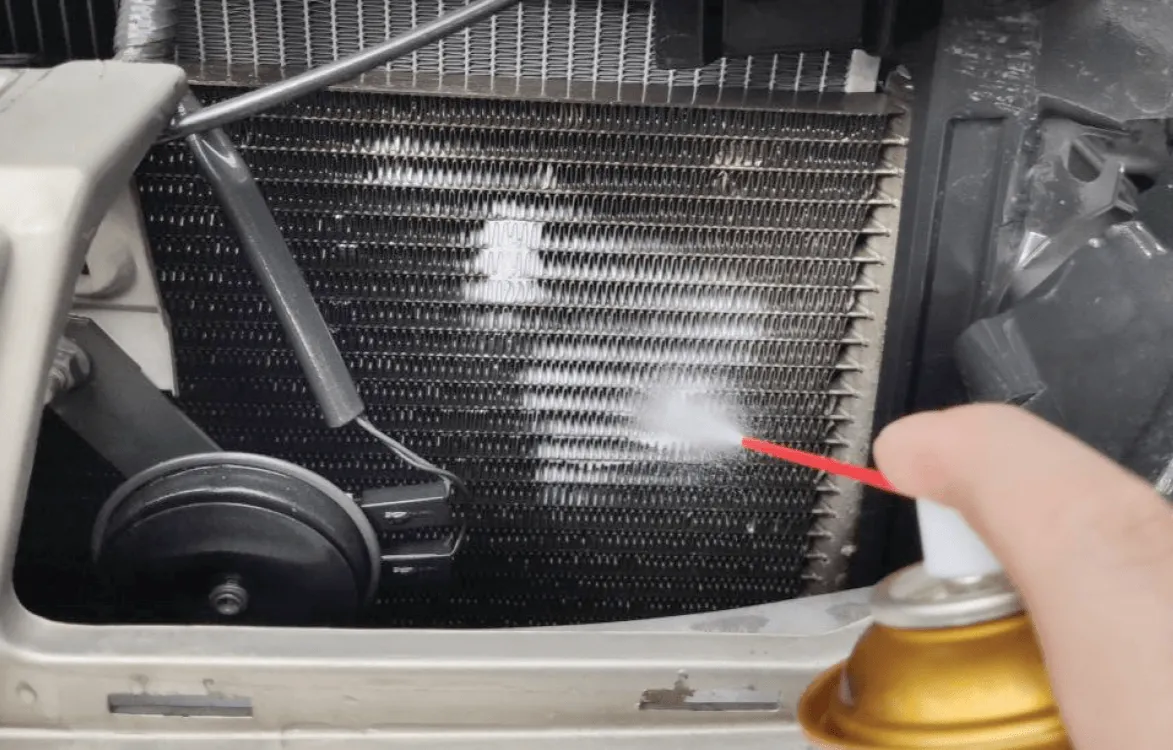
Routine surface cleaning of the car AC condenser using a specialized spray agent.
- Cleaning the Condenser Surface: The surface easily accumulates dust, grease, and debris, which impairs heat dissipation. Regularly clean the surface using a low-pressure water source or specialized cleaning agents, taking care not to damage the delicate fins.
- Checking the Condenser Fan: Regularly inspect the fan's operation. Promptly repair or replace it if unusual noises or malfunctions occur.
- Inspecting Coolant Levels: Regularly check the coolant level and quality to ensure proper concentration and performance.
- Examining Condenser Pipes: Periodically check for leaks or blockages. Repair leaks immediately and use specialized agents to clear any blockages.
- Preventing Physical Damage: Exercise caution while driving to avoid external impacts or severe road conditions that could harm the front-mounted condenser.
 Previous Article