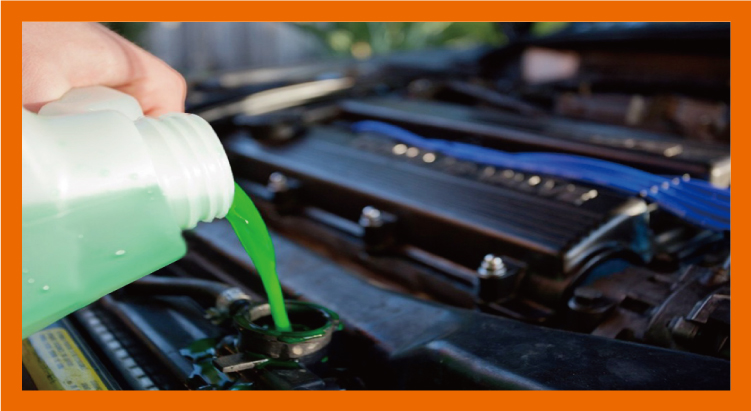
Coolant

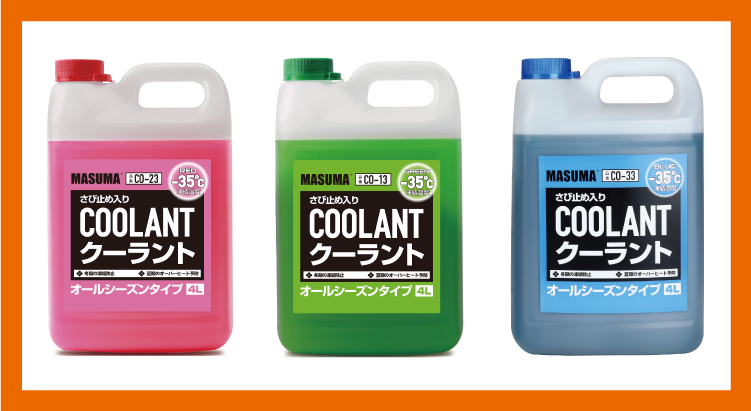
■ Antifreeze (engine coolant) prevents the cooling system from freezing in cold weather, protecting the radiator, engine block, and cylinder head from damage caused by ice expansion. It is mainly designed to protect the normal and good operation of the engine and to circulate in the engine water tank, and thus plays a role in freezing, boiling, rust, and corrosion prevention. Generally, Premium engine coolant is red, green, or blue, so as to facilitate leakage observation or to be distinguished from other engine liquids in case of confusion.
■ The primary active component in modern high-performance engine coolant is high-purity ethylene glycol, valued for its elevated boiling point and extremely low freezing point. Coolant is not subject to either season or region. Nevertheless, freezing point and boiling point work as its two primary indicators. Many people may believe that coolant only applies to the winter season, but the fact is that it shall be used throughout the year.
■ Formulated as a premium antifreeze coolant enriched with specialized additive packages, it delivers dependable winter anti-freeze capability, summer anti-boiling margins, and continuous defense against internal oxidation.


Brief Product Introduction:
■ This product adopts the polyester-graded ethylene glycol with a purity of up to 99.9%, whose most significant feature is freezing resistance as compared with water. Moreover, ethylene glycol has a high boiling point, a low volatility, a moderate viscosity, a small temperature-dependent variability, and good thermal stability.
In addition to anti-freezing property, coolant also features the following advantages:
■ Corrosion Resistance: The engine and its cooling system are made of metals, including copper, iron, aluminum, steel, and solder. Those metals will be corroded after a long period of contact with water at a high temperature. Moreover, MASUMA coolant not only does not cause corrosion to the engine cooling system, but also provides effective corrosion protection.
■ Rust Resistance: Corrosion and rust prevention performance is of significant importance because long-term corrosion of metal parts will result in a large amount of rust and then gradually erode the metal plate and cause leakage in a severe scenario. It has a direct relevance to the service life of the vehicle cooling system. Featured by its condensation, overheating, rust, and corrosion resistance, MASUMA coolant protects all metal surfaces of refrigeration systems, including those aluminum components.
■ Water Incrustation Resistance: More than half of the vehicle cooling systems on the road contain water scale that seriously compromises their cooling system performance. Therefore, owners should first clean up the scale and rust spots in their water tanks before replacing coolant. A clean tank will bring forth a better cooling performance after the injection of MASUMA coolant.
Product Strengths
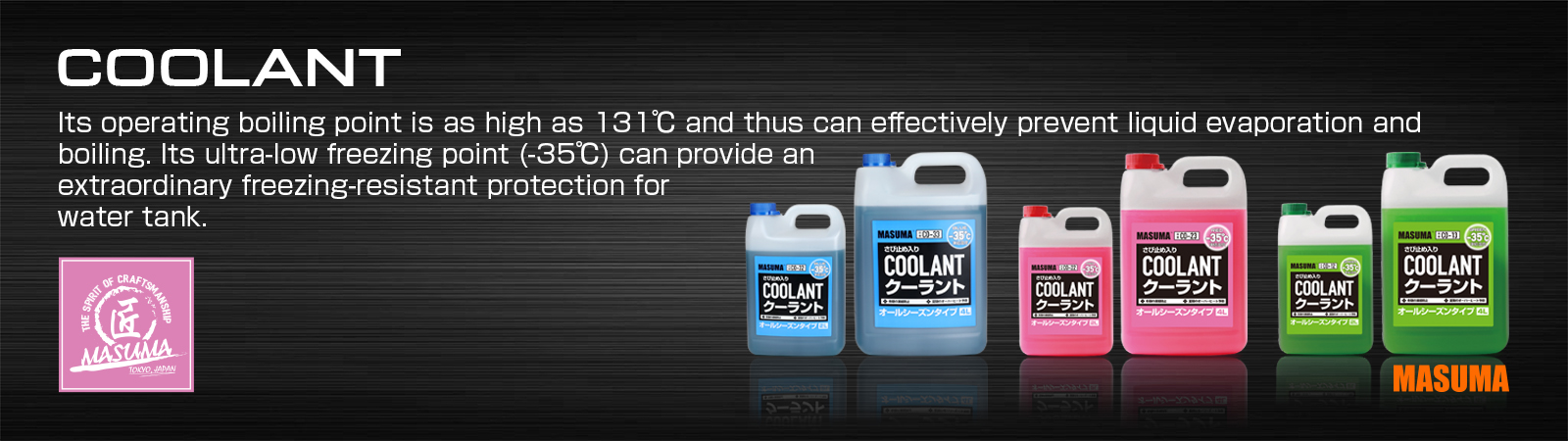
■ Its operating boiling point is as high as 131℃ (At a tank pressure of 15 psi) and thus can effectively prevent liquid evaporation and boiling. Its ultra-low freezing point (-35℃) can provide an extraordinary freezing-resistant protection for the water tank.
■ Corrosion prevention through unique technology: The unique ion film passivation technology is adopted to form a dense oxide protection film on the metal surface, so as to effectively prevent electrochemical corrosion in the cooling system.
■ Safe and environmentally friendly, durable protection: This coolant contains no boron, amine, or nitrite components, complies with environmental requirements in a better way, effectively reduces the consumption of anti-corrosion components, and presents an extended service life.
■ A higher purity by multi-layer filtration:This product adopts dual-stage reverse osmosis filtration and the polyester-graded ethylene glycol with a purity of up to 99.9%, thus effectively preventing water scale from incrustation.
■ Highly efficient heat dissipation through incrustation inhibition and boiling prevention: It not only presents excellent scale removal, incrustation inhibition and silicate stability performance, and prevents flocculation, deposition and pipeline clogging, but also has good anti-bubble and anti-boiling performance, so as to keep the cooling system at a high heat dissipation efficiency.
■ The new coolant should be filled in a cold engine until the highest mark "MAXT" in the fluid reservoir. Then, the maintainer tightens the cover, starts the engine, idles it to the normal temperature and shuts it down. When engine temperature drops, the maintainer checks if the liquid level in the fluid reservoir remains at the "MAXT" scale. Otherwise, the coolant should be supplemented to its appropriate level accordingly.
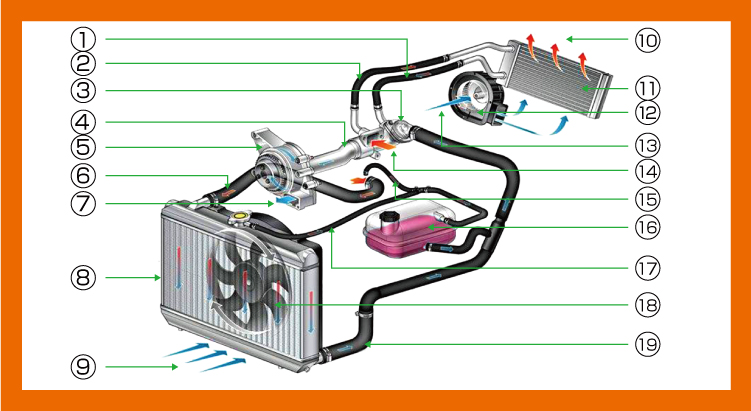
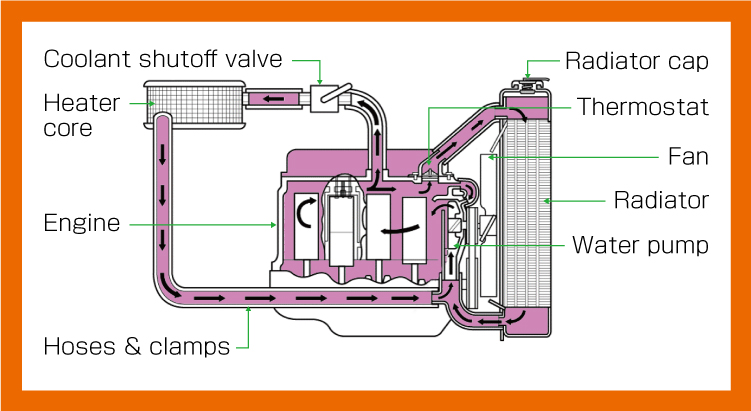
Products (structural schematic)

Coolant Quality Criteria
■ Engine coolant quality can be measured in two aspects as follows: The first criterion is the anti-freezing effect; the freezing point of water is 0°C; the freezing points of ordinary-type coolants in ordinary type can reach -15°C or -25°C, while MASUMA coolant can reach -35°C or so. This is a key indicator of coolant quality. The second criterion is its boiling point; the boiling point of water is 100°C; the boiling points of ordinary-type coolants in ordinary type are above 108℃ while the operating boiling point of MASUMA coolant is up to 131°C; namely, the lower the freezing point is and the higher the boiling point is, the greater the temperature difference will be and the better the coolant quality will be.

Maintenance Tips
■ When replacing the coolant, it is suggested to operate the pump for a fully empty condition, and then rinse the tank with tap water, circulate the water thoroughly, and then empty the tank again.
■ Coolant is generally replaced after the vehicle has been driving for 2 years or 40,000 kilometers. It should be noted during the replacement that coolant varies by vehicle, so owners shall choose the right coolant according to their own models. Different coolants cannot be used in a mixed way unless there is an extreme circumstance. Otherwise, the mixture is prone to chemical reaction, precipitation, or bubble formation, thus substantially compromising the corrosion, incrustation, boiling, freezing, and rust prevention performance.
As demand for reliable cooling system protection continues to grow, choosing products from trusted engine coolant brands is essential for maintaining engine performance and durability. MASUMA offers premium coolant formulated to provide dependable freeze protection, boil-over resistance, corrosion protection, and long-term cooling system efficiency for a wide range of passenger vehicles.