









 Home
Home
 Share
Share


I. Introduction
During a car's daily operation, the engine acts as its heart, while the cooling system—consisting of the radiator (commonly known as the water tank), water pump, and coolant---serves as the vital guardian preventing the engine from overheating. Once a radiator malfunctions, it can easily lead to soaring water temperatures, air conditioning failure, and even catastrophic engine "overheating" resulting in severe mechanical damage.
II. Core Understanding: What is a Car Radiator and How Does It Work?
The car radiator is an essential component of water-cooled engine cooling systems, also serving as a heat exchanger that dissipates heat through air convection to maintain the engine's normal operating temperature.
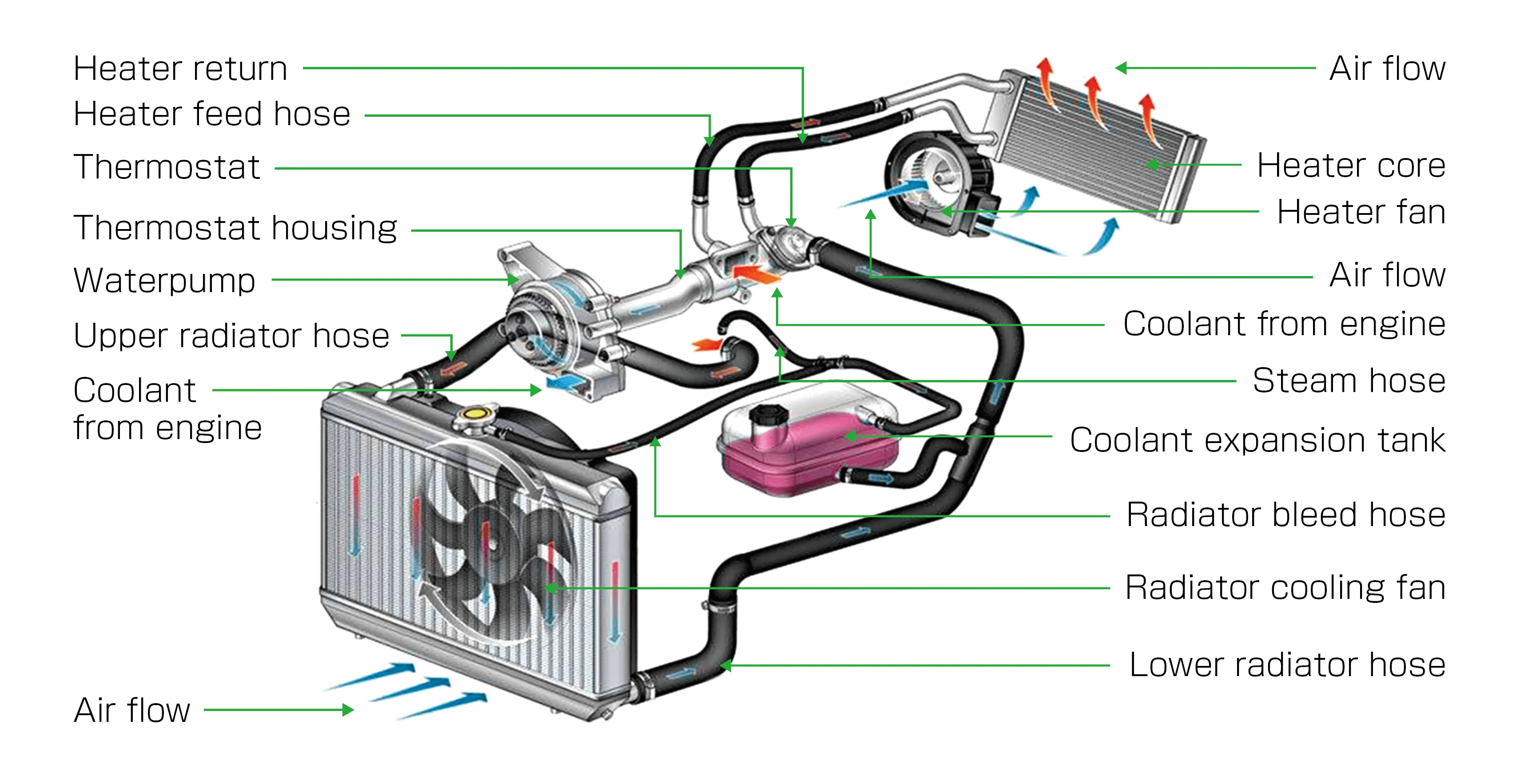
Comprehensive schematic diagram illustrating the layout and components of a standard automotive engine cooling system.
1. Basic Structure of a Radiator
A standard automotive radiator primarily consists of the following core components:
- Radiator Core: Contains densely packed cooling fins and water pipes inside, serving as the main zone for heat exchange.
- Water Pipes: Channels through which the coolant flows.
- Cooling Fins: Increase the surface area to accelerate air convection.
- Upper and Lower Water Tanks: Responsible for the collection, distribution, and buffering of the coolant.
2. Circulating Workflow
The radiator operates through a continuous circulation process:
- Heat Absorption Phase: Coolant circulates through the engine's water jackets, absorbing high heat from the cylinder block.
- Heat Dissipation Phase: The high-temperature coolant flows into the radiator, where heat is dispersed into the air through large-area cooling fins.
- Return Cycle: The cooled coolant flows back into the water jackets, maintaining continuous temperature regulation and effectively preventing engine overheating.
III. Why is There Red Water in the Radiator? Common Pitfalls and Pain Points
During daily use and routine maintenance, vehicle owners frequently encounter cooling system failures caused by improper practices:
Beware of Radiator Rust ("Red Water" Phenomenon): When the liquid inside the radiator turns red or murky, it is usually caused by internal rusting.
Fatal Mistake: Never Use Tap Water as a Substitute for Coolant:
- Ordinary tap water contains high mineral content and is either acidic or alkaline.
- In high-temperature environments, tap water easily produces scale, corrosion, and rust inside the radiator and engine water passages.
- This not only leads to clogged radiator pipes and reduced cooling performance, but also causes abnormal spikes in engine temperature.
Scientific Selection of Coolant: Proper coolant provides not only freeze protection but also outstanding lubrication and anti-corrosion properties. When replacing coolant, vehicle owners should choose specialized coolants matching the specific pH value required by the radiator material.
IV. Material Upgrade: Why Do Global Mainstream Standards Favor "All-Aluminum Radiators"?
As the global automotive industry places increasing demands on lightweight design and high efficiency, all-aluminum radiators have become the absolute mainstream for modern passenger vehicles. As an international brand deeply rooted in the automotive parts sector, MASUMA incorporates high-standard all-aluminum designs into its radiator product lines, offering significant comprehensive advantages over traditional materials:
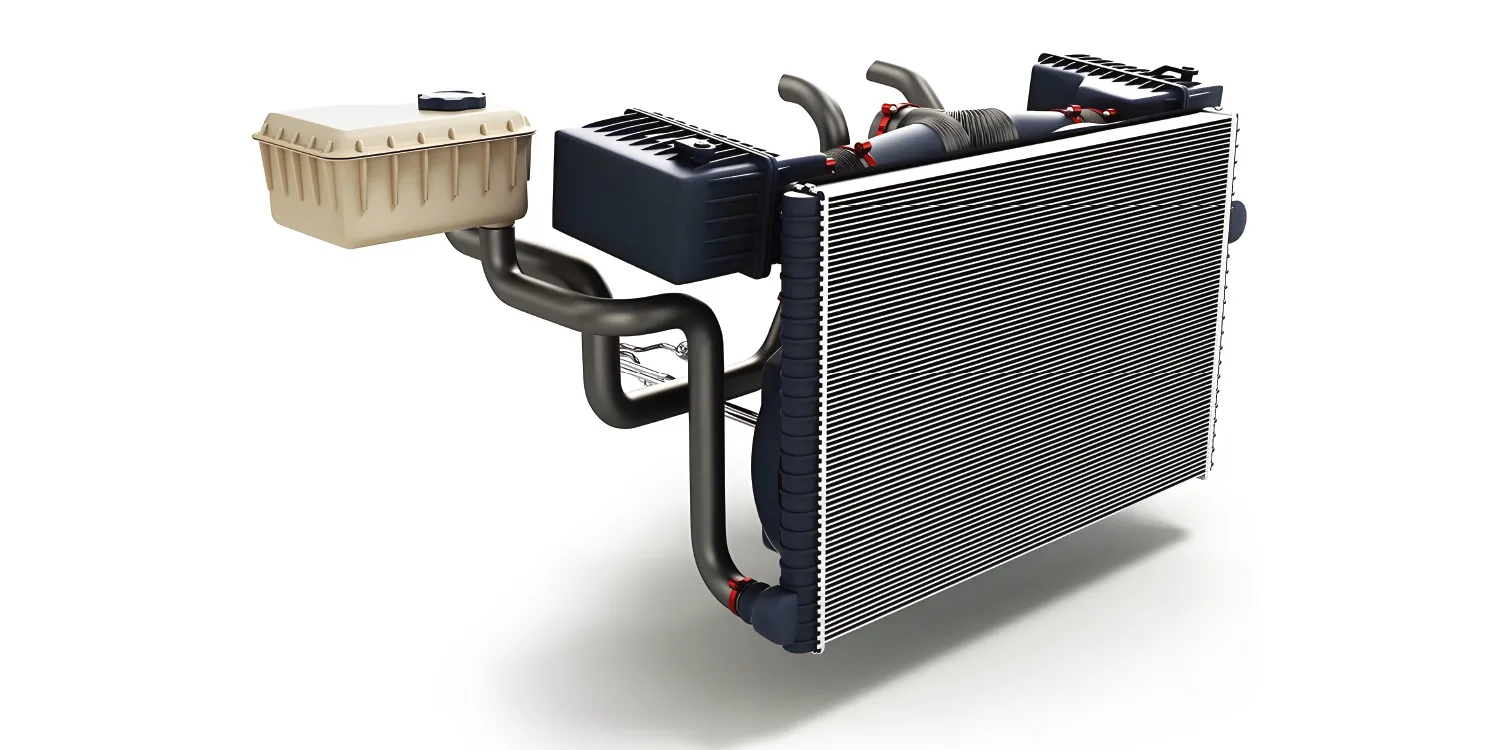
MASUMA high-performance all-aluminum car radiator assembly
- Excellent Corrosion Resistance: MASUMA all-aluminum radiators are manufactured from high-purity aluminum, offering exceptional corrosion resistance and minimal susceptibility to rusting, thereby significantly maximizing the vehicle's service life.
- Superior Thermal Conductivity: Compared to traditional copper or steel radiators, aluminum alloy features stronger thermal conductivity. It heats up and cools down more rapidly, effectively preventing engine damage caused by localized overheating.
- Lightweight Design: The all-aluminum structure substantially reduces the radiator's overall weight, lightening the front load of passenger cars and improving power performance and fuel efficiency.
- Environmentally Friendly Concept: Perfectly aligned with the sustainable development trends of the global automotive industry, the adoption of aluminum radiators is widely established across overseas passenger vehicle markets.
V. Frequently Asked Questions (FAQs)
Q1: Can tap water be used temporarily in an emergency instead of coolant?
Answer: Highly discouraged. Although small amounts of water can be used for temporary emergency top-offs, the system must be flushed and refilled with professional coolant as soon as possible. Chlorine ions and minerals in tap water quickly cause scaling and corrosion on the interior walls of the radiator, severely damaging the engine.
Q2: How often should a car radiator be cleaned or replaced?
Answer: Coolant replacement should be performed according to the vehicle manual and actual operating conditions, typically every 60,000 kilometers or two years. Additionally, exterior dust and debris on the cooling fins as well as internal rust should be cleaned regularly to ensure optimal cooling efficiency.
Q3: How can I tell if a car radiator is leaking?
Answer: Common warning signs include: a continuously rising dashboard temperature gauge, a sweet carmel or maple-like odor coming from the engine bay (the smell of coolant), green or orange fluid puddles under the vehicle after parking, and an expansion coolant reservoir level dropping consistently below normal marks.
 Previous Article