









 Home
Home
 Share
Share


Quick Summary for Mechanics & Car Owners:
If you find oil in your coolant reservoir, it usually indicates a failure in one of three components: a blown head gasket, a leaking engine oil cooler, or a damaged transmission oil cooler. Identifying the fluid's color and texture is the fastest way to pinpoint the exact issue.
Quick Diagnostic Guide: What Does Your Coolant Look Like?
Before jumping into repairs, check the appearance of the contaminated fluid in your cooling reservoir:
| Fluid Appearance | Color & Texture | Vehicle Symptoms | Primary Suspect Component |
|---|---|---|---|
| Thick Brown Sludge | Brownish / Mayonnaise-like texture | Loss of power, engine misfires, white exhaust smoke, overheating | Blown Head Gasket (or cracked cylinder head) |
| Light Oily Sheen | Brownish oil layer floating on top | Engine runs completely normal, no white smoke, normal power | Leaking Engine Oil Cooler or its gasket |
| Pink Foamy Liquid | Pinkish / "Strawberry Milkshake" appearance | Transmission slipping, harsh shifting, delayed engagement | Ruptured Transmission Cooler (Inside Radiator) |
Pro Tip for Mechanics:
Always pull the engine oil dipstick first. If the dipstick shows clean, normal oil but the coolant reservoir contains oil, suspect the Engine Oil Cooler first! If both engine oil and coolant are milky, it is almost certainly a Blown Head Gasket.
The 3 Main Causes of Oil in Engine Coolant
1. Blown Head Gasket
• Why it happens: The head gasket seals the engine block and cylinder head, keeping coolant and engine oil passages separated. When overheating causes the gasket to blow or warp, high-pressure oil leaks directly into the cooling system.
• Key Symptoms: Milky brown sludge in the radiator, sweet-smelling white smoke from the exhaust, and engine misfires.
• Required Fix: Replace the head gasket, perform a cylinder compression test, and flush the entire cooling system.
2. Leaking Engine Oil Cooler
• Why it happens: Modern turbocharged and high-performance engines use oil coolers. Engine oil pressure (30–60 PSI) is significantly higher than cooling system pressure (10–15 PSI). When internal seals or the cooler core fail, oil is forced into the coolant passages.
• Key Symptoms: Oil in the expansion tank while the engine continues to run smoothly without loss of power or white smoke.
• Required Fix: Replace the engine oil cooler assembly and gasket, then flush the cooling system thoroughly.
3. Damaged In-Radiator Transmission Cooler
• Why it happens: Many automatic vehicles route transmission fluid through a cooler embedded inside the radiator. Internal corrosion can crack the barrier, mixing transmission fluid (ATF) with ethylene glycol coolant.
• Key Symptoms: Pinkish, foamy liquid in the radiator (known in the industry as the "Strawberry Milkshake of Death"), accompanied by transmission slipping.
• Required Fix: Replace the radiator/transmission cooler assembly, perform a complete transmission fluid exchange, and flush the cooling system.
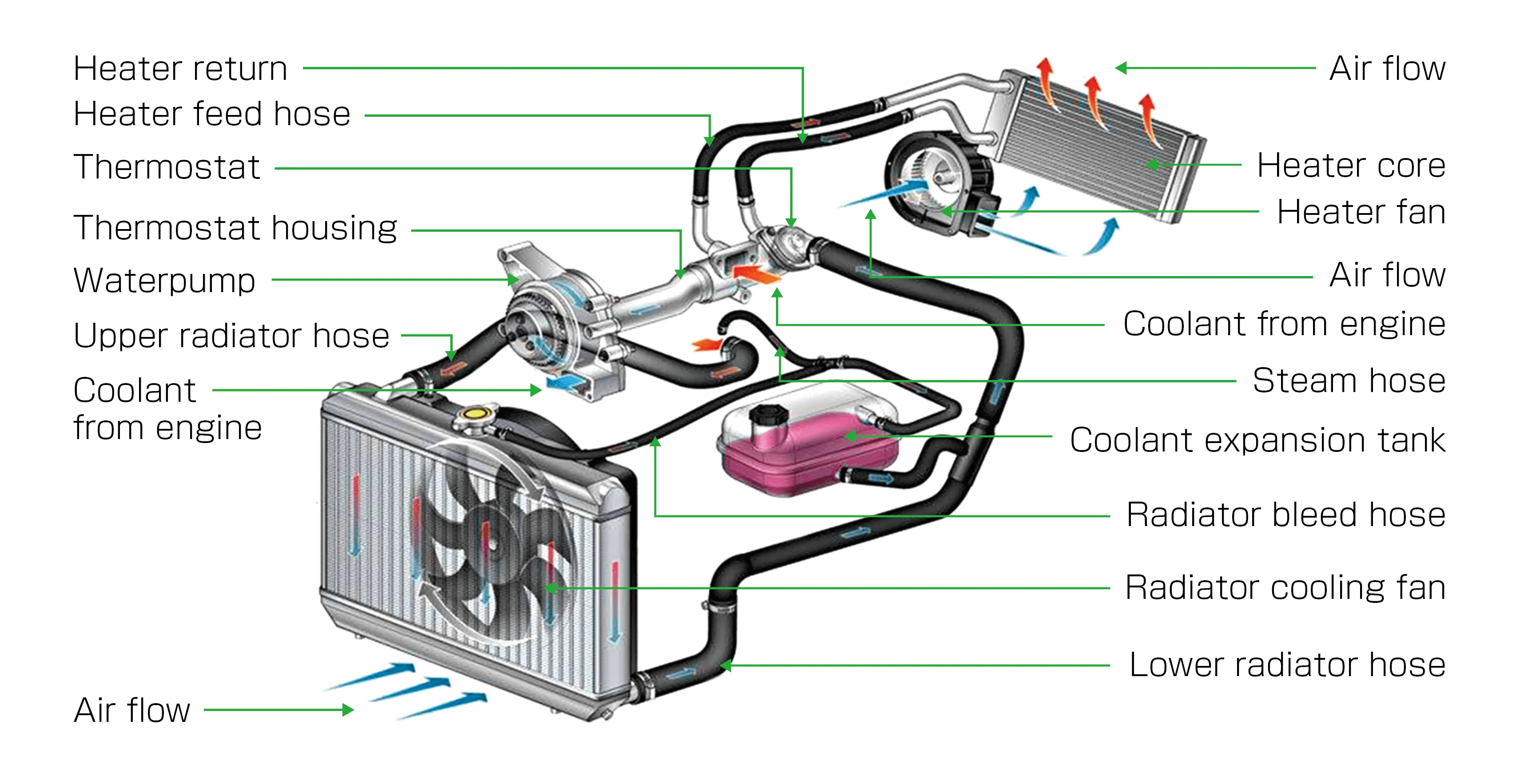
Diagram: Engine Cooling System Components and Circulation Routing
Step-by-Step Cooling System Flush & Diagnostic SOP
Cold engine oil is viscous and can clog internal cooling passages, stick to thermostat elements, or damage water pump seals. Follow this procedure:
Pressure Test: Perform a cooling system pressure test and a cylinder leak-down test to confirm the source.
Replace Failed Components: Install new OE-spec replacement parts (Head Gasket, Oil Cooler, or Radiator).
Thorough Flushing: Use a specialized cooling system cleaner/degreaser to dissolve oil sludge. Flush with distilled water until it runs completely clear.
Replace Critical Components: Always inspect and consider replacing the Water Pump and Thermostat if oil contamination was severe, as swollen rubber seals can lead to premature pump failure.
Reliable Cooling Solutions by MASUMA
When fixing oil contamination, replacing compromised components with factory-spec parts is essential to prevent recurring leaks.
MASUMA offers high-durability, OE-quality cooling components—including Coolants, Water Pumps, Thermostats --- engineered for precise fitment and long-lasting thermal protection.
Watch MASUMA Cooling Products in action:
Frequently Asked Questions (FAQ)
Can I drive my car with oil in the coolant?
No. Engine oil degrades rubber hoses and seals in the cooling system. Furthermore, contaminated coolant loses its ability to regulate temperature, which can lead to catastrophic engine overheating.
Will oil in coolant destroy my water pump?
Yes. Thick oil sludge increases drag on the water pump impeller and can deteriorate the internal mechanical seal, leading to premature water pump failure or coolant leaks. If your pump is damaged, replace it with an OE-spec replacement water pump.
 Previous Article