









 Home
Home
 Share
Share


Quick Summary
A fuel filter is a critical component responsible for screening out solid impurities (such as iron oxide and dust) and moisture from gasoline or diesel. It protects precision fuel system components like injector nozzles, reduces mechanical wear, and ensures stable engine operation.
1. Core Functions of a Fuel Filter
- Contaminant Filtration: Removes fine particles, rust, and debris originating from fuel tanks and stations.
- Moisture Separation: Prevents water from entering the combustion chamber to avoid internal corrosion and critical engine damage.
- System Protection: Safeguards fuel pumps and fuel injectors against premature wear and blockages.
2. Main Types of Fuel Filters
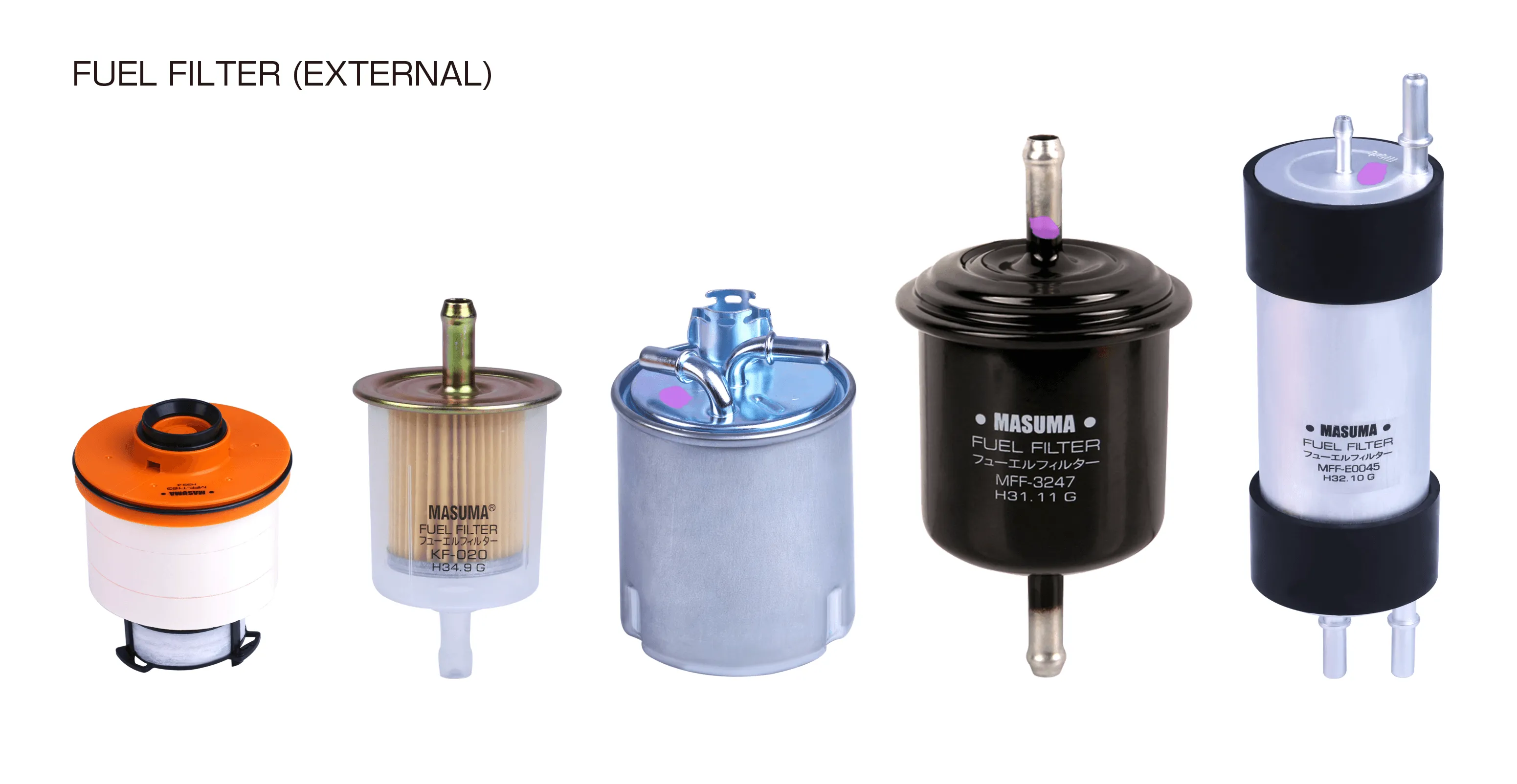
Diagram: External Fuel Filters and Types
Gasoline Filters:
Carburettor vs. EFI Systems: Low-pressure inlet-side plastic filters for carburettors vs. high-pressure metal/aluminium outlet-side filters for EFI engines.
Internal (In-Tank) Filters: Integrated directly inside the fuel pump module within the fuel tank.
Diesel Filters:
Oil-Water Separator: Crucial for separating water to prevent high-pressure pump seizure and sulphuric acid corrosion (due to high sulfur content).
Diesel Fine Filters: Utilizes high-precision filter paper (pore size ≤3–5 microns) to trap micro-particles in compliance with modern emission regulations.
Gas Filters:
Specialized high-, medium-, and low-pressure filters designed for alternative gas-fueled vehicles to eliminate storage and manufacturing impurities.
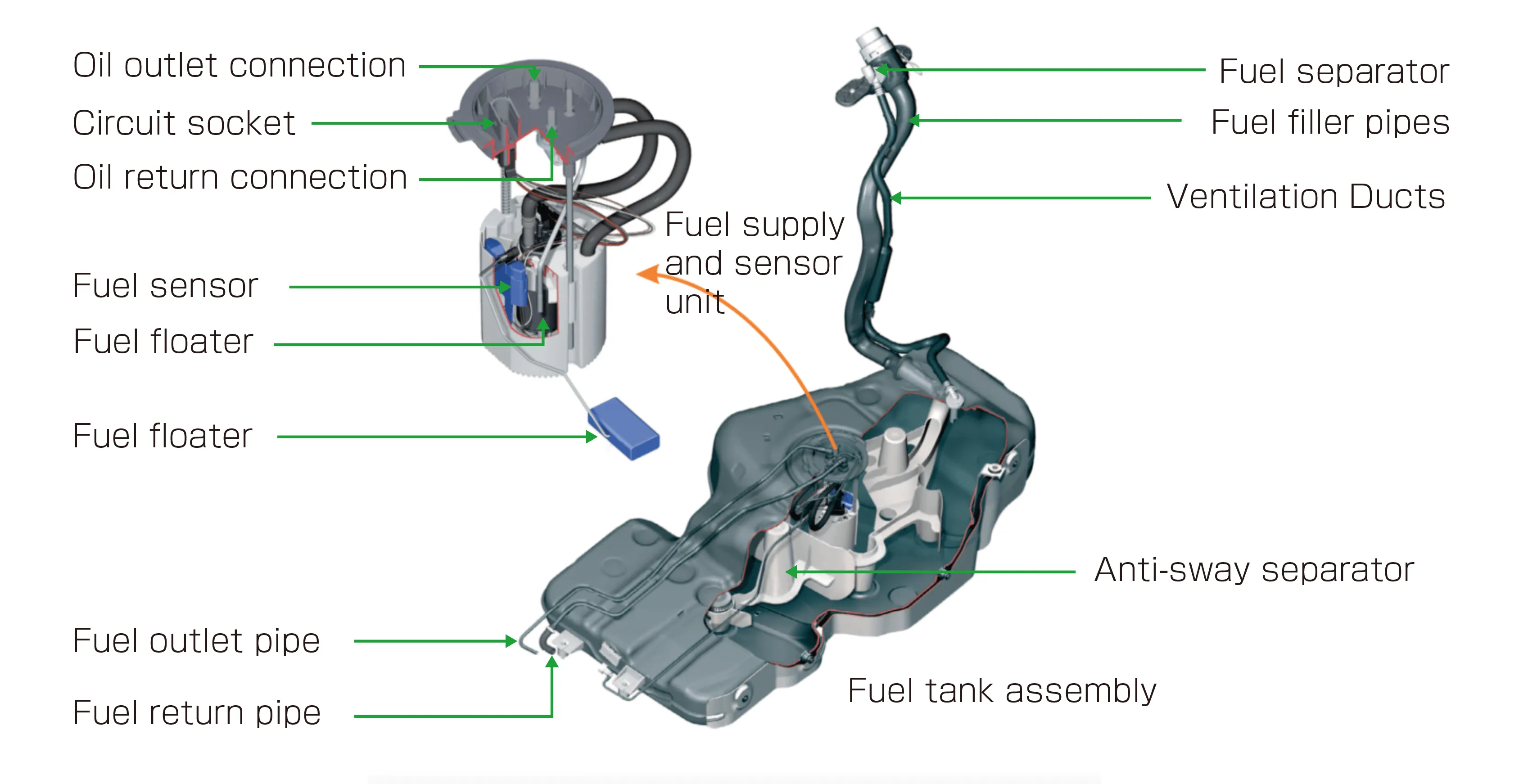
Diagram: Internal Structure of Fuel Tank and Assembly
3. OEM Material & Manufacturing Standards
- High-Performance Housings: American Hostaform POM plastic housings offering 70MPa tensile strength, low water absorption, and high thermal/wear resistance; high-quality cold-rolled sheets and lightweight European-spec aluminum.
- Advanced Filter Media: Korean Ahlstrom high-performance composite fiber materials providing high elasticity, dimensional stability, low thermal shrinkage, and superior corrosion resistance.
- Rigorously Tested: Validated via fuel pulse testers, cycle testers, and material relaxation testers.
4. Symptoms of a Bad or Clogged Fuel Filter
- Power Loss Under Load: Engine struggles to maintain fuel rail pressure during acceleration or when pulling loads.
- Check Engine Light (CEL): Storing lean mixture codes (e.g., P0171 System Too Lean).
- Rough Idling or Stalling: Fuel starvation mimicking a pinched straw effect.
- Engine Cranking Issues / Won't Start: Inability to build adequate fuel pressure upon ignition.
- Premature Fuel Pump Failure: Overworking the fuel pump due to severe flow restrictions.
- Decreased Fuel Economy: ECU overcompensating for a lean mixture by injecting excess fuel.
5. Professional Replacement & Maintenance Guidelines
Replacement Intervals:
External Filters: Recommended every 10,000 km.
Internal Filters: Recommended every 40,000 – 80,000 km.
Critical Installation Warning: Always ensure the small black rubber pressure-relief valve ring from the fuel pump is properly reinstalled; omitting this causes immediate fuel delivery failure and starting issues.
Safety & Handling Precautions: Conduct replacements away from open flames, manage residual fuel vapor safely, and avoid excessive force when unsealing the fuel pump module base.
6. Why Partner with MASUMA for Fuel Filtration Solutions?
- Strict OEM Performance Matching: Designed to exact OE specifications for global vehicle applications.
- Industrial-Grade Durability: Built to withstand high working pressures and thermal variations.
- 100% Quality Inspected: Comprehensive end-of-line testing for sealing and structural integrity.
- Global Supply Support: Flexible order volumes, extensive SKU coverage, and reliable logistics for wholesale distributors.
 Previous Article