







 Home
Home
 Share
Share


Understanding Brake Disc Surface Changes and Their Impact on Braking Performance
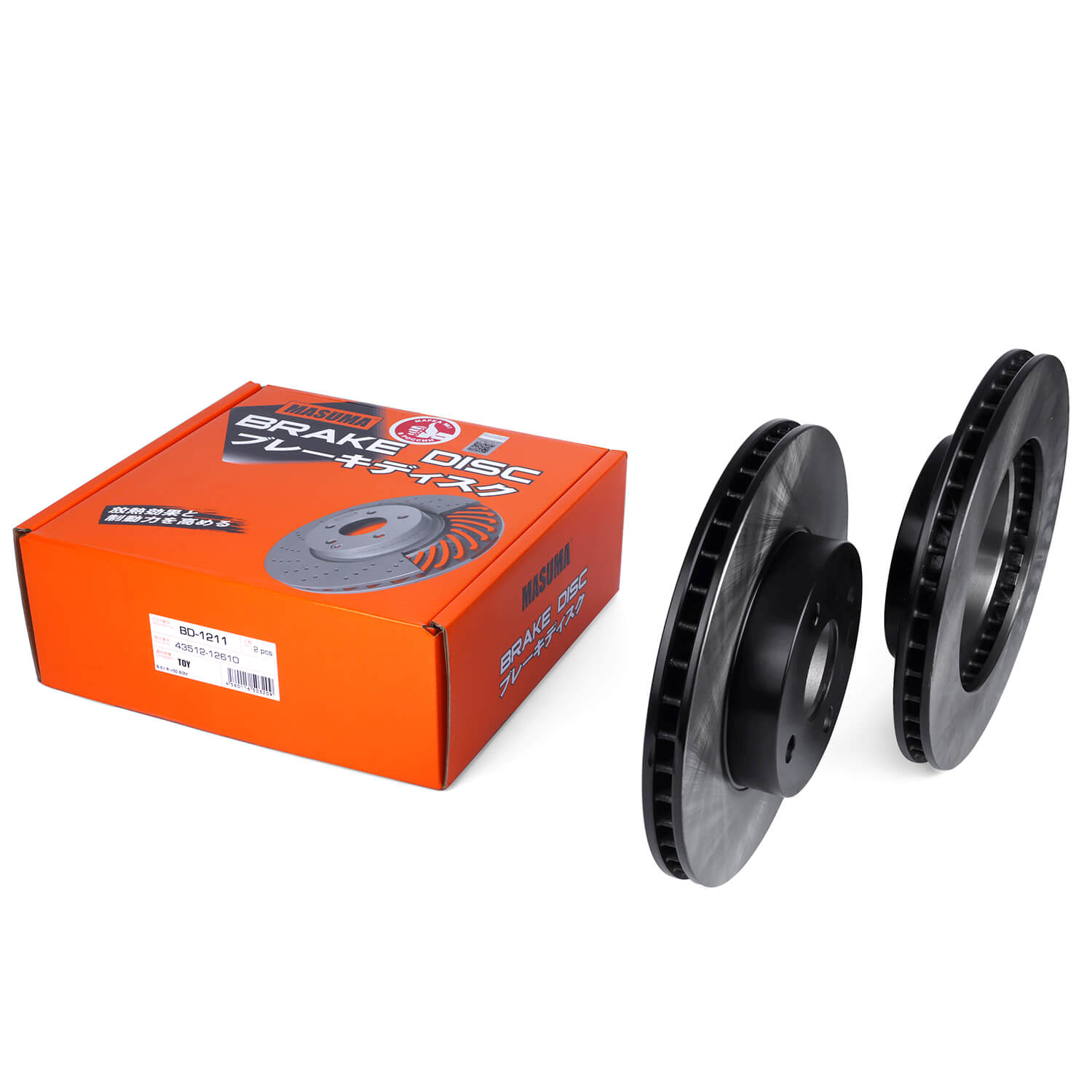
A brake disc (Brake Disc / Brake Rotor) is a key friction component in the braking system. During vehicle deceleration, brake pads clamp against the rotating brake disc, converting kinetic energy into heat through friction to reduce vehicle speed and bring the vehicle to a stop.
Because brake discs are constantly exposed to friction, pressure, and temperature changes, their surface conditions may gradually change over time depending on operating conditions and the environment. Different wear patterns not only reflect the working condition of the brake disc itself but also provide valuable information about whether the braking system is operating properly.
Understanding common brake disc surface conditions, including uneven wear, corrosion, thermal effects, and thickness variation, helps provide better evaluation of braking performance and supports the selection of suitable replacement components.
Normal Brake Disc Surface: Uniform Contact Creates Stable Braking Performance
A properly functioning brake disc typically maintains a relatively even friction contact area.
Under ideal conditions, the brake pad and brake disc maintain stable contact, allowing friction force to be distributed evenly and providing smooth braking performance. As the vehicle accumulates mileage, slight wear marks may appear on the brake disc surface, which is a normal result of continuous friction.
A well-designed and properly manufactured brake disc requires:
· Stable material performance;
· Consistent machining accuracy;
· Reliable dimensional consistency.
These factors collectively influence the long-term performance of brake discs across different vehicle applications and operating environments.
Uneven Wear: How Contact Changes Affect Brake Performance
When uneven wear appears on a brake disc, it usually indicates changes in the friction contact condition.
Under normal conditions, brake pads should apply pressure evenly across the brake disc surface. If certain areas experience higher friction loads, different wear levels may develop, causing variations in disc thickness distribution.
Common effects include:
· Vibration during braking;
· Less stable braking force output;
· Changes in brake pedal feedback.
Uneven wear can be influenced by factors such as brake system matching, installation conditions, and component manufacturing precision.
Therefore, brake disc machining quality plays an important role in maintaining stable friction conditions. High-precision manufacturing helps reduce abnormal surface changes caused by dimensional variations.
MASUMA brake discs are manufactured through an automated intelligent production process. CNC vertical machining centers, intelligent robotic handling systems, and CNC vertical lathes are used throughout production, enabling precise processing from casting blanks to finished products while maintaining product consistency through quality control procedures.
Brake Disc Corrosion: Different Surface Conditions of Red Rust and Black Rust
Because brake discs are generally manufactured from cast iron materials, oxidation may occur when they are exposed to moisture or remain unused for extended periods.
Different types of corrosion can have different effects on brake disc surface conditions.
Red Rust: A Common Surface Oxidation Condition
After a vehicle has been parked for a long period, red rust may appear on the brake disc surface.
This type of light oxidation generally does not affect normal brake disc operation. When the vehicle is driven again and braking occurs, friction between the brake pad and brake disc gradually removes the surface oxidation layer, allowing the friction area to return to normal condition.
Black Rust: A Surface Condition Requiring Attention
Compared with red rust, black rust is usually more difficult to remove through normal braking friction.
If noticeable black rust develops on the brake disc surface, it may change the condition of the friction area and affect surface uniformity. When normal contact cannot be restored during braking, further inspection may be required to determine whether replacement is necessary.
Therefore, evaluating brake disc condition requires considering corrosion severity, surface changes, and actual braking performance together.
Thermal Effects and Deformation: How Heat Changes Brake Disc Performance
During braking, brake discs continuously absorb and release heat generated by friction.
Under frequent braking, heavy-load operation, or demanding driving conditions, braking system temperatures can rise rapidly. If heat cannot be effectively managed, brake discs may experience:
· Thermal deformation;
· Surface overheating;
· Reduced friction performance.
High-temperature conditions place higher requirements on brake disc materials. In addition to basic strength, materials need to provide good thermal stability and resistance to deformation.
MASUMA improves brake disc material formulation by adding alloy elements such as copper (Cu), nickel (Ni), chromium (Cr), molybdenum (Mo), and tin (Sn), helping optimize material structure and improve high-temperature stability, resistance to thermal deformation, and resistance to brittleness.
Thickness Variation (DTV) and Runout: Key Factors Affecting Braking Smoothness
In addition to surface wear, brake disc thickness variation (DTV, Disc Thickness Variation) is another important factor affecting braking performance.
When thickness differs across different areas of the brake disc, friction pressure may become inconsistent, potentially causing vibration or uneven braking feel.
Brake disc runout after installation can also influence braking system performance.
During brake disc installation, attention should be paid to:
· Cleaning the wheel hub mounting flange surface;
· Removing contaminants that may affect installation accuracy;
· Checking runout after installation.
Maintaining proper machining accuracy and installation conditions helps reduce brake vibration issues and improves overall braking performance.
Surface Coating Technology: Improving Brake Disc Corrosion Protection
In addition to material selection and manufacturing precision, surface treatment technology has become an important part of modern brake disc design.
Because brake discs are exposed to different environmental conditions, moisture, salt, and storage or transportation conditions may affect surface performance. Therefore, corrosion-resistant coating technology helps improve product stability in various applications.
MASUMA brake discs use environmentally friendly corrosion protection coating technology. The coating system does not contain hexavalent chromium (Cr6+) or heavy metals and provides:
· Good corrosion resistance;
· Resistance to acids and alkalis;
· Resistance to oil and solvents;
· Resistance to scratches and abrasion.
Through surface protection technology, corrosion impact during storage and operation can be reduced, improving overall product reliability.
Material, Manufacturing and Surface Treatment Together Define Brake Disc Quality
Brake disc performance is not determined by a single factor. Instead, it is the result of combined factors including material selection, manufacturing precision, and surface treatment technology.
Brake disc wear patterns can provide insights into braking system operation, while manufacturing processes determine the foundation for long-term product stability.
Through automated intelligent manufacturing systems, material process optimization, and strict quality control, MASUMA provides reliable replacement brake disc products for global vehicles, supporting different vehicle applications and operating environments.
Conclusion
Every change on a brake disc surface provides information about the condition of the braking system.
Light corrosion, uneven wear, thermal effects, and thickness variation all require proper evaluation based on actual operating conditions.
For the automotive parts industry, understanding brake disc wear characteristics helps improve braking system maintenance and provides better insight into product quality evaluation.
High-quality brake discs require stable performance across multiple areas, including material selection, manufacturing processes, and surface protection technology, to meet modern vehicle demands for safety and reliability.
 Previous Article