







 Home
Home
 Share
Share


From Traditional Mechanical Components to Advanced Wheel-End Systems, How Wheel Hub Bearings Adapt to Automotive Development
The automotive industry is undergoing rapid transformation. From vehicle electrification and increasing vehicle sizes to upgraded safety systems and higher expectations for driving comfort, modern vehicles are placing greater demands on component performance.
As a key component connecting the wheel and chassis system, wheel hub bearings not only support wheel rotation but also withstand vehicle weight, road impacts, and complex loads generated during steering. With continuous advancements in vehicle technology, wheel hub bearing designs and performance requirements are also evolving.
Today, wheel hub bearing development is no longer limited to basic load support. Instead, greater attention is being placed on durability, low-noise operation, structural integration, and long-term reliability.
Increasing Vehicle Weight Creates Higher Requirements for Wheel Hub Bearing Load Capacity
In recent years, the growing popularity of SUVs and the rapid development of electric vehicles have contributed to an increase in overall vehicle weight.
Compared with traditional internal combustion engine vehicles, some electric vehicles have higher vehicle mass due to the integration of battery systems. Increased vehicle weight means wheel-end components need to withstand greater loads, requiring wheel hub bearings to maintain stable performance under more demanding operating conditions.
During vehicle operation, wheel hub bearings are exposed to multiple types of loads, including:
· Radial loads generated by vehicle weight;
· Axial loads during cornering;
· Impact forces and vibrations caused by uneven road conditions.
Therefore, modern wheel hub bearings require not only sufficient strength but also optimized materials, structural design, and manufacturing processes to achieve long-term reliability.
High-quality bearing materials, optimized internal structures, and consistent machining accuracy are important foundations for improving wheel hub bearing load capacity.
Higher Driving Comfort Expectations Are Driving Lower Noise Requirements for Wheel Hub Bearings
With the development of electric vehicles and quieter vehicle platforms, mechanical noise during vehicle operation has received increasing attention.
In traditional vehicles, engine and exhaust system sounds can mask certain mechanical noises. However, in quieter vehicle environments, noises from chassis and wheel-end components become easier for drivers and passengers to notice.
Noise generated during wheel hub bearing operation can be influenced by multiple factors, including:
· Bearing manufacturing precision;
· Rolling contact conditions;
· Internal lubrication performance;
· Sealing structure design.
Therefore, modern wheel hub bearings must not only meet load requirements but also achieve smoother and more stable operation through precision manufacturing and optimized design.
For vehicle manufacturers and automotive component suppliers, reducing operating noise has become an important direction for improving overall vehicle quality.
The Development of Vehicle Safety Systems Is Driving Continuous Wheel Hub Bearing Optimization
Modern vehicles increasingly rely on electronic control systems to improve safety performance. Technologies such as anti-lock braking systems require more accurate information about wheel operating conditions.
This trend has encouraged wheel hub bearings to evolve from traditional separated structures toward higher levels of integration.
Early wheel hub bearings mainly focused on supporting and enabling wheel rotation. During later development stages, wheel hub bearings gradually incorporated more structural functions:
· First-generation wheel hub bearings simplified installation through integrated design;
· Second-generation wheel hub bearings further combined mounting structures to improve assembly efficiency;
· Third-generation wheel hub bearings integrated more functions into wheel hub units to improve system compatibility.
As automotive chassis systems continue to advance, integrated wheel hub units are becoming an important development direction for modern wheel-end systems.
Material and Manufacturing Technologies Are Key to Improving Wheel Hub Bearing Reliability
With increasing performance requirements, wheel hub bearing reliability increasingly depends on material selection and manufacturing technology.
Multiple internal components work together to influence final performance, including:
Bearing Materials
High-quality bearing steel provides strong mechanical properties and fatigue resistance. Material characteristics such as chemical composition, non-metallic inclusions, and structural uniformity can influence long-term bearing performance.
Precision Manufacturing
The inner ring, outer ring, raceways, and rolling elements of wheel hub bearings require high levels of consistency.
Precision manufacturing helps reduce friction and abnormal wear during operation, improving overall running stability.
Sealing and Lubrication
Because wheel hub bearings operate in complex road environments, effective protection against dust, water, and contaminants is essential.
Reliable sealing structures and stable lubrication performance help extend bearing service life and maintain long-term operating reliability.
Wheel Hub Bearings Are Moving Toward Higher Integration and Reliability
Future automotive technology development will continue to drive improvements in wheel hub bearing performance.
With the advancement of electric vehicles, intelligent vehicles, and chassis technologies, wheel hub bearings need to meet increasingly complex application requirements:
· Higher load capacity;
· Improved operating smoothness;
· Greater structural integration;
· More stable long-term reliability.
Wheel hub bearings have developed from traditional mechanical rotating components into important elements influencing vehicle safety, comfort, and chassis performance.
MASUMA Wheel Hub Bearing Technology Supports Evolving Vehicle Requirements
As an automotive parts supplier, MASUMA continues to focus on wheel hub bearing technology development trends and improves product consistency and reliability through material selection, manufacturing optimization, and design improvements.
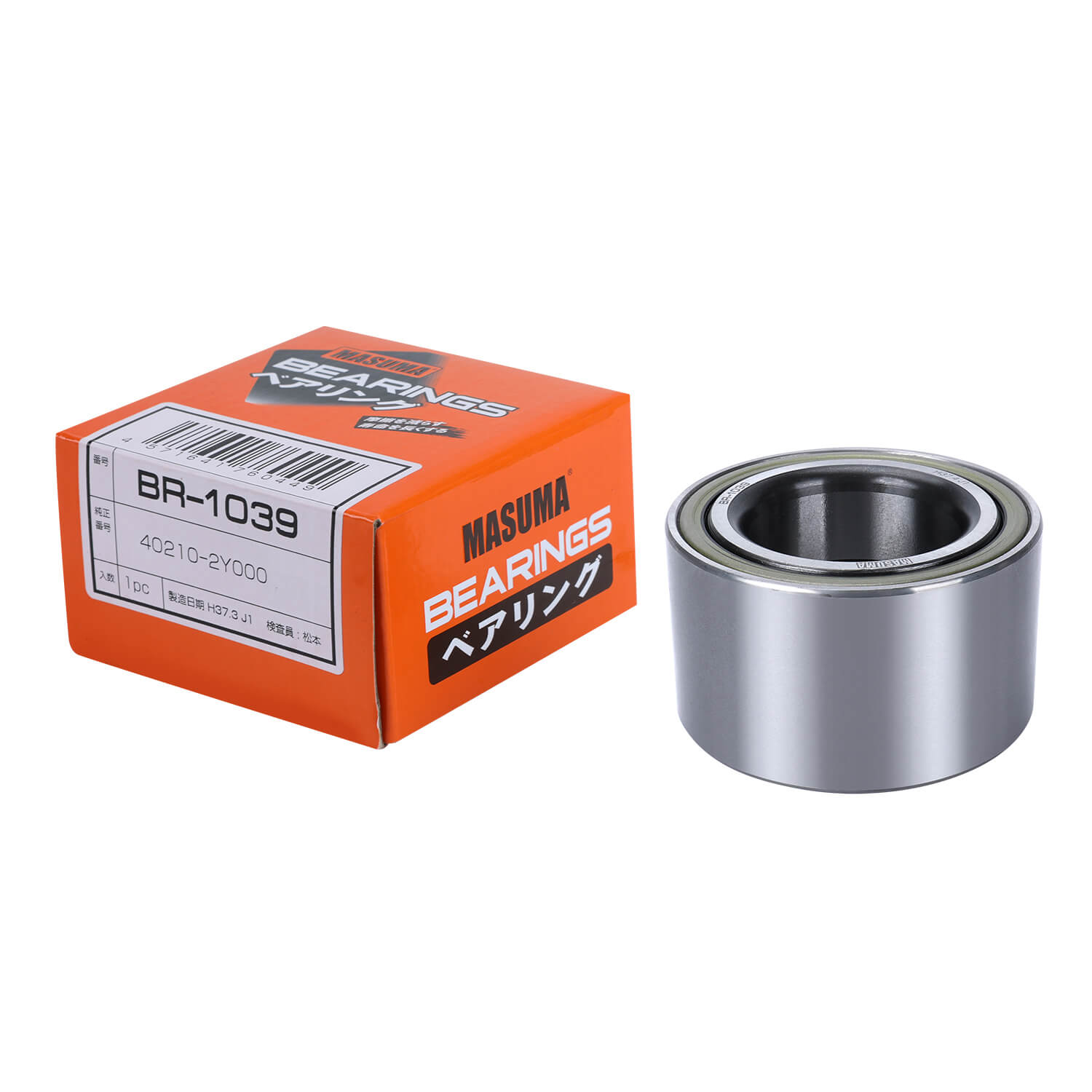
MASUMA wheel hub bearings use high-quality materials and focus on controlling the performance of critical components during production, including inner and outer ring machining accuracy, rolling element quality, cage performance, lubrication solutions, and sealing structure design.
Through continuous product optimization and manufacturing improvements, MASUMA is committed to providing reliable wheel hub bearing solutions for global automotive applications and meeting the needs of different vehicle models and operating environments.
Conclusion
The development of the automotive industry is redefining wheel hub bearing performance requirements.
From increasing vehicle weight and rising demand for quieter operation to the evolution of integrated wheel-end systems, modern wheel hub bearings are no longer simply components that support wheel rotation. They have become important elements affecting vehicle safety, stability, and driving experience.
As automotive technology continues to evolve, wheel hub bearings will continue developing toward higher reliability, improved performance, and stronger system compatibility.
 Previous Article