Universal joints

Product Description
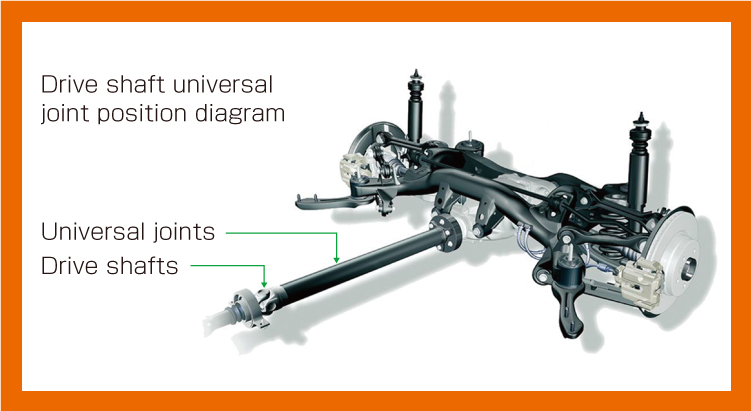
■ Universal joints are the "joints" of the Universal Gearing of a vehicle drive system. Universal Gearing generally consists of universal joints and drive shafts, sometimes with intermediate supports.
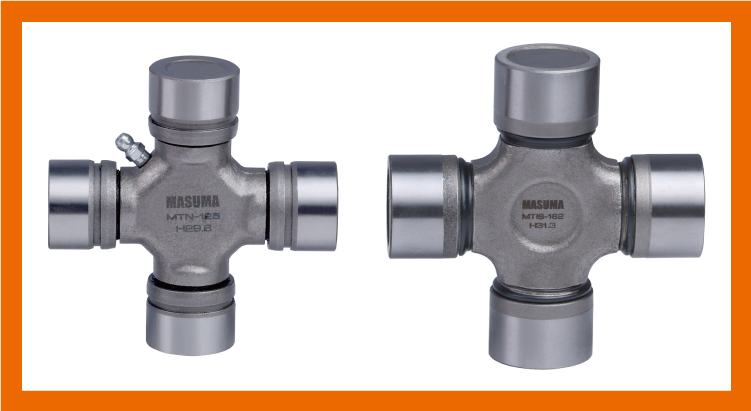
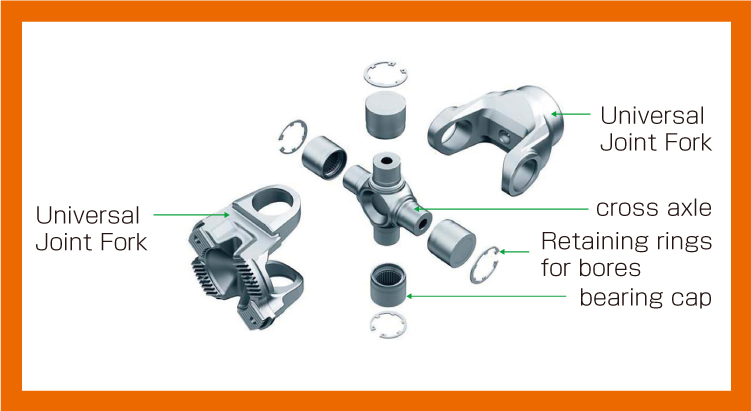
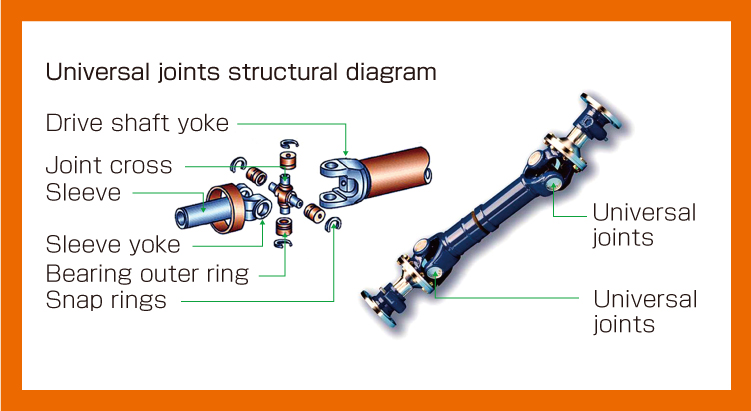
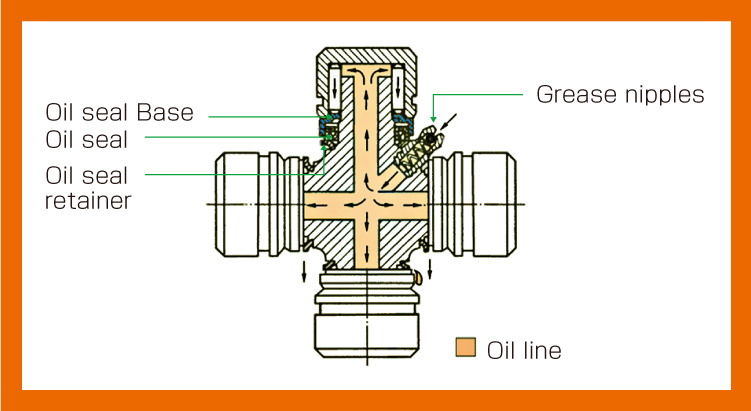
■ Universal joints consist of a universal yoke, joint cross, needle bearing, oil seal, sleeve, bearing cap, etc. A universal joint assembly consists of a joint cross and four needle roller bearings, etc. The joint cross is one of the key components of a universal joint.

■ The automotive joint cross is made of alloy steel (40Cr, 40CrNi, 20CrMo or 20CrMnVB) with a hardness of 58 to 62 HRC after heat treatment, and the maximum permissible crossing angle between two adjacent shafts is 15-20 degrees.
■ The needle rollers in the needle bearing can rotate during the rotation of the Universal joints in order to reduce friction. The shaft that is connected to the input power is called the input shaft, and the shaft that outputs power via the universal joints is called the output shaft.

Product Strengths
1. Large angular compensation capacity.
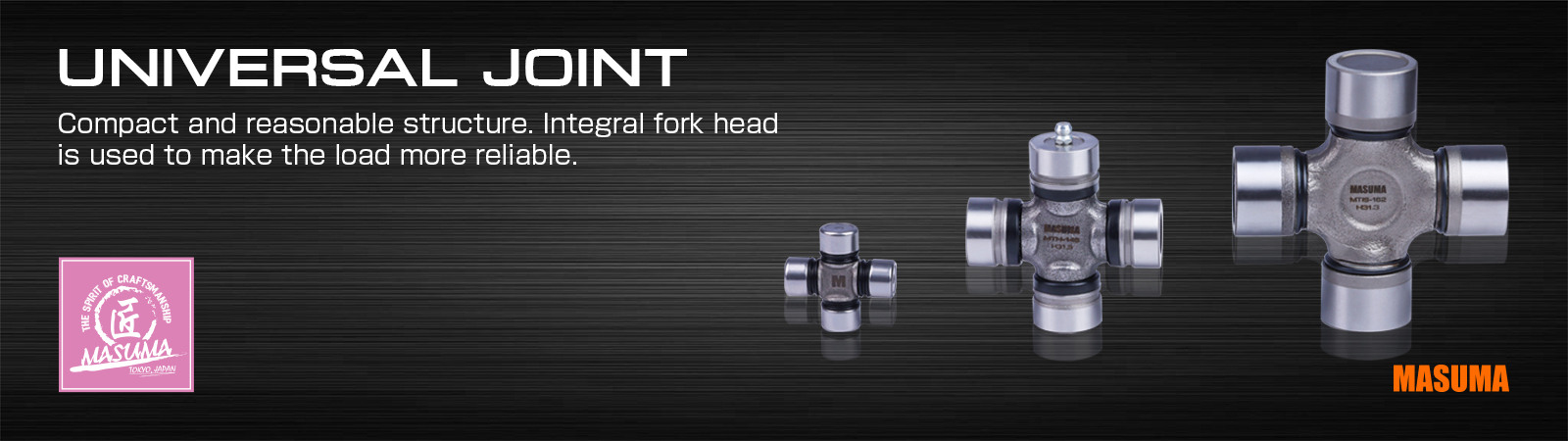
2. Compact and reasonable structure. An integral fork head is used to make the load more reliable.
3. High load capacity. Compared with other types of couplings with the same swivel diameter, the torque transmitted is greater, so the range is superior for machinery with restricted swivel diameters.
Products (structural schematic)





Maintenance Tips
1. Universal joints are generally used once every 3 months for maintenance; if indentation and other normal wear phenomena are found, they should be replaced in time.
2. To extend the service life of Universal joints, turn the cross shaft 180° during maintenance disassembly to achieve alternate use of the journals under stress.
3. Universal joints should be avoided for long-term overload use and operating accidents.
4. In working operation, Universal joints should be frequently observed for abnormal radial oscillation, bearing heating, and other phenomena; these phenomena must be found in time for maintenance.
Common Transmission Shaft Failure
1. Drive shaft loose, loud sound
When the vehicle starts under heavy load or accelerates with a large throttle opening, the driveshaft produces a noticeable metallic clunking noise, accompanied by visible looseness.
2. Disconnecting bolts
The drive shaft is bent and out of balance, causing the drive shaft to shake violently during operation, resulting in loose drive shaft bolts, or when tightening the drive shaft bolts, the bolts are not tightened strongly enough.
3. Whole vehicle shaking: If the driveshaft is bent, twisted, and unbalanced, it can cause such a vibration feeling, which is stronger when the speed increases and can be felt even when holding the steering wheel.