









 Home
Home
 Share
Share


What is a Tire Pressure Sensor Fault?
A tire pressure sensor fault occurs when a vehicle's Tire Pressure Monitoring System (TPMS) fails to receive or process accurate data from one or more wheel sensors. This is typically caused by a dead sensor battery, physical damage to the valve stem, or signal disruption, causing the dashboard TPMS light to flash or stay illuminated even when tire inflation is normal.
A flashing or solid TPMS warning light is one of the most common---and misdiagnosed---dashboard alerts. When manual pressure checks confirm your tires are fine, a malfunctioning sensor is almost always the culprit. This guide covers the key symptoms of TPMS sensor failure, the main technical reasons behind them, and how to source exact-fit replacement parts.
Common Symptoms of a Bad Tire Pressure Sensor
When an internal TPMS sensor begins to fail, your vehicle will alert you through specific dashboard warnings and data inconsistencies. Here are the most common symptoms of a faulty tire pressure sensor:
- TPMS Warning Light Flashing Then Staying Solid: Upon starting the vehicle, the tire pressure light will flash for about 60 seconds before remaining continuously illuminated. This sequence indicates that the ECU has lost communication with one or more sensors (usually due to a dead battery or failed internal circuitry).
- Dashes ("--") or Missing Data on Dashboard Display: On vehicles that show real-time PSI for each individual wheel, a failed sensor will cause the corresponding position to display dashes ("--"), a blank reading, or an error message instead of actual pressure numbers.
- Inaccurate or Stuck Pressure Readings: If a manual pressure gauge reads a healthy 35 PSI, but your digital dashboard shows a critically low number---or the number never changes at all---the sensor’s internal pressure transducer or valve stem is malfunctioning.
- Frequent False Low-Pressure Alarms: If your vehicle continuously triggers a low-pressure warning despite you consistently verifying and adjusting the tires to the correct inflation level, the sensor is likely transmitting erratic signals due to low battery voltage.
The Root Causes of TPMS Sensor Failures
Understanding what causes a tire pressure sensor to go bad can help you avoid recurring issues and make informed replacement decisions.
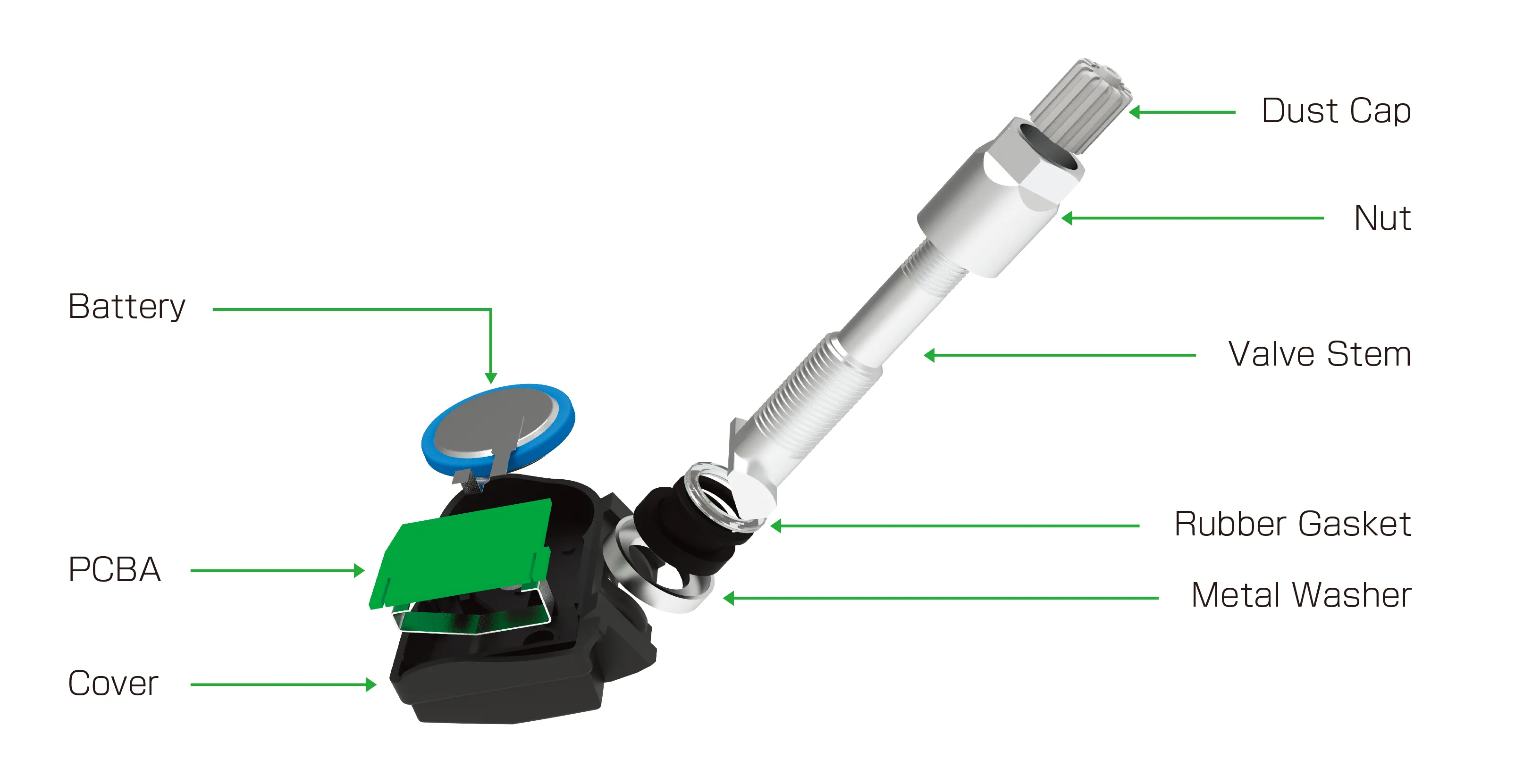
- Battery Depletion: The most common reason why your tire pressure sensor keeps going off is a dead battery. The built-in lithium batteries typically last 5 to 10 years. Once the battery dies, the entire sensor must be replaced as the battery cannot be swapped individually.
- Corrosion and Stem Failure: Exposure to road salt, moisture, and extreme temperatures can cause the metal valve stem (especially aluminum ones) to corrode, become brittle, and eventually snap or leak air.
- Mechanical Damage: Bad tire pressure sensor symptoms often appear immediately after a tire change or repair. Tire mounting equipment or pry bars can easily crush or snap the delicate sensor inside the wheel if handled improperly.
Replacement Guide: Why Choose MASUMA OE-Quality TPMS Sensors
When replacing a faulty tire pressure sensor, selecting the right part is crucial for driving safety, fuel economy, and long-term reliability. With over 70% of highway accidents linked to abnormal tire pressure, your replacement sensor must deliver precision data and harsh-condition durability.
MASUMA TPMS sensors are engineered with high-precision MEMS technology, built to function as intelligent sentinels inside your tires. Offering comprehensive coverage across global vehicle platforms, MASUMA delivers OE-equivalent direct-fit and universal programmable replacement solutions.
- 100% Quality Assurance Tested: Every single MASUMA sensor undergoes rigorous factory testing, including 100% battery capacity verification, 100% RF high/low frequency validation, and 100% pressure accuracy testing to meet automotive industry standards.
- Automotive-Grade Premium Components: Engineered with industry-leading Infineon MEMS pressure-sensing chips, Japanese Murata automotive-grade electronic components, and long-life Maxell batteries, ensuring ultra-stable RF signal transmission and sustained power.
- 95%+ Global Vehicle Coverage: Whether you need pre-programmed OE direct-fit replacement sensors or universal programmable sensors, MASUMA solutions cover over 95% of vehicle models worldwide. Fully compatible with mainstream diagnostic tools such as Autel and ATEQ for fast relearning and programming.
- Extreme Environment Durability: Housed in high-strength, waterproof, and explosion-proof casings, MASUMA sensors operate smoothly across extreme temperatures (-40°C to +125°C) and detection pressures from 0 to 900 kPa, featuring integrated acceleration monitoring to prevent blowouts and abnormal heat buildup.
Search the MASUMA Parts Catalog by VIN or OE Part Number to find your exact TPMS replacement
 Previous Article