









 Home
Home
 Share
Share


A Complete Guide to Oil Filter Replacement Intervals and Selection
During normal vehicle operation, temperatures at the combustion chamber walls can reach between 265°F and 475°F, while internal metal components like the crankshaft, camshafts, and pistons move at high speeds. Engine oil keeps these parts lubricated and cool, while the oil filter plays a critical role: capturing metal debris, carbon deposits, and contaminants to keep the oil clean as it circulates.
Standard Oil Filter Replacement Intervals
Determining how often to replace your oil filter depends on the filter media, driving conditions, and the type of engine oil used:
Regardless of mileage, it is recommended to change both your engine oil and oil filter at least once per year.
Do You Need to Change the Oil Filter Every Time?
Short answer: It is highly recommended to change the oil filter with every oil change, but you should always refer to your owner's manual for your vehicle's specific requirements.
Manufacturer guidelines vary: Some vehicle manufacturers recommend changing the oil filter at least every second oil change, while others mandate replacing it with every oil change. Check your owner's manual or maintenance reminder system to determine what is right for your specific car.
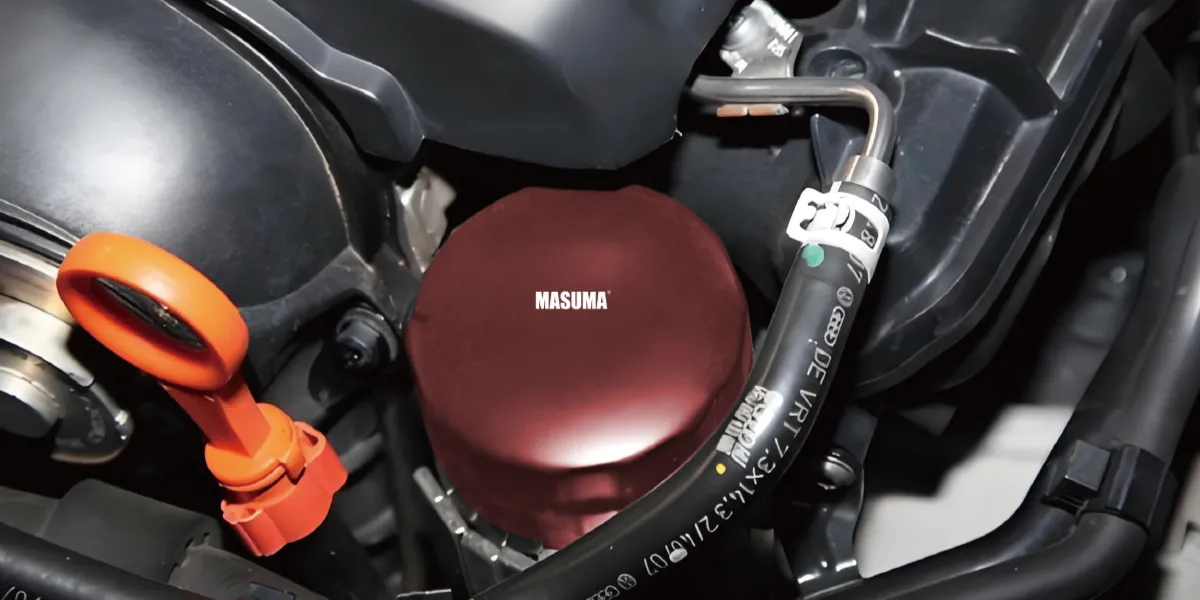
5 Signs of a Bad or Clogged Oil Filter
When an oil filter becomes excessively dirty or clogged, your vehicle will often show the following symptoms:
- Oil Pressure Warning Light Illuminates: A clogged filter causes abnormal pressure within the lubrication system.
- Engine Metallic Squealing or Knocking: Insufficient lubrication leads to direct metal-to-metal friction between moving components.
- Engine Overheating: Reduced oil circulation compromises the engine's thermal dissipation capability.
- Rapidly Darkening Engine Oil: A saturated filter loses its ability to strain impurities, causing grime to accumulate rapidly.
- Exhaust Smoke or Increased Carbon Build-up: Unfiltered debris can affect combustion efficiency and exacerbate exhaust emissions.
Oil Filter Materials and Selection Guide
Oil filters generally come in two styles: Spin-on filters and Cartridge filters. Regardless of the housing design, filtration performance relies on internal component quality:
- Standard Paper Media vs. High-Density Synthetic Media: Standard cellulose paper media can degrade or collapse under long service intervals. High-density synthetic fiber media traps microscopic particles while maintaining structural integrity under high temperatures and pressure.
- Precision-Calibrated Bypass Valve: The bypass valve opening pressure must precisely match manufacturer specifications.
- High-Resilience Anti-Drainback Valve: A quality anti-drainback valve prevents oil from draining back into the oil pan when the engine is turned off, ensuring immediate oil pressure during cold starts to eliminate dry friction.
- Durable Housing and Seals: Heavy-duty corrosion-resistant zinc-coated steel canisters paired with heat-resistant rubber gaskets prevent leaks and withstand pressure surges.
About MASUMA Quality Standards
As a global automotive parts manufacturer and B2B supplier for distributors, importers, and professional repair networks, MASUMA produces oil filters built strictly to OE specifications. With comprehensive VIN and OE cross-reference matching, MASUMA delivers reliable replacement solutions for the professional aftermarket.
Frequently Asked Questions (FAQ)
Q1: Do oil filters have a shelf life or expire?
Unopened oil filters stored in a dry, cool environment generally have a shelf life of 3 to 5 years. While the metal casing and filter media do not easily degrade, long-term storage in humid conditions can cause the rubber gasket to harden and lose its seal. Choosing products like MASUMA—which feature moisture-proof shrink packaging and anti-aging synthetic rubber gaskets—ensures ideal sealing performance even after extended storage.
Q2: Do I need a synthetic oil filter for synthetic oil?
Yes, it is strongly recommended. Synthetic oil is designed for extended drain intervals (often 10,000+ miles). Conventional paper filters can clog or degrade before the oil lifecycle ends. High-capacity filters, such as MASUMA's synthetic composite series, feature high dust-holding capacity to handle extended service intervals safely.
Q3: What is the best oil filter choice for high-mileage vehicles?
Older engines produce more internal wear particles, carbon, and sludge, requiring higher dust-holding capacity and reliable cold-start protection. Look for oil filters equipped with high-flexibility silicone anti-drainback valves (standard across MASUMA's filter line) to prevent oil drain-back and eliminate dry-start wear in high-mileage engines.
 Previous Article