





 English
 Japanese
 Home
Home
 Share
Share


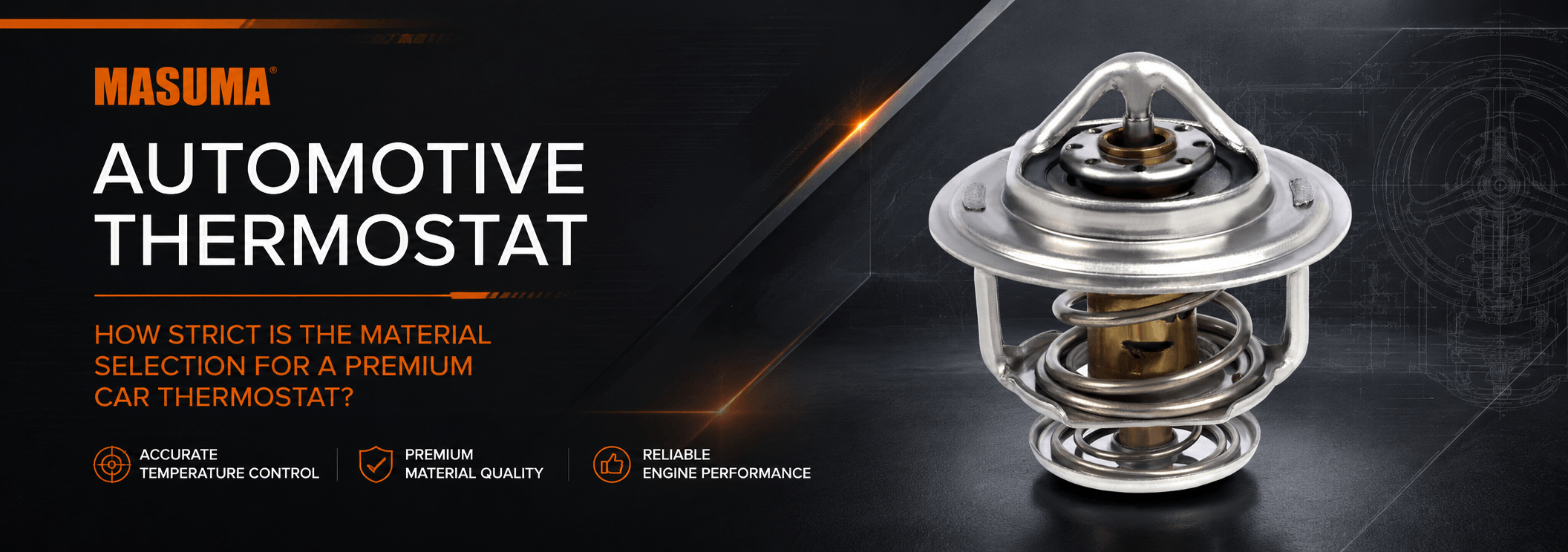
In the automotive aftermarket, prices for replacement thermostats can vary significantly across brands. At first glance, most thermostats appear to be simple components consisting of a metal housing, a spring, and a temperature-sensitive element. However, selecting a thermostat based solely on price can increase the risk of premature failure. In some cases, a low-quality thermostat may stick open or closed, affecting engine temperature control and cooling system performance.
As discussed in [The Ultimate Guide to Automotive Thermostat: How They Work, Materials, and Diagnosis], the thermostat plays a central role in regulating engine coolant circulation. It relies on the thermal expansion characteristics of refined paraffin wax to switch between small and large cooling circuits. To perform reliably throughout its service life, a thermostat must withstand repeated temperature fluctuations while remaining continuously exposed to coolant and its chemical additives.
Given these operating conditions, material quality has a direct impact on durability, response accuracy, and long-term reliability. This article explains the material selection considerations behind a quality automotive thermostat and highlights the key materials commonly used in premium thermostat manufacturing.
1. The Brass Metallurgy: Why H62 / H65 Grade Matters
The thermostat's gland (temperature-sensing capsule housing) is continuously exposed to circulating coolant and changing temperatures, making material stability particularly important.
Risks of Lower-Grade Materials
Some lower-cost products may use recycled copper alloys or lower-grade brass materials. These materials can contain higher impurity levels and may offer less consistent mechanical properties. Under repeated thermal cycling and coolant pressure fluctuations, material fatigue can occur over time, increasing the risk of deformation, cracking, or wax leakage.
Material Selection at MASUMA
MASUMA thermostat glands are manufactured using H62 or H65 brass alloys, which typically contain approximately 62%–65% copper combined with zinc and controlled alloying elements. These materials provide good mechanical strength, dimensional stability, and corrosion resistance under repeated heating and cooling cycles.
In addition, H62 and H65 brass offer strong resistance to the additives commonly found in modern engine coolants, helping maintain capsule integrity during long-term operation.
2. Core Wax Pellets: Refining Quality and Copper-Enhanced Thermal Conductivity
The expansion of paraffin wax during its phase transition provides the primary force responsible for opening the thermostat valve. As a result, wax formulation and thermal conductivity can influence both response characteristics and temperature regulation performance.
Refined Wax Formulation
MASUMA utilizes a refined paraffin-based wax formulation specifically developed for automotive thermostat applications. The formulation is engineered to provide stable and repeatable thermal expansion characteristics at designated opening temperatures.
As coolant temperature reaches the specified threshold, the wax expands and generates sufficient force to overcome the resistance of the return spring, allowing the valve mechanism to open as designed.
Through strict formulation control and manufacturing consistency, the wax element is designed to maintain reliable temperature response characteristics throughout repeated heating and cooling cycles, supporting accurate and dependable thermostat operation.
Copper-Enhanced Thermal Response
Paraffin wax naturally has relatively low thermal conductivity. To improve heat transfer efficiency within the wax element, ultra-fine copper powder may be incorporated into the formulation.
This approach can improve the rate at which heat is transferred through the wax element, helping the thermostat respond more quickly to temperature changes during high-load operating conditions.
3. Stainless Steel Components: The Roles of 430 and 304 Grades
The thermostat assembly contains several critical moving components, including the push rod, valve seat, main valve, bracket, sub-valve, and spring system. Corrosion or wear of these components can affect valve operation and overall thermostat performance.
430 Stainless Steel for Structural Components
Some conventional thermostat designs may utilize plated steel components that can experience corrosion during long-term coolant exposure.
MASUMA uses 430 stainless steel for structural components such as brackets and linkage mechanisms. This material offers good oxidation resistance, thermal stability, and durability under repeated operating cycles. These characteristics help maintain reliable mechanical movement throughout the service life of the thermostat.
304 Stainless Steel for Return Springs
The return spring plays an important role in controlling valve movement. It works against the expansion force generated by the wax element and returns the valve to its closed position when coolant temperatures decrease.
To support long-term durability and corrosion resistance, MASUMA utilizes 304 stainless steel for thermostat springs. This material helps maintain spring performance under repeated compression cycles while providing strong resistance to rust and coolant-related corrosion.
4. Premium Rubber Materials for Reliable Sealing
Performance
The thermostat seal is a critical component that helps maintain proper coolant flow control. If sealing materials become brittle, hardened, or damaged over time, coolant leakage or bypass flow may occur, affecting engine warm-up efficiency and temperature regulation.
Material Selection
MASUMA utilizes premium natural rubber as a base material and incorporates compounds designed to enhance resistance to aging, coolant exposure, and temperature-related degradation.
Performance Characteristics
Across a wide operating temperature range, the sealing material is designed to maintain elasticity, mechanical strength, and sealing effectiveness. These properties help reduce the risk of coolant leakage and support stable thermostat operation under both cold-start and high-temperature conditions.
Jiggle Valve (Pendulum Valve) Design
To further improve cooling system performance, selected MASUMA thermostat models feature an integrated jiggle valve or pendulum valve.
This design allows trapped air within the cooling system to escape during coolant refilling procedures, helping reduce the formation of air pockets that could interfere with coolant circulation.
5. Material Quality and Long-Term Operating Costs
In automotive supply chains, lower-cost thermostats manufactured with lower-grade metals and sealing materials may offer short-term purchasing savings. However, material quality can have a significant influence on long-term reliability and maintenance costs.
Potential Consequences of Material Failure
Capsule Damage or Wax Leakage
If the temperature-sensing capsule becomes damaged and wax leakage occurs, thermostat operation may be affected. In severe cases, restricted coolant circulation can cause engine temperatures to rise rapidly.
Seal Degradation or Spring Fatigue
If sealing materials deteriorate or spring performance declines, the thermostat may not regulate coolant flow as intended. The engine may require more time to reach its normal operating temperature, which can contribute to reduced combustion efficiency, increased deposits, and higher fuel consumption.
Even when high-quality materials are used, thermostats remain subject to normal wear and thermal fatigue over time. As discussed in What Is the Safe Lifespan of a Car Thermostat & Why Preventative Replacement Matters?, periodic inspection and preventative replacement can help reduce the risk of unexpected cooling system failures.
Summary
The performance and durability of an automotive thermostat depend largely on the materials and manufacturing quality inside the assembly. Key materials—including H62/H65 brass, refined wax formulations, 430 and 304 stainless steel, and high-quality sealing compounds—each contribute to the thermostat's ability to operate reliably under repeated thermal cycling and continuous coolant exposure.
By following strict material selection and manufacturing standards, thermostat manufacturers can improve durability, temperature control accuracy, and long-term reliability. These material and engineering considerations are important factors for distributors, importers, repair professionals, and other automotive aftermarket businesses when evaluating thermostat quality.
 Next Article