





 English
 HOME
HOME
 Share
Share


How Spark Plug Technology Supports the Growing Automotive Aftermarket
Spark plugs remain one of the most important replacement components in gasoline engine maintenance. As a key part of the ignition system, spark plugs are responsible for introducing high-voltage current into the combustion chamber and creating the spark required to ignite the air-fuel mixture.
For automotive parts distributors, importers, wholesalers, and repair networks, spark plugs represent more than a routine maintenance product. They are a high-demand aftermarket category that requires strong product coverage, reliable performance, and consistent supply capability.
As global vehicle fleets continue to diversify, aftermarket customers increasingly need replacement spark plugs that can meet different engine applications, vehicle generations, and market requirements. The ability to provide reliable alternatives to OEM products has become an important factor for suppliers competing in the automotive aftermarket.
OEM Spark Plugs and Aftermarket Spark Plugs: Understanding the Difference
OEM spark plugs are developed for original vehicle production and are designed around specific engine applications.
Aftermarket spark plugs, however, serve a broader purpose. They must support vehicle maintenance and replacement needs across multiple brands, models, and engine platforms.
For aftermarket suppliers, a high-quality replacement spark plug is not simply a copy of an original component. It requires a balance between compatibility, material technology, structural design, and manufacturing consistency.
A reliable aftermarket spark plug needs to maintain:
· Mechanical durability;
· Electrical insulation performance;
· Chemical resistance;
· Stable ignition capability throughout its service life.
During engine operation, spark plugs are exposed to extreme conditions, including rapid temperature changes, combustion pressure impact, chemical corrosion, and ignition voltage pulses of at least 30kV. Therefore, spark plug design must ensure stable mechanical, electrical, and chemical performance under demanding operating environments.
Spark Plug Materials: Different Technologies for Different Applications
Material selection is one of the key factors that determines spark plug performance and market positioning.
For aftermarket distributors, offering multiple spark plug technologies allows them to serve different vehicle applications and customer requirements.
Nickel Alloy Spark Plugs: Reliable Solutions for Standard Replacement Markets
Nickel alloy spark plugs remain an important category in the automotive replacement market.
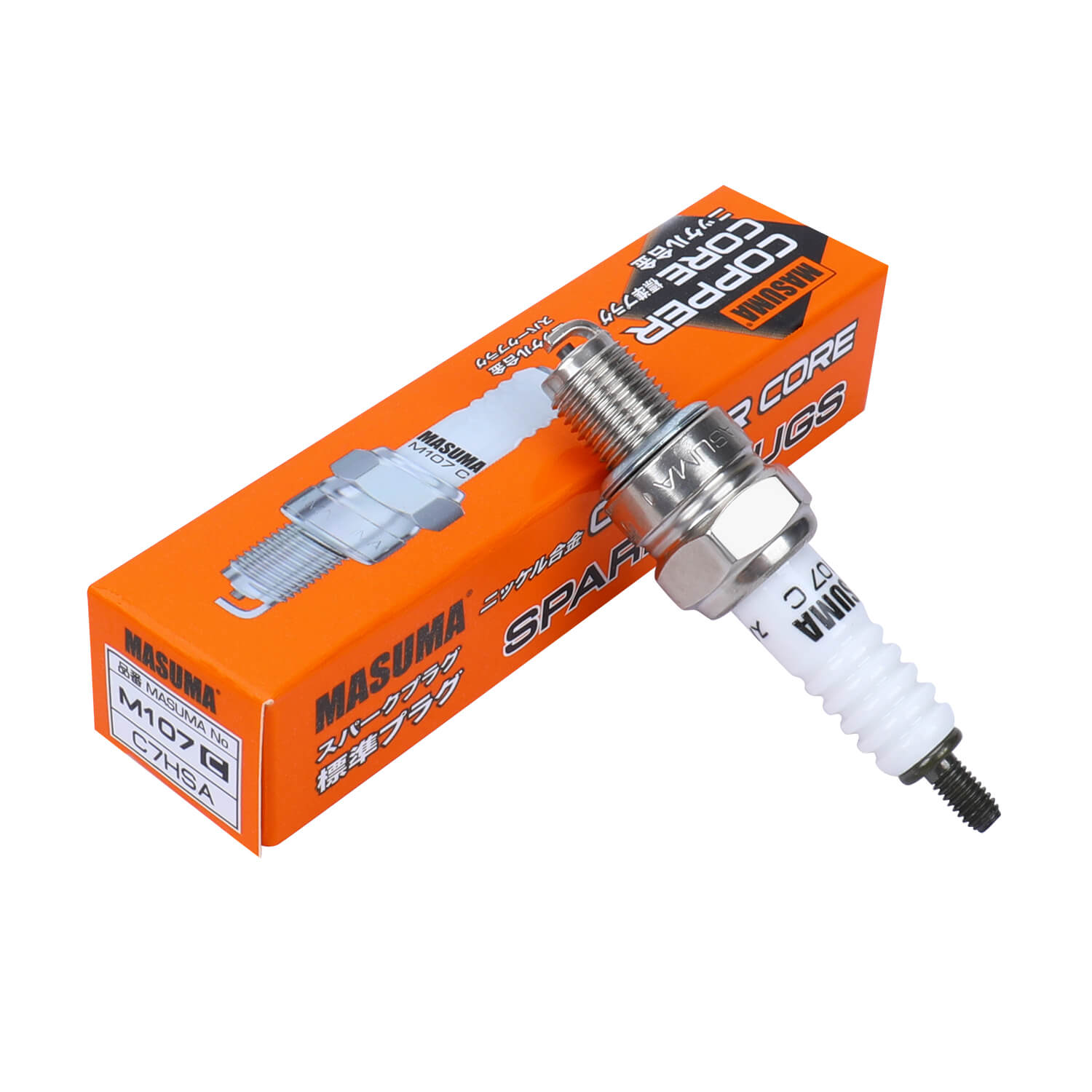
MASUMA copper-core nickel alloy spark plugs feature a copper core integrated into the electrode tip, improving heat dissipation performance and helping prevent excessive heat accumulation during engine operation.
For distributors serving large vehicle populations and standard maintenance markets, nickel alloy spark plugs provide a practical replacement solution with broad application potential.
Platinum Spark Plugs: Improved Stability and Durability
As engine technology develops, many vehicle applications require spark plugs with improved durability and more stable electrode performance.
Platinum spark plugs use platinum material advantages to improve electrode durability and maintain more stable electrode gaps over time.
MASUMA platinum spark plug products are designed for applications where ignition stability and service life are important considerations, providing additional options for aftermarket product portfolios.
Iridium and Double Iridium Spark Plugs: Advanced Ignition Solutions
Iridium spark plugs have become an important category in the premium aftermarket segment due to their material characteristics and ignition performance advantages.
MASUMA iridium spark plugs help improve ignition efficiency while supporting better acceleration response, reduced fuel consumption, and extended service life.
Double iridium spark plugs represent a further development in ignition technology. MASUMA second-generation double iridium spark plugs use a 0.5mm fine tip electrode design, helping promote faster flame core growth and lower ignition voltage requirements.
For modern engines and applications requiring stronger starting performance, high-efficiency ignition, and long service intervals, advanced spark plug technologies continue to gain attention in the aftermarket.
Multi-Electrode Spark Plugs: Meeting Diverse Engine Requirements
In addition to material selection, electrode structure plays an important role in spark plug performance.
Different electrode designs allow suppliers to meet different vehicle operating conditions and customer expectations.
Twin Electrode Spark Plugs
Twin electrode spark plugs feature two symmetrical side electrodes.
Compared with traditional single-electrode designs, the structure allows two side electrodes to share wear during operation, helping maintain ignition stability over longer service periods.
Key characteristics include:
· Stable ignition paths;
· Improved spark reliability;
· Reduced pressure on ignition coils;
· Longer service performance.
For many naturally aspirated passenger vehicles, twin electrode spark plugs provide a reliable aftermarket replacement option.
Three Electrode Spark Plugs
Three electrode spark plugs use three evenly distributed side electrodes around the center electrode.
This multi-path ignition structure improves spark stability and provides stronger resistance against carbon buildup.
For demanding applications such as high-load operation, high-speed driving, or cold environments, three electrode spark plugs can help maintain more consistent ignition performance.
For aftermarket suppliers, multi-electrode spark plugs expand product coverage and provide additional solutions for different vehicle applications.
What Defines a High-Quality Aftermarket Spark Plug?
For automotive distributors and importers, product selection is not only about individual specifications. A competitive aftermarket spark plug supplier needs to provide products that support long-term business development.
1. Broad Vehicle Coverage
The global automotive aftermarket includes a wide range of European, Japanese, and American vehicles.
Distributors often require suppliers that can provide:
· Multiple spark plug material options;
· Wide application coverage;
· Cross-reference support;
· Solutions for different vehicle platforms.
MASUMA offers six major spark plug categories, including nickel alloy, platinum, iridium, double platinum, double iridium, and iridium platinum spark plugs, supporting applications across many global vehicle brands.
2. Stable Product Performance
Spark plugs operate under extreme engine conditions, making product reliability a critical consideration.
High-quality spark plugs need to maintain:
Mechanical Performance
Ceramic insulators and electrode materials must withstand combustion pressure impact and continuous temperature changes.
Electrical Performance
The ceramic insulator must withstand high-voltage ignition pulses while preventing electrical breakdown or abnormal discharge.
Chemical Performance
Materials must resist chemical corrosion caused by combustion by-products.
Heat range matching is also an important consideration when selecting spark plugs. Incorrect heat range selection may result in overheating, electrode damage, or carbon buildup caused by insufficient operating temperature.
Supporting Aftermarket Growth Through Reliable Spark Plug Supply
For automotive parts businesses, spark plugs are not only replacement components but also an important category for maintaining customer relationships and expanding product portfolios.
A competitive spark plug supply solution requires:
· Comprehensive product coverage;
· Wide vehicle application support;
· Stable supply capability;
· Professional technical knowledge.
In today's global aftermarket environment, distributors need more than individual products. They need suppliers capable of supporting different market requirements with complete product solutions.
Through a wide range of spark plug technologies and product categories, MASUMA supports overseas automotive parts distributors, importers, wholesalers, and repair networks with ignition system solutions designed for diverse aftermarket applications.
Conclusion
The difference between OEM and aftermarket spark plugs is not only about where products are manufactured. It is also about how effectively replacement products meet the complex requirements of global vehicle maintenance markets.
For automotive aftermarket businesses, high-quality spark plugs require a combination of material technology, vehicle coverage, application compatibility, and supply reliability.
As the aftermarket continues to evolve, suppliers with comprehensive spark plug portfolios and strong technical capabilities will be better positioned to support customers and capture future replacement opportunities.
 Next chapter