





 English
 HOME
HOME
 Share
Share


Introduction: The Evolution of Wiper Blade Technology in the Automotive Aftermarket
In the global automotive aftermarket, wiper blades are a high-demand replacement category with continuous market potential. As vehicle ownership expands, vehicle fleets age, and expectations for driving safety and comfort increase, wiper blade technology is gradually moving from traditional designs toward more advanced and optimized solutions.
For automotive parts distributors, importers, wholesalers, and repair networks, wiper blades are more than a routine maintenance component. They represent a stable aftermarket category that can support product portfolio expansion and long-term customer demand.
Among the available solutions, conventional wiper blades and frameless wiper blades remain two major product types. While conventional designs have been widely used for decades, frameless wiper blades are gaining attention in the replacement market due to their optimized structure, improved contact performance, and modern vehicle compatibility.
From Conventional Frames to Frameless Designs: A Shift in Wiper Technology
Traditional conventional wiper blades use multiple metal support frames to distribute pressure across the rubber blade and maintain contact with the windshield.
This design has been widely adopted in automotive applications due to its established manufacturing process and broad vehicle coverage. However, as modern vehicles continue to adopt more aerodynamic windshield designs, traditional multi-frame structures may face challenges in maintaining consistent contact across complex windshield curves.
Common limitations include:
· More complex structural design;
· Greater dependence on multiple support points;
· Potential uneven pressure distribution over time;
· Reduced adaptability to certain windshield shapes.
Frameless wiper blades take a different approach by using an integrated flexible structure with an internal spring steel element. Instead of relying on multiple external frames, the blade uses continuous elastic pressure to maintain closer contact with the windshield surface.
This design simplifies the structure while improving adaptability across different vehicle applications.
1. Structural Design: From Multiple Support Points to Full-Surface Contact
For automotive parts professionals, product structure directly influences market performance and customer satisfaction.
Conventional wiper blades rely on multiple metal frames to transfer pressure to the rubber element. In comparison, frameless wiper blades use an integrated flexible structure with a high-elastic memory steel strip, allowing pressure to be distributed more evenly across the wiping area.
This structural difference provides several practical advantages:
· More consistent windshield contact;
· Reduced risk of uneven wiping areas;
· Better adaptability to different windshield curves;
· A cleaner and simpler product design.
For distributors and aftermarket suppliers, products with stable performance can help reduce customer complaints and improve channel competitiveness.
2. Material Selection: A Key Factor in Long-Term Performance
In the automotive aftermarket, buyers increasingly evaluate products beyond initial cost. Material quality, durability, and performance consistency have become important factors in supplier selection.
High-quality wiper blades need to balance several requirements:
· Elastic recovery capability;
· Environmental resistance;
· Rubber durability;
· Long-term operating stability.
MASUMA frameless wiper blades use steel strips sourced from Belgium-based Bekaert, a globally recognized steel wire manufacturer. The internal spring strip is produced with 60C high-elasticity material, designed to maintain stable pressure and support continuous contact with windshield surfaces.
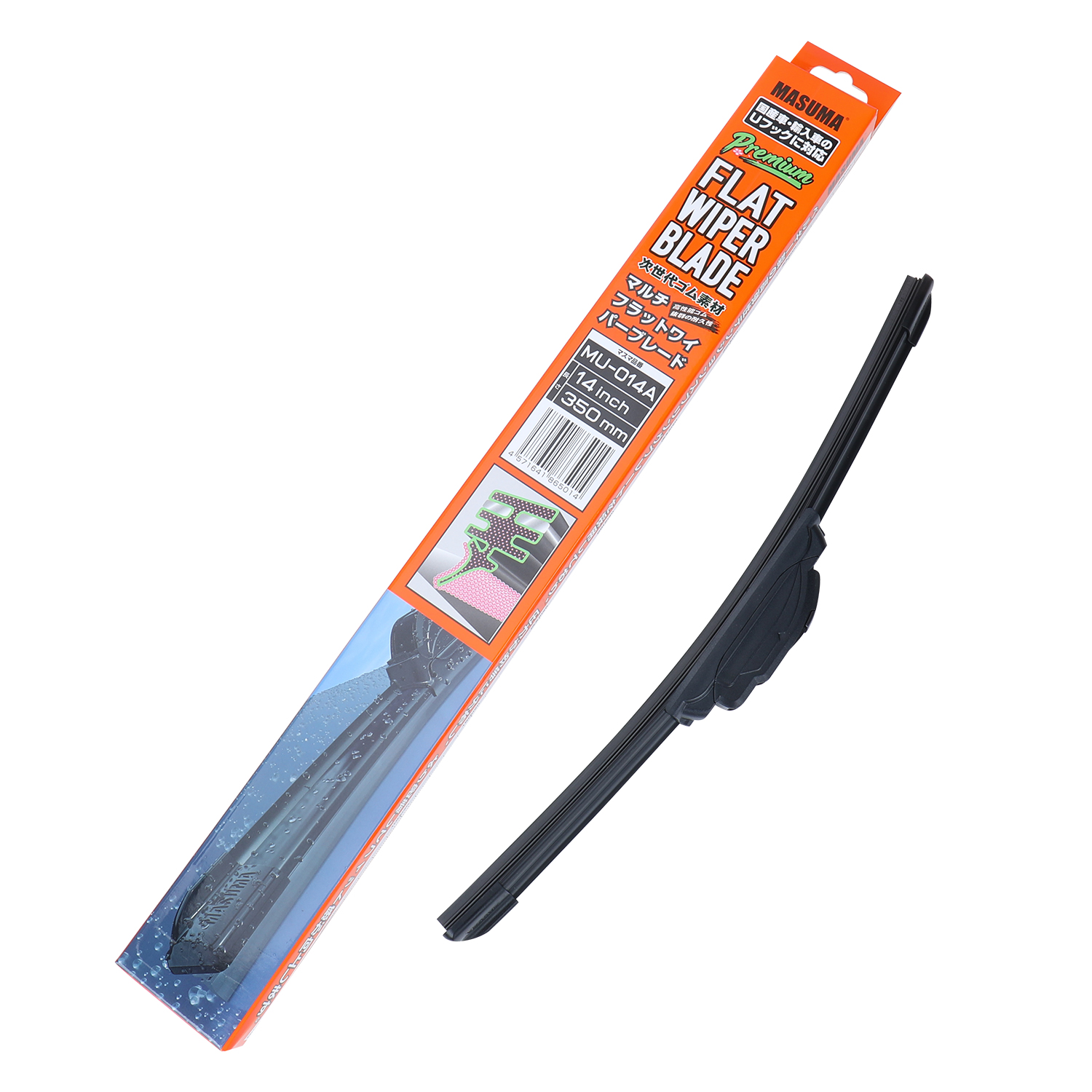
With professional anti-corrosion treatment, the steel element is designed to provide improved durability against environmental conditions such as humidity, rainfall, and salt exposure.
For global automotive aftermarket suppliers, reliable material selection helps create more consistent product quality across different markets.
3. Rubber Technology: Supporting Stable Wiping Performance
The rubber element is one of the most important components affecting wiper blade performance.
Vehicles operate in diverse environments, including:
· High-temperature regions with strong sunlight exposure;
· Cold climates with low temperatures;
· Rain-intensive areas requiring frequent use;
· Urban environments with dust and road contamination.
Therefore, wiper rubber materials need to maintain flexibility, wear resistance, and weather adaptability.
MASUMA frameless wiper blades use chloroprene rubber (CR) as the core rubber material and apply a graphite coating treatment to improve wiping performance.
CR rubber provides reliable elasticity, wear resistance, and weather resistance for different operating environments.
The graphite coating helps reduce friction between the rubber strip and windshield surface, supporting smoother and quieter wiping performance while helping slow down rubber wear during long-term use.
For automotive repair networks and aftermarket distributors, consistent wiping performance contributes to better end-user satisfaction and fewer quality-related service issues.
Why Frameless Wiper Blades Represent an Opportunity in the Automotive Aftermarket
For automotive parts distributors, selecting a product category requires more than evaluating technical specifications. Commercial factors also play an important role, including:
· Market demand stability;
· Vehicle coverage;
· Product differentiation;
· Supplier capability.
Wiper blades are a frequently replaced maintenance component with broad application across passenger vehicles and commercial vehicle markets.
As global automotive aftermarket competition continues to develop, importers and wholesalers are looking for product categories that provide stable demand and opportunities for portfolio expansion.
Frameless wiper blades offer several advantages for aftermarket product strategies:
· Modern structural design;
· Broad vehicle application potential;
· Stable performance characteristics;
· Adaptability across different weather conditions.
These factors make frameless wiper blades an increasingly attractive category for automotive parts suppliers seeking to strengthen their replacement parts portfolio.
Key Factors Professional Buyers Consider When Sourcing Wiper Blades
When evaluating wiper blade suppliers, professional buyers typically consider several important factors.
Vehicle Coverage Capability
Different regions have different vehicle populations and aftermarket requirements.
A supplier with broad vehicle application coverage can help distributors serve more customers and respond to diverse market demands.
Product Quality Consistency
Stable material selection and manufacturing processes help reduce quality risks during large-volume procurement.
For importers and wholesalers, consistent product performance is essential for maintaining long-term customer relationships.
Supply Reliability
A reliable supply chain is a key factor in aftermarket cooperation.
Distributors need suppliers capable of providing stable product availability to support continuous market operations.
Portfolio Expansion Value
Wiper blades can complement other automotive replacement categories, including:
· Filtration products;
· Brake system components;
· Suspension and steering parts;
· Electrical components.
By expanding product categories strategically, distributors can create more comprehensive aftermarket solutions for their customers.
MASUMA: Supporting Global Automotive Aftermarket Customers with Wiper Solutions
As a global automotive parts supplier, MASUMA provides replacement solutions designed to support the needs of international aftermarket customers.
MASUMA frameless wiper blades combine:
· High-elasticity steel strip technology;
· CR rubber materials;
· Graphite coating treatment;
· Frameless integrated structure.
Through continuous product development and expanded vehicle application coverage, MASUMA helps distributors, importers, wholesalers, and repair networks build stronger automotive aftermarket product portfolios.
Conclusion
The difference between frameless and conventional wiper blades represents more than a change in product structure. It reflects the automotive aftermarket’s ongoing demand for improved reliability, better adaptability, and higher-value replacement solutions.
For automotive parts professionals, understanding wiper blade technology trends and market requirements can help optimize product strategies and identify new opportunities in the global replacement parts market.
 Next chapter