









 Home
Home
 Share
Share


Traffic rules and driving habits vary significantly across the globe. While the vast majority of regions operate on right-hand traffic with left-hand drive (LHD) vehicles, roughly 30% of countries and territories worldwide---such as the UK, Japan, Australia, and Singapore---maintain the tradition of left-hand traffic using right-hand drive (RHD) vehicles.
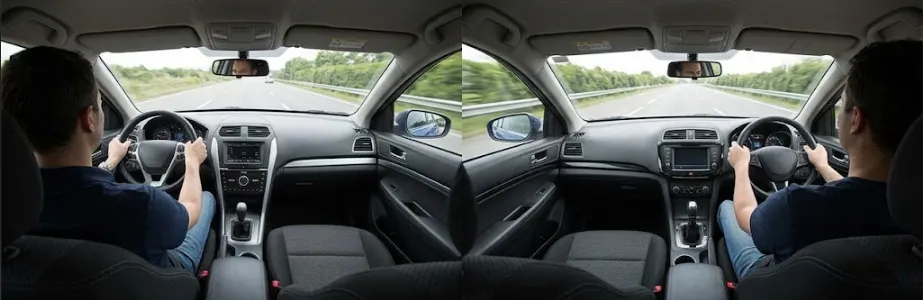
Why do traffic rules and steering positions differ so greatly across the world? Behind this global divide lies a rich historical evolution that also imposes strict requirements on modern automotive engineering and international spare part compatibility.
I. The Historical Roots: Left vs. Right
1. Knights and Samurai: The Tradition of Left-Side Traffic
Driving on the left dates back to medieval times. Knights and sword-bearers carried their swords on their left hip. By riding on the left side of the road, their right hand remained closer to oncoming strangers, enabling quick defense if necessary.
Japan followed a similar path. Samurai wore their swords on the left side. Passing on the left prevented scabbards from accidentally clashing with passersby, avoiding unnecessary conflict.
2. Freight Wagons and Napoleon: The Rise of Right-Side Traffic
The movement toward right-side traffic gained traction in the late 18th century:
Heavy Wagons: Large freight wagons in Europe and North America were drawn by multiple horse pairs. Drivers sat on the rear-left horse to whip the team with their right hand. To gauge clearance when passing oncoming wagons, drivers naturally kept to the right side of the road.
Napoleonic Conquests: Following the French Revolution, right-side driving was codified in France and spread across continental Europe during Napoleon's conquests.
3. Industrial Standardization
In 1908, Ford placed the steering wheel on the left side in the iconic Model T, establishing left-hand drive (LHD) as the mainstream industrial standard for right-side traffic. Meanwhile, Britain and its former territories retained left-side traffic, cultivating a dedicated right-hand drive (RHD) automotive ecosystem.
II. Serving Global Markets: MASUMA's Precision Matching and High Compatibility Design
To seamlessly serve both LHD and RHD global markets, MASUMA combines a rigorous OE cross-reference database with high-compatibility product engineering:
Precise OE Cross-Referencing: While structural variations exist between LHD and RHD vehicles, MASUMA leverages an extensive OE database. Distributors and technicians do not need to manually decipher steering parameters---searching directly by OE number or vehicle application ensures 100% accurate fitment, eliminating ordering errors.
Universal & High-Compatibility Engineering: MASUMA incorporates versatile design innovations where applicable. For instance, MASUMA wiper blade series feature universal LHD/RHD compatibility with multi-fit adapters. This design accommodates both driving orientations flawlessly while helping global distributors streamline inventory SKUs and reduce warehousing costs.
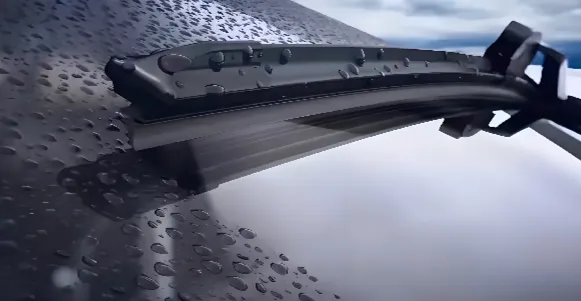
By pairing precise OE matching with flexible product design, MASUMA reliably supports left-hand drive regions across Europe, North America, and Central Asia, alongside right-hand drive markets including Japan, Australia, and Southeast Asia.
 Previous Article