









 Home
Home
 Share
Share


Automotive AC Alternator: Engineering Principles and Core Component Analysis
An automotive alternator converts mechanical energy from the engine into direct current (DC) electricity to power onboard electrical systems and recharge the battery. Sourcing high-quality alternators that meet OEM specifications is critical for distributors and repair shops to reduce warranty claims and Return Merchandise Authorization (RMA) rates.
01. Introduction & Dual-Core Power System
The battery and alternator function as a dual-core supply system:
02. Operating Principles & Core Construction
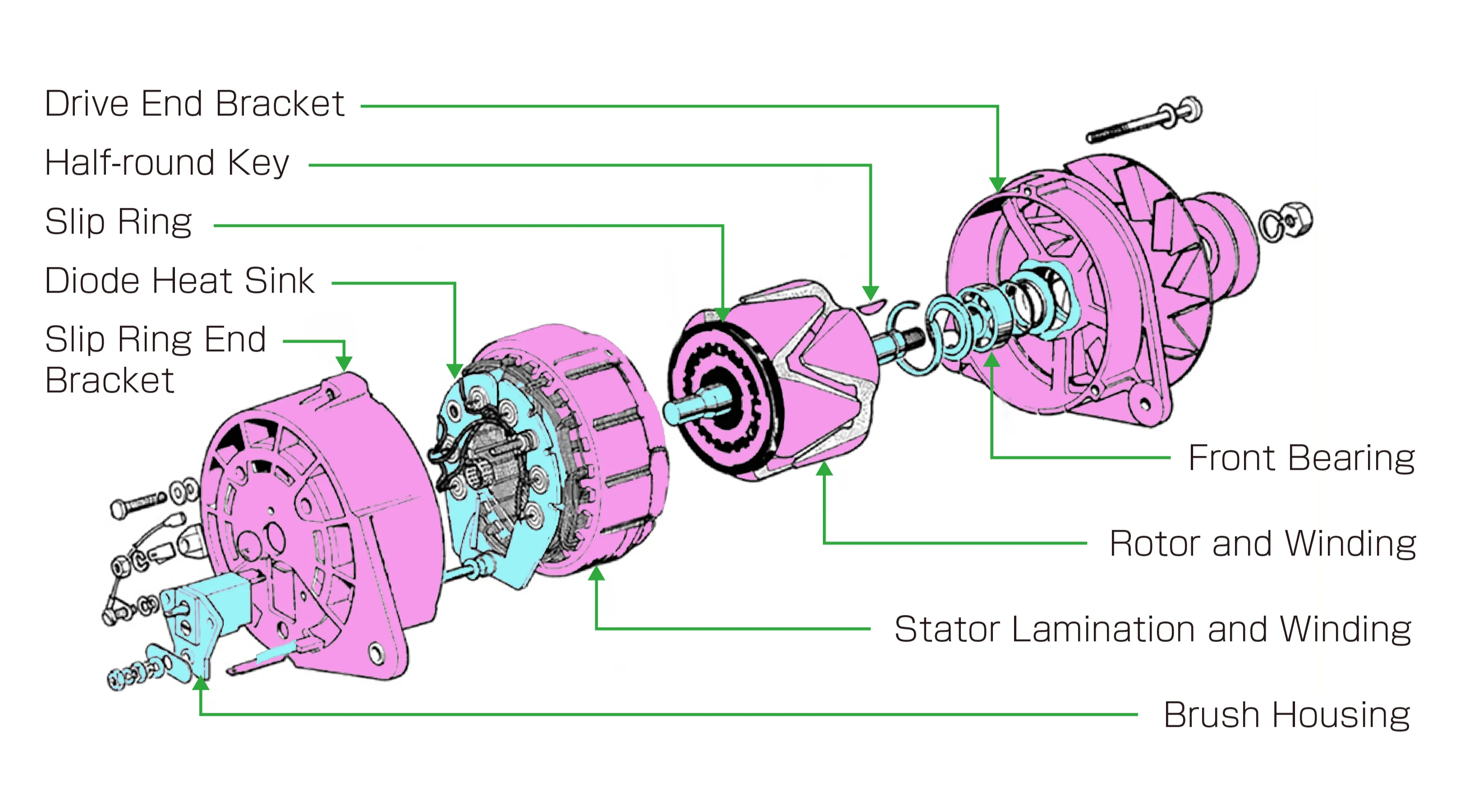
Exploded View of Automotive AC Alternator Components
- Rotor & Stator: The rotor claw poles establish the magnetic field; the laminated silicon steel stator houses three-phase windings. Their electromagnetic matching determines total power output and thermal efficiency.
- Rectifier Diodes: Converts three-phase AC into usable DC power, withstanding surge currents and minimizing AC voltage ripple to suppress electromagnetic interference (EMI) with onboard electronics.
- Integrated Voltage Regulator: Dynamically adjusts excitation current during load spikes (acceleration, heavy A/C use) to maintain steady voltage output (typically 13.5V to 14.7V).
03. Manufacturing Standards: The MASUMA Advantage
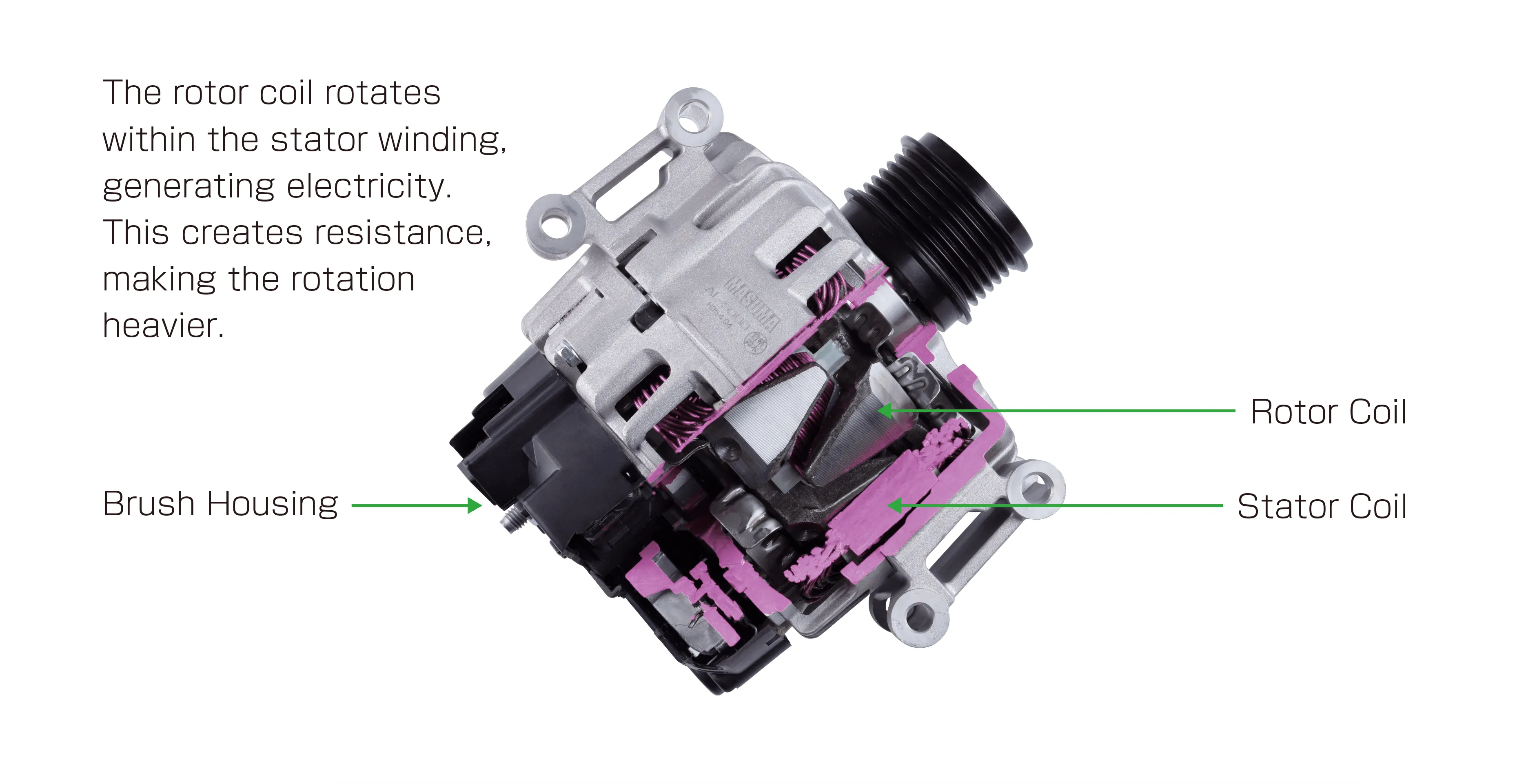
MASUMA Alternator Cross-Sectional Engineering View
MASUMA automotive alternators incorporate targeted engineering improvements to eliminate common aftermarket failure modes:
04. Preventive Maintenance Guidelines
- Belt Tension & Fasteners: Periodically check drive belt tension and mounting bolts. A loose belt reduces charging efficiency, while an over-tightened belt accelerates bearing wear.
- Brushes & Slip Rings: For standard brushed units, inspect carbon brush wear regularly and replace brushes worn beyond 50% height.
- Dust Cover Integrity: Keep protective dust covers securely installed to prevent road debris, dust, and oil contamination from damaging slip rings and winding insulation.
05. Frequently Asked Questions
What is the typical voltage output of a healthy alternator?
How do MASUMA alternators prevent radio noise and electrical interference?
Summary
For automotive parts distributors, importers, and service networks, sourcing alternators that adhere strictly to OE dimensional specifications and rigorous manufacturing standards is the most effective strategy for mitigating warranty claims and protecting profit margins. Precise fitment, consistent electromagnetic conversion efficiency, and high-durability internal components remain the fundamental benchmarks of a premium alternator. Partnering with manufacturers that implement total quality management and rigorous operational testing not only minimizes RMA rates but also delivers long-term power reliability for end users, safeguarding brand reputation across the global aftermarket.
 Previous Article