DRIVE SHAFT BOOT KIT

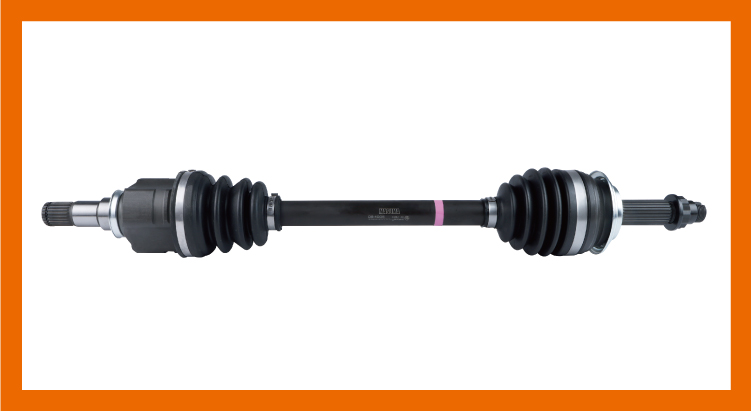
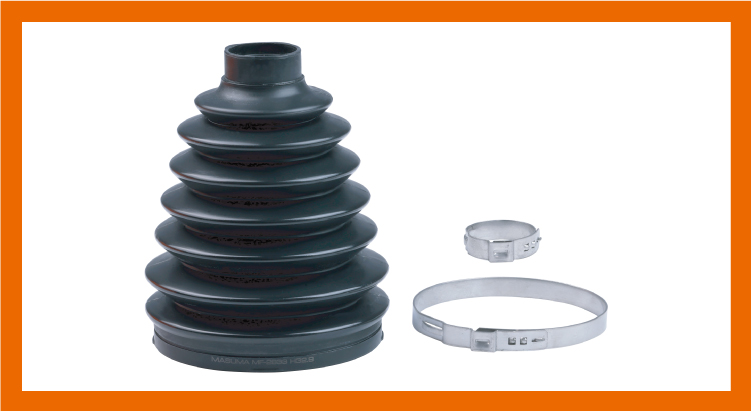
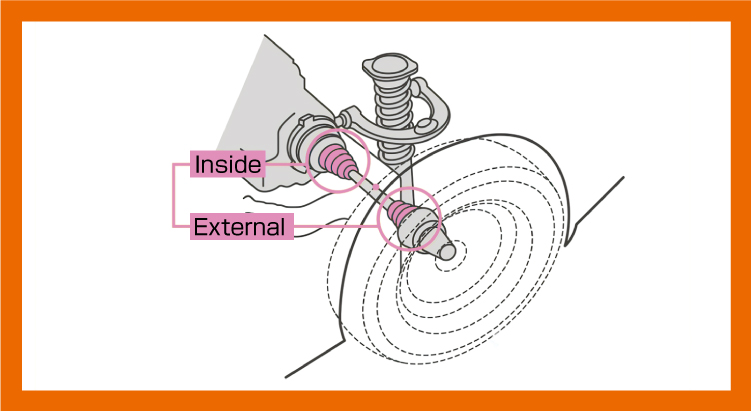
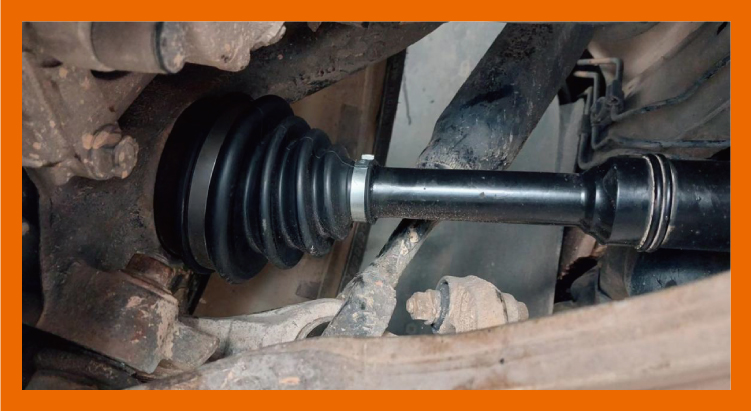
■ CV joint boot is a critical part of the CV joint, which is mainly used to prevent dust from entering it and the lubricant inside the CV joint from flowing out. Once the CV joint boot is damaged, water and sand will enter it, resulting in abnormal wear and tear and clearance of the CV joint. A large gap will cause abnormal turning, accelerated shaking, and even breakage of the CV joint in severe cases, and thus the vehicle runs abnormally.


DRIVE SHAFT BOOT KIT
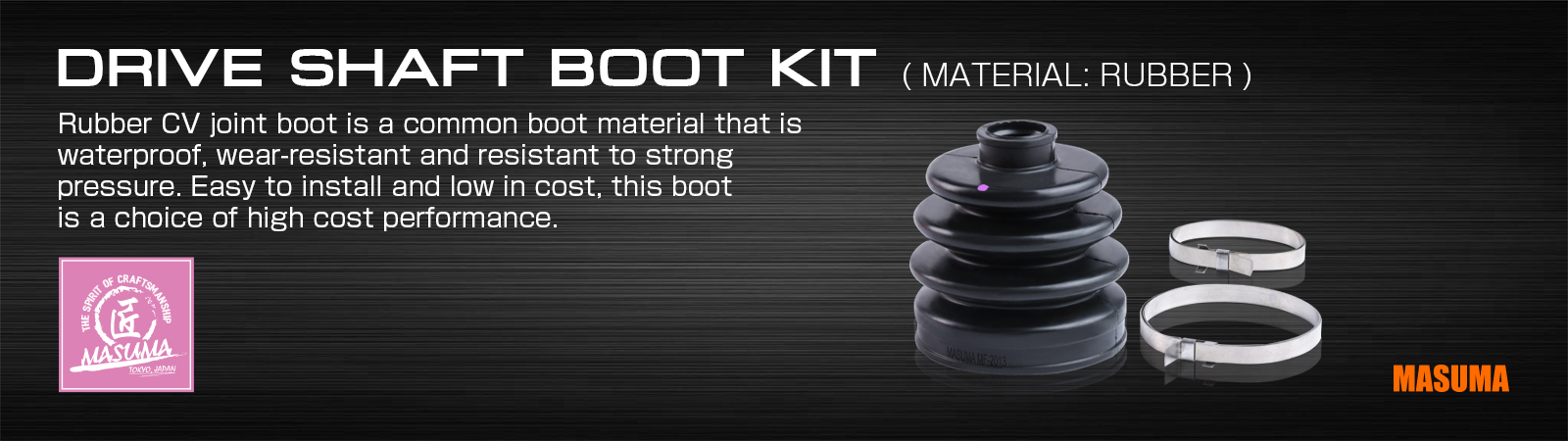
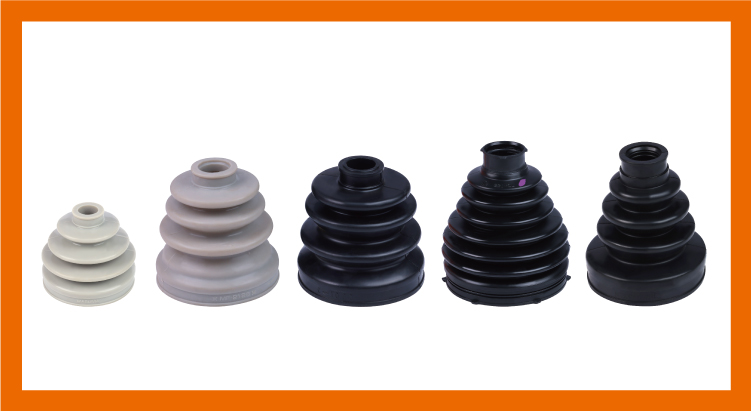
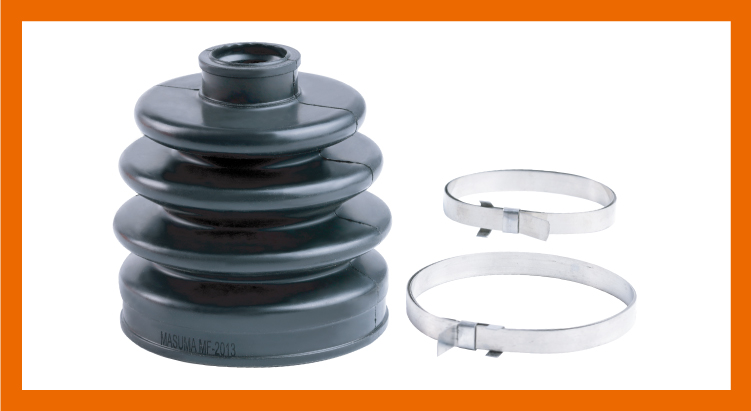
■ Rubber CV joint boot is a common boot material that is waterproof, wear-resistant, and resistant to strong pressure. Easy to install and low in cost, this boot is a choice of high cost performance.

DRIVE SHAFT BOOT KIT (TPEE)
■ TPEE materials are the newest of the thermoplastic elastomers that are gaining attention and are being used in preference by an increasing number of automotive manufacturers. TPEE contains a PBT (polybutylene terephthalate) polyester hard segment and an aliphatic polyester or polyether soft segment in a linear block copolymer. It combines the excellent elasticity of rubber and the easy processability of thermoplastic, with adjustable hardness and softness and free design.
Mechanical Performance: Through the adjustment of the ratio of soft and hard sections, the hardness of TPEE may range from Shore D30-82, and its elasticity and strength are between rubber and plastic, with extremely high tensile strength, fatigue resistance, low temperature flexibility, and abrasion resistance.
High and low temperature resistance: TPEE features excellent heat resistance, and as hardness increases, heat resistance becomes improved. In addition, it features excellent low temperature resistance. The brittle point is lower than -70℃, and the lower the hardness, the better the cold resistance, allowing long-term use at -40℃.
Chemical resistance: TPEE possesses excellent oil resistance and is resistant to polar liquid chemical media at normal temperature, with its resistance to chemicals increasing as its hardness improves.
Weather fastness: TPEE has outstanding chemical stability when subjected to many varying conditions, such as water spray, ozone, and outdoor atmospheric aging. Degradation will occur under UV light, as it happens with most TPEs.

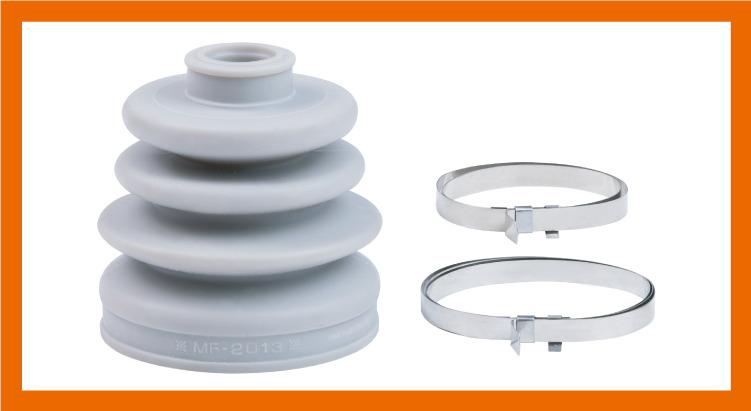
DRIVE SHAFT BOOT KIT (SILICONE RUBBER)
■ Silicone CV joint boot is a relatively high-grade material. Its advantages lie in resistance to high temperatures, antioxidation, environmental protection characteristics, etc. It also has a long service life and can adapt to more harsh environments. In particular, it’s necessary to use silicone CV joint boot for some high-end mechanical equipment. However, its costs are relatively high, and the installation and use also put forward higher requirements.

Product Strengths
■ Masuma CV joint boot protects the CV joint from foreign matter like dust and sand, extends its service life, and meets the needs of various environments.
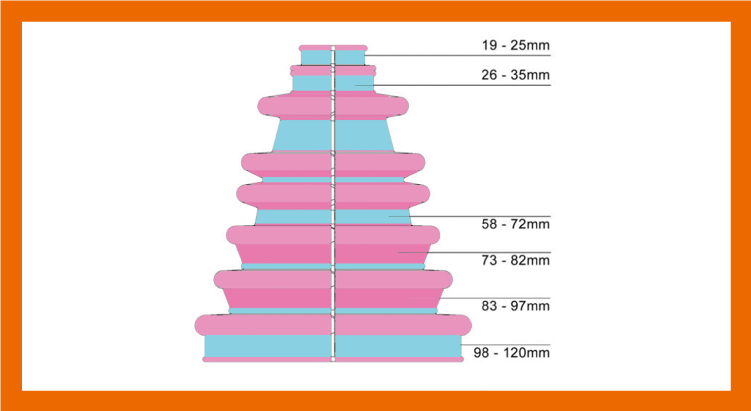
Products (structural schematic)


Maintenance tips
■ In case of abnormal noise when a car turns or bumps, check if the CV joint boot is damaged. If the boot is damaged, dust may enter the CV joint, causing damage to it.

■ Make sure to check the CV joint boot for cracks, aging, and other problems on a regular basis. If any, replace it in time; otherwise, dust may enter the CV joint and cause damage to the CV joint.
■ Damages and aging of the CV joint boot will lead to loss of oils of CV joint gears. Don’t handle these problems by yourself. Make sure to seek professional help.
Ball cage dust cover installation
1. Lift up the main body and remove the tire.
2. Detach the three screws on the ball head of the lower swing arm, unplug the half-shaft, and detach the large circlip from the inner ball cage.

3. Pull off the half-shaft assembly.
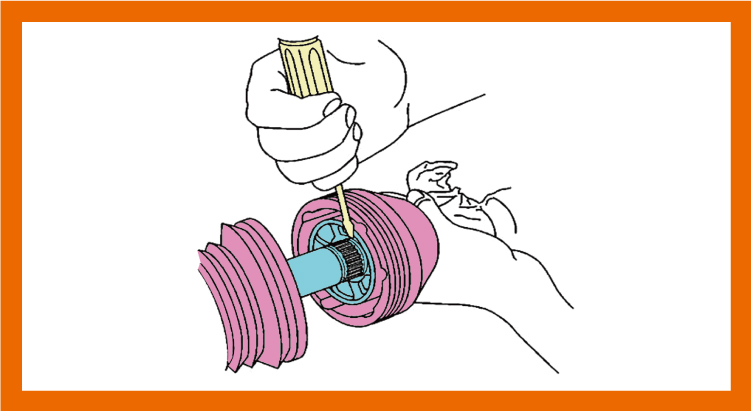
4. Dismantle the circlip in front of the ball cage bearing; thereafter tap the bearing down gently, taking care not to hit the glossy surface of the bearing.
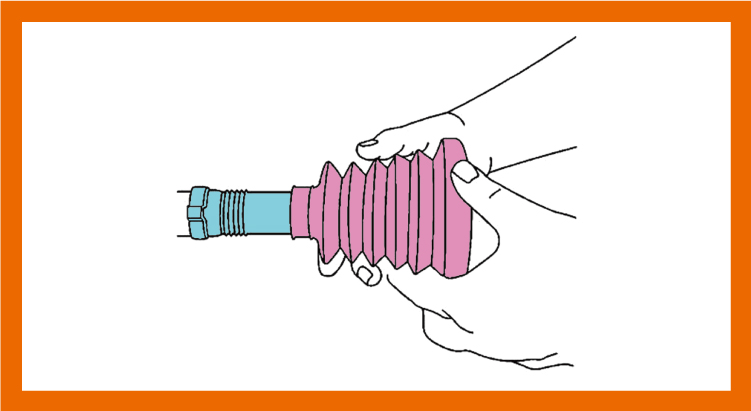
5. Replace the small circlip under the dust boot, take off the old boot, put the new small circlip on the new boot, and assemble the half shaft accordingly. Also, please note (do not lock the circlip in haste), mount the bearing and lock the snap ring ( in the middle spline location).

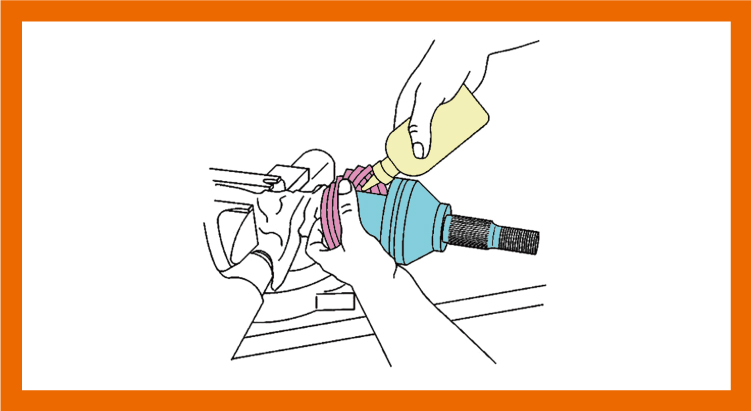
6. Fill grease into the dust sleeve and ball cage inside (clean the inside of the ball cage prior to filling). After all 140g is added, reinstall into the half-shaft. Then attach the large dust sleeve spring; watch the direction of installation, and install in accordance with the direction of rotation of the half-shaft. Lock the large circlip spring and the small circlip spring with small cut pliers (the same coupled with a small hose); lock, note the location of the large and small circlip spring latch in the same direction, so that the replacement is done.