AIR CONDITIONING COMPRESSOR

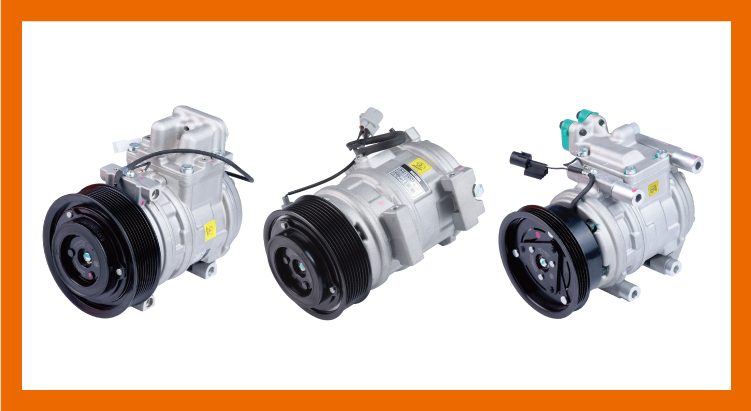
■ Automobile AC compressor is the core of the automobile AC cooling system. It can compress and convey refrigerant vapor. It is part of the automobile AC refrigeration system.
■ Depending on the working principle, an AC compressor can be classified into a fixed-displacement compressor and a variable-displacement compressor.

Product Description
■ As to the material of Masuma AC compressor, its inside parts are made of lead; only some small parts use steel (for example, ball locating ring, wear plate, steel ball, and counter weight). The outside parts adopt alloy lead; there is an iron cylinder liner, piston head, and connecting rod inside.

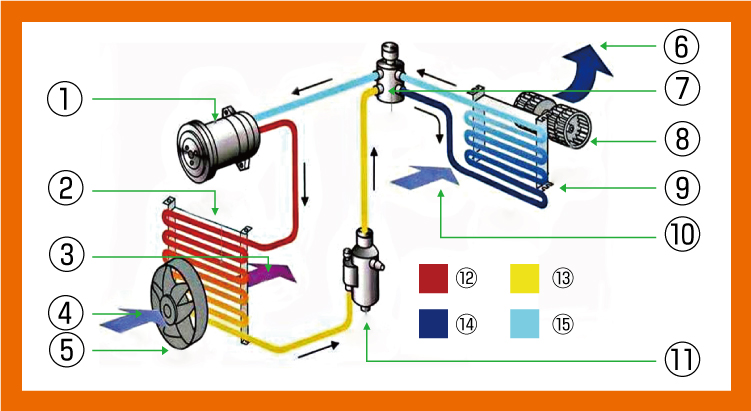
■ Working principle: Compressor - condenser - throttle device - evaporator. The compressor compresses refrigerant into high-pressure saturated gas (Freon). This gaseous refrigerant is further condensed by the condenser.
■ After throttling by throttling device, refrigerant gets into evaporator to cool the target medium for cooling and heat exchange. In evaporator’s coiled pipe, refrigerator turns to low-pressure vapor after heat transfer, which gets back to compressor and then is compressed by compressor again for cyclic utilization. This is how the cooling system works.

Fixed displacement wobble plate type compressor with single-headed pistons
■ Working principle: Principal axis drives planetary plate to wobble, and connecting rod drags piston to move in cylinder to achieve the goals of gas inflow, compression, and discharge.
■ Production introduction: Highly reliable, cost-effective, and suitable for harsh working environments, this compressor is extensively applied in trucks, construction vehicles, agricultural machinery, and other special vehicles for refrigeration and freezing.
■ Features: Based on market and in order to improve compressor’s reliability, many core parts and components come from the same suppliers as OE manufacturers, for example, bearings, fixed gear wheel, and wobble gear. Besides, we have also optimized the physical parameters of key parts and components for better reliability.
Variable displacement wobble plate type compressor with single-headed pistons
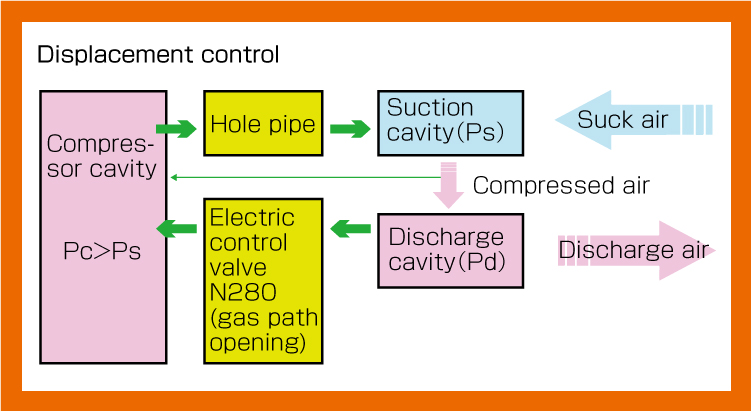
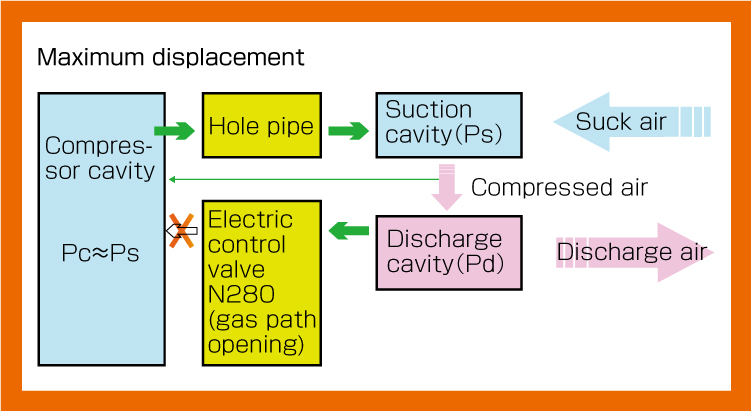
■ Working principle: Principal axis drives planetary plate to wobble, and connecting rod drags piston to move in cylinder to achieve the variable displacement process of gas inflow, compression and discharge through control valve’s control of wobbling angle.
■ Production introduction: As a variable displacement wobble plate type compressor with single-headed pistons is more advanced in technology among traditional compressors. Depending on the number of cylinders, it has 5-cylinder, 6-cylinder and 7-cylinder classifications. Technologically mature and stable, this product is widely applied in mid-end passenger vehicles, for example, Peugeot, Citroën and Volkswagen.
■ Features: Sensitive to temperature, energy-saving, low power consumption, cost-effective; better energy-saving effects than fixed displacement compressor.
Fixed displacement swash plate type compressor with double-headed pistons
■ Working principle: Principal axis drives swash plate to drive piston to make reciprocating motions in cylinder and achieve the goals of gas inflow, compression, and discharge.
■ Production introduction: This compressor uses 5 pistons to do 10 cylinders’ motion, so 1 piston works as 2 cylinders do. It is called “10-cylinder machine”. It is widely applied in OE supporting and after-sales markets of engineering machinery (for example, excavator, loader, bulldozer, crane, driller and agitator). Further, enhanced versions, as well as dust cover, have been developed for special applications.
■ Features: Small size, light weight, high efficiency, etc. Widely applied to passenger vehicles and commercial vehicles.
Variable displacement swash plate type compressor with single-headed pistons
■ Working principle: It involves an automobile AC compressor. It connects to the right end cover at the right end of the casing, but to the left end cover at the left end; a crankshaft chamber is formed inside the left part of the casing, while a piston chamber is formed inside the right part of the casing; principal axis is installed in the casing; valve plate is set between the right end cover and the casing.
■ Production introduction: At the part on the principal axis corresponding to crankshaft chamber are driving arm in fixed connection, and slide bush in movable connection; swash plate connects onto slide bush, and swash plate’s one end is hinged to driving arm via pin bearing; at the outer edge, swash plate connects to planetary plate in movable connection; at one side of planetary plate, connecting rod is hinged; the connecting rod’s another end is hinged with the piston in the piston chamber; planetary plate’s another end is located in the guide rail set axially on the inner wall of the casing.
■ Features: Few components, compact structure, small size, light weight, high efficiency, good durability, good NVH performance, high-speed rotation, wide displacement adjustment scope.

Product Strengths
■ Lightweight: Optimized structure. Relying on CAE simulation analysis, it is lightweight; the total weight of the compressor <6KG;
■ Efficient: Efficient oil and gas separation and return mechanism, efficient motor matching and high-precision mechanical device, which guarantee: PS/PD=0.3/1.5MPA; SH/SC=10/5℃, COP>2.4.
■ Automotive grade controller: Adopting automotive grade component design; working under 120℃; it can satisfy the requirements of plug-in hybrid and harsh environment applications.
■ R&D strength: Capable of making positive development. We have a professional R&D team that can develop compressor assembly, controller, and motor.

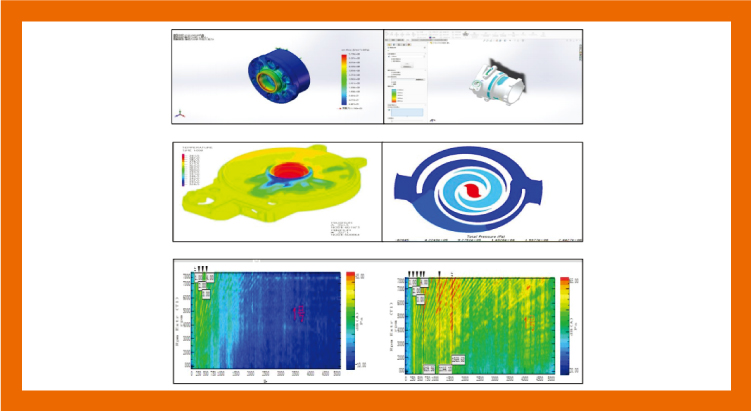
■ CAE simulation capacity: Structural mechanics, hydromechanics, acoustics; simulation software: SolidWorks, Abaqus+HyperMesh, Ansys workbench GT-power, WAVE, etc. Available for linear statics analysis, nonlinear analysis, buckling analysis, modal analysis, vibration, frequency response analysis, thermal analysis, acoustic analysis, fatigue & durability analysis, structural strength checking, etc.
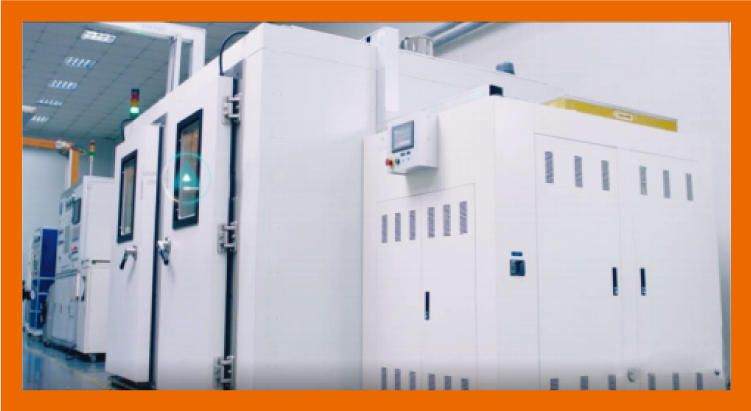
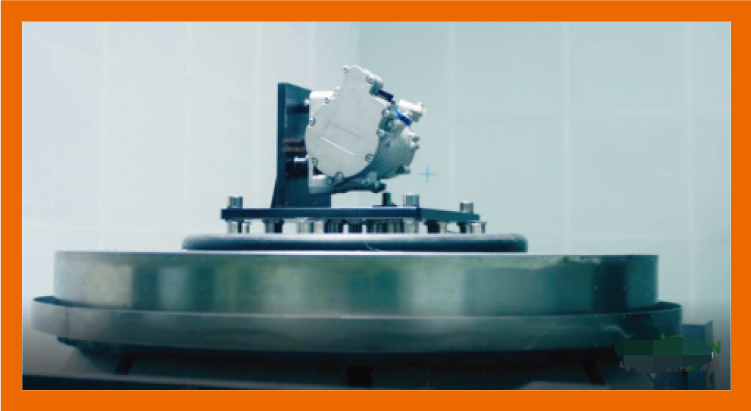
■ Experimental capacity: Available to satisfy the requirements of varied compressor tests. Independent lab center could complete 45 tests, including function, performance (refrigerating capacity and COP), noise, blasting, vibration at high and low temperature, thermal shock, insulation and voltage resistance, dynamic balance, moisture detection, bench life, environment simulation chamber, service life under temperature and temperature change, IP6X7/IP6X9, current transmitted by EMI, voltage method, liquid resistance test, system oil content OCR&ORC, battery cooling, resistance to corrosion, cleanliness, stator winding DC resistance under cold state, stator winding’s voltage withstanding and insulation resistance to the casing, motor load characteristics, environment simulation and compressor reliability test.


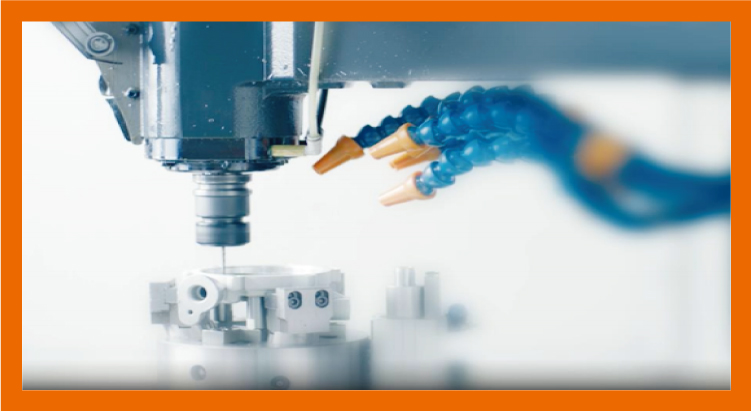
■ High precision machining: Machining of movable and fixed plates; world-top Swiss FEHLMANN high-dynamic micron-sized high-precision processing center, Japanese MORl-SEIKI cutting-edge equipment processing center, together with German clamps and FANUC six-axis robot, which realizes the automatic production. Casing and end capping machines are equipped with MAZAK, BROTHER, and other imported equipment.

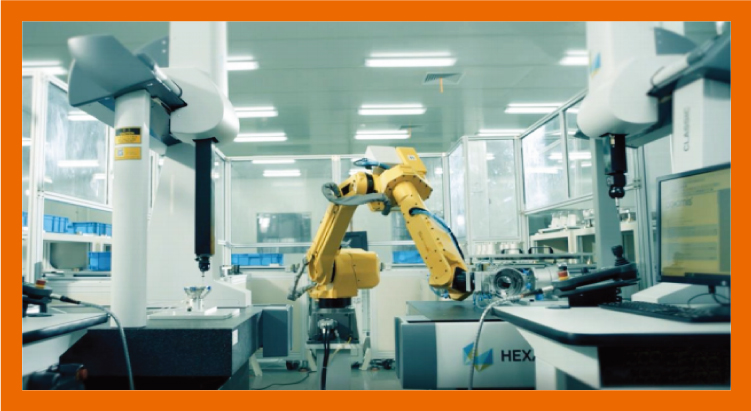
■ Self-test workstation: Fully automatic detection line; equipped with 2 FANUC robots and 4 HEXAGON three-coordinate measuring instruments, which can realize the fully automatic SPC analysis.

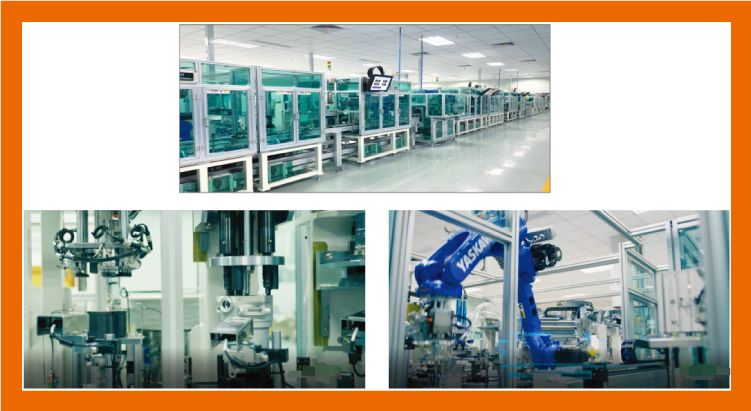
■ Full-automatic assembly line: Totally, there are over 220 sets of error-proof devices, position sensor monitors, pressure sensor monitors, visual perception sensor monitors, ID data monitors, full-process QR code data collector, visualization, smart logistics distribution AGV, etc. Completion of active prevention, passive prevention, detective prevention, joint station-process prevention and other measures; controller assembly line: 1 integrated modular layout assembly line; design production capacity: 300,000 sets per year; selective crest device; AO detection, ICT/FCT detection.
■ High refrigerating capacity, fast temperature reduction; in the system, refrigerant flow changes greatly. (For AC system driven by engine, automobile speed changes greatly)
■ High condensing temperature: Condenser’s ventilation and condensation effects are affected by the radiant heat of engine water tank, automobile’s driving speed and road dust pollution.

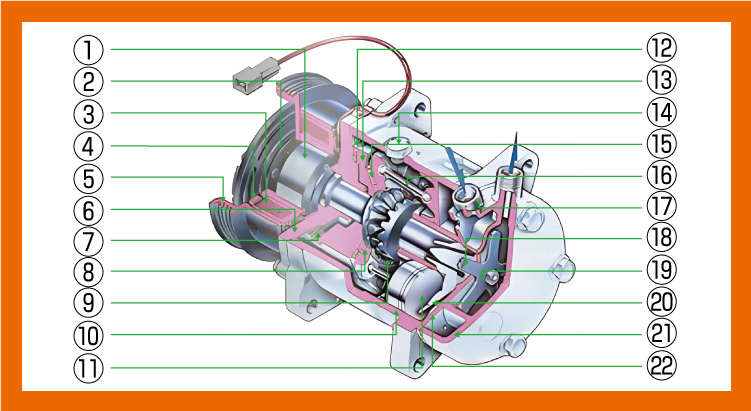
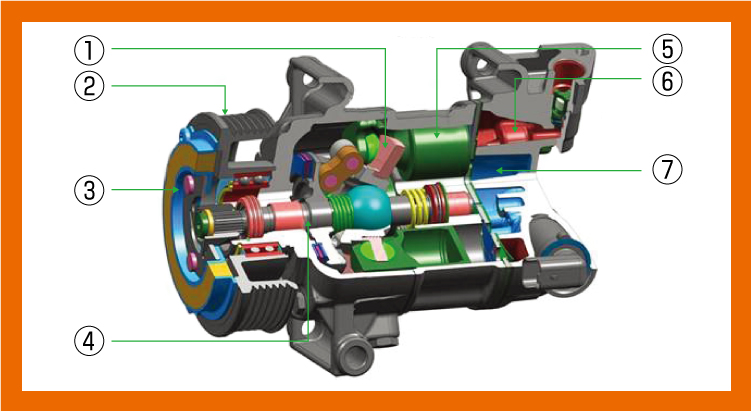
Products (structural schematic)


Common Faults and Troubleshooting of AC Compressor
■ Hammer test: Tilt the air-conditioner by 45° at its front, rear, left and right parts, power it off; hammer the lower half part of the AC compressor with a wooden hammer to enable the jammed part in the AC compressor to run due to vibration.
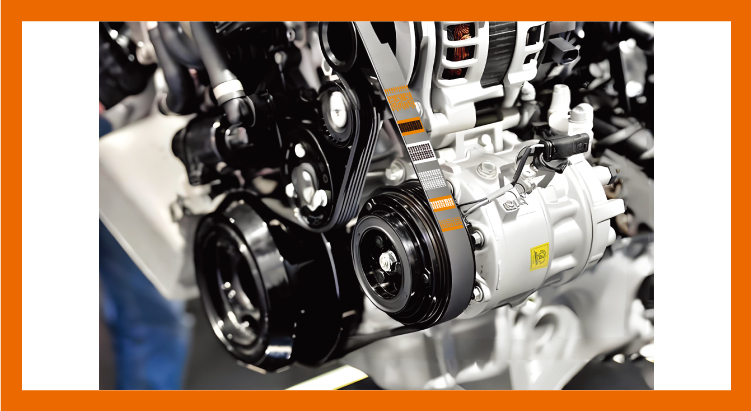
■ Air pressure impact: Test the socket voltage to confirm it’s normal; disassemble ODU casing, test compressor capacitor to confirm the charge-discharge function works well; test over temperature and overcurrent protectors to make sure they work properly; measure the sum of AC compressor’s primary winding resistance and secondary winding resistance to make sure the sum is equal to the value of common terminal. AC compressor of an automobile is set on the engine; the AC compressor and the engine work by belt driving. It’s easier to figure out where the AC compressor is if you already know the position of the belt.