









 Home
Home
 Share
Share


1. How Spark Plugs Work and Key Performance Requirements
As one of the most vital ignition components in an internal combustion engine, a spark plug delivers high-voltage electricity supplied by the ignition coil directly into the combustion chamber. It generates a powerful electric spark across the electrode gap, igniting the compressed air-fuel mixture to drive the pistons.
Because spark plugs operate under extremely harsh conditions—enduring cyclic combustion pressures, rapid temperature swings from sub-zero to over 2,000°C, and repetitive high-voltage surges exceeding 30,000 volts—they must be engineered to exceptionally high standards.
Core Performance Criteria for Quality Spark Plugs
- Mechanical Strength: Must withstand intense peak combustion pressures and severe physical shock without structural failure.
- Electrical Insulation: High-grade ceramic insulators must prevent current leakage, surface flashover, and dielectric breakdown under heavy loads.
- Chemical Resistance: Electrodes and metal shells must resist high-temperature chemical corrosion caused by fuel additives and combustion by-products.
- Precise Heat Range: Must efficiently dissipate heat away from the firing tip to prevent pre-ignition, engine knocking, or heavy carbon fouling.
Common Symptoms of Worn or Failing Spark Plugs
Over thousands of miles of operation, spark plug electrodes naturally erode, widening the gap and reducing spark efficiency. When this happens, engines typically exhibit several warning signs:
- Hard Starting & Rough Idling: Inconsistent sparks make it difficult for the engine to start smoothly, leading to vibrations at idle.
- Engine Misfires & Sluggish Acceleration: Intermittent ignition failure causes hesitation when pressing the gas pedal and reduces overall power output.
- Increased Fuel Consumption: Incomplete combustion forces the engine to burn more fuel to maintain required performance levels.
- Check Engine Light: Persistent misfires will trigger fault codes (such as P0300 series) on the vehicle dashboard.
2. Spark Plug Types & Material Categories
Modern automotive spark plugs vary significantly based on precious metal composition and structural configuration. MASUMA provides a comprehensive six-core product lineup designed to cover diverse vehicle applications:
| Series Name | Material & Core Design | Performance Characteristics & Ideal Use |
|---|---|---|
| SC Series | Copper-Core Nickel Alloy | Features a copper core for rapid heat dissipation and reliable everyday performance at an economical price point. |
| PLATINUM Series | Single Platinum Tip | Platinum-tipped center electrode significantly reduces gap erosion, offering extended service life compared to standard copper plugs. |
| IRIDIUM Series | Single Iridium Tip | Utilizes an ultra-fine iridium center electrode to maximize ignition focus, lower voltage requirements, and boost fuel economy. |
| DP Series | Double Platinum | Both center and ground electrodes feature platinum pads, ensuring superior long-term stability in waste-spark ignition systems. |
| DI Series | Double Iridium Alloy | Provides ultimate durability and supreme ignition efficiency, engineered specifically for high-compression and modern high-output engines. |
| IP Series | Iridium–Platinum Combination | Combines an iridium center electrode with a platinum ground chip to balance maximum durability and cost-effectiveness. |
3. Why Choose MASUMA Spark Plugs?
MASUMA advanced spark plug lines—especially the Second-Generation Double Iridium series—incorporate cutting-edge manufacturing techniques to deliver distinct advantages over standard aftermarket options:
- 0.5mm Fine-Wire Electrode: The ultra-narrow profile minimizes the "quench effect," promoting rapid flame kernel growth and lowering the required ignition voltage.
- Enhanced Throttle Response: Quicker, more consistent energy discharge translates to immediate acceleration feedback and smoother engine operation.
- Superior Cold-Weather Reliability: Advanced dielectric insulation and fine-tip engineering ensure reliable, rapid cold starts even in harsh sub-zero winter climates.
- Exceptional Longevity: Built with an iridium melting point of 2454°C and high-strength alumina ceramic insulators, MASUMA plugs easily handle high-compression and turbocharged environments.
How to Quickly Find the Correct MASUMA Spark Plug
Selecting the correct spark plug is vital for engine protection and performance. MASUMA provides three convenient identification methods:
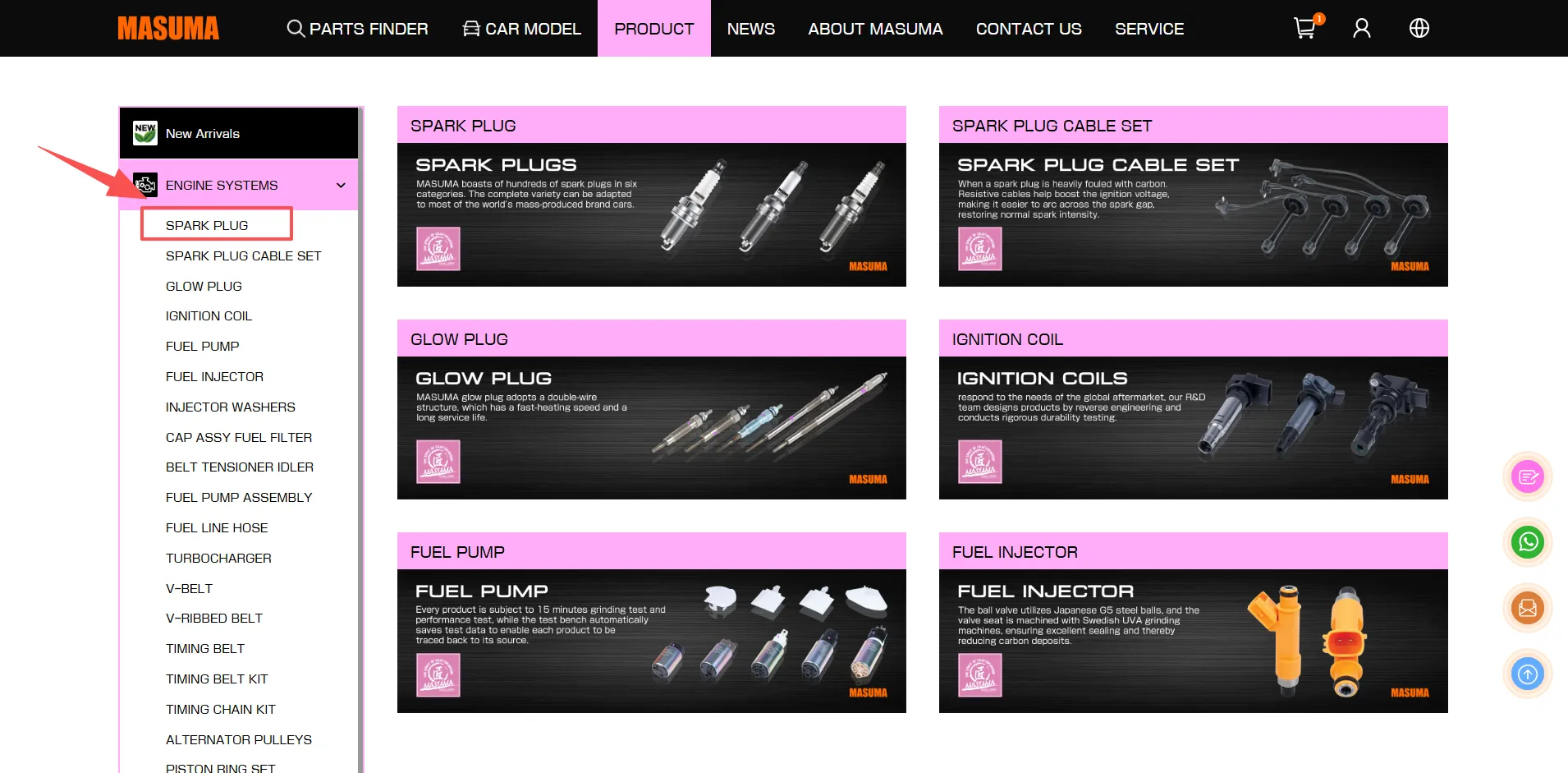
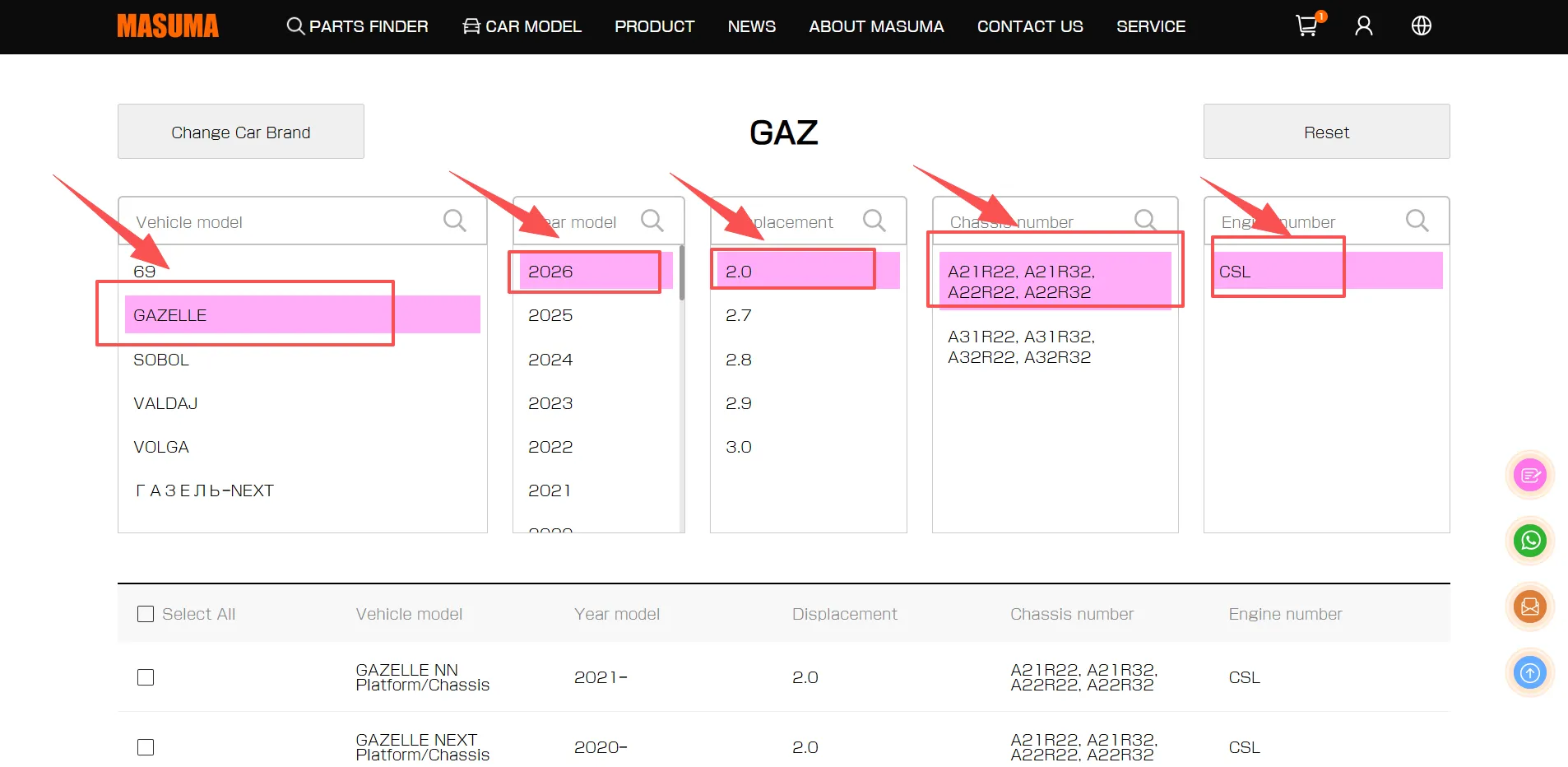
Method 1: Vehicle Application & Online Catalog Search
The fastest and most accurate approach is to look up your vehicle by make, model, year, and engine code using the online MASUMA electronic catalog or application database.
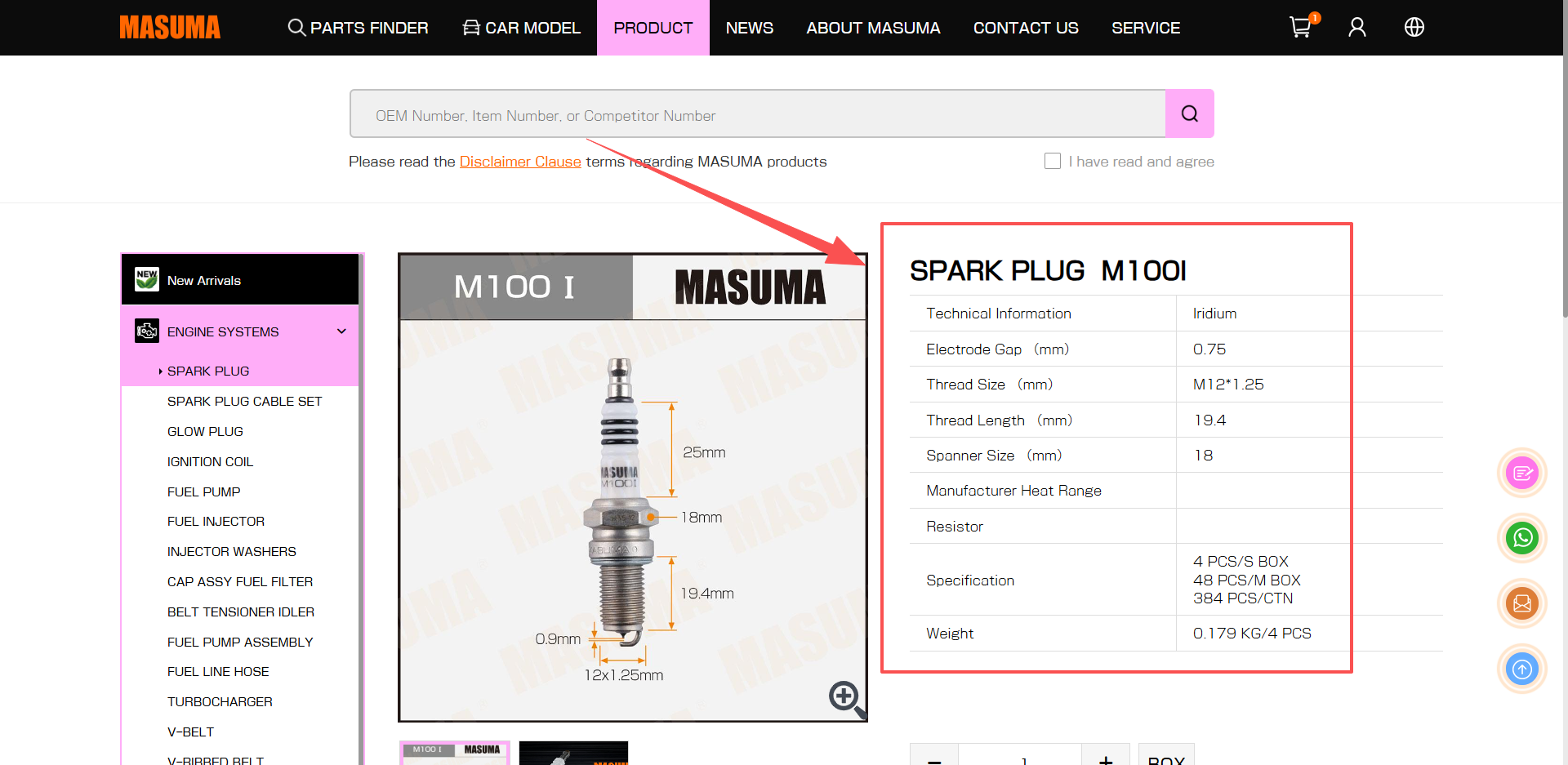
Method 2: Physical Dimension & Specification Matching
If vehicle details are unavailable, match the spark plug by evaluating critical physical parameters: thread diameter, thread pitch, reach length, hex size, and seat type (tapered vs. gasket).
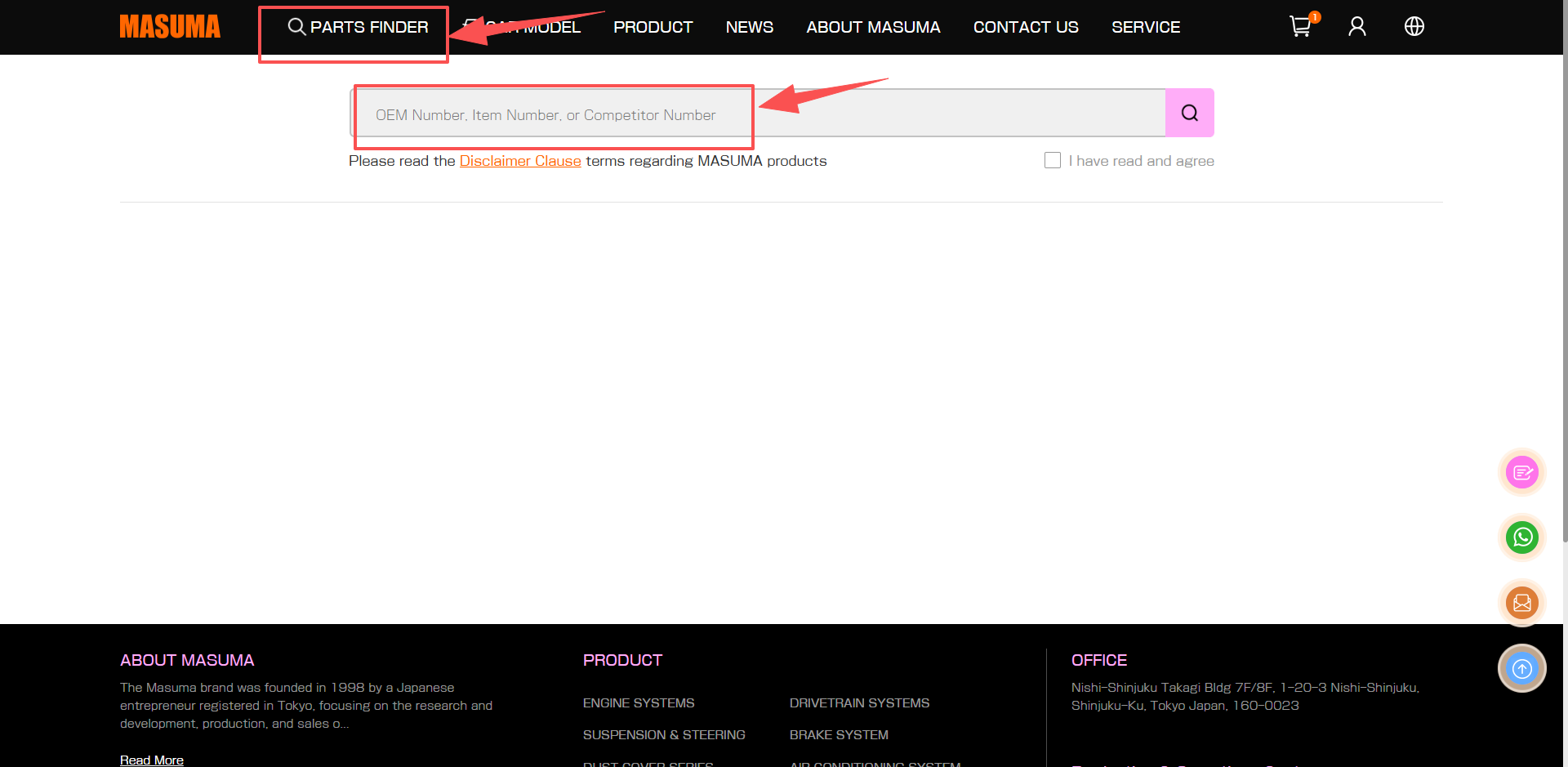
Method 3: OE Number & Competitor Cross-Reference
Cross-reference using original equipment (OE) manufacturer part numbers or equivalent competitor numbers via the MASUMA cross-reference lookup tool to ensure a direct, seamless replacement.
 Previous Article