





 English

New Arrivals
















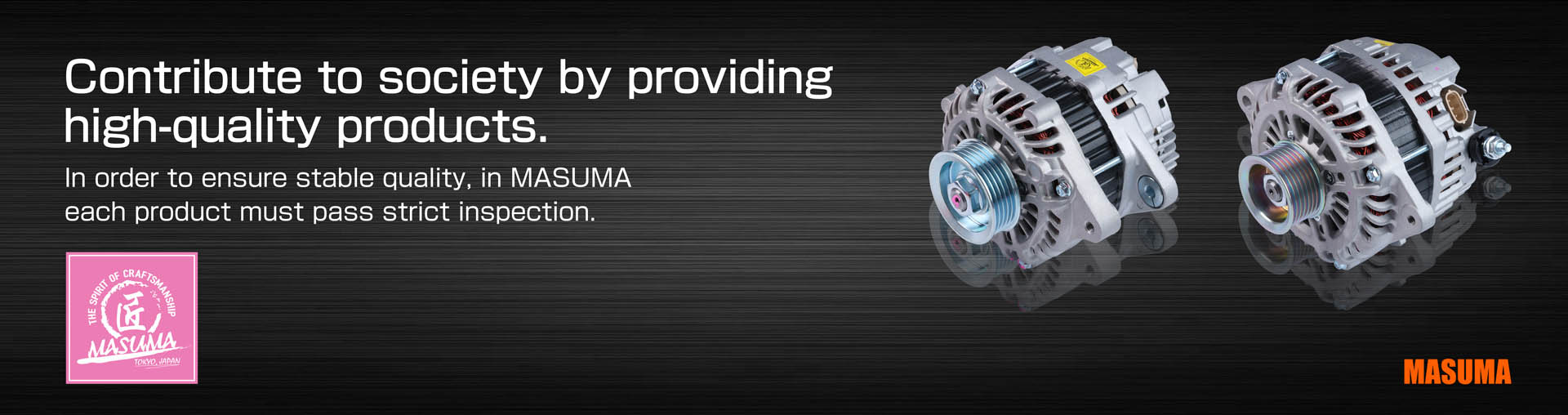
 GENERATOR
■ The automotive generator, driven by the engine, converts mechanical energy into electrical energy. It serves as the primary power source for the vehicle's electrical systems, supplying power to the electrical equipment when the engine runs above idle speed and continuously charging the battery.
■ Generators can be classified into AC (alternating current) and DC (direct current) generators. Due to the large size, low efficiency, and high cost of DC generators, they have been phased out. Currently, almost all generators used in vehicles worldwide are AC generators. AC generators consist of rotor, stator, brush, slip ring, rectifier, bearings, fan, and front and rear end cover.
■ Compared with DC generators, AC generators are smaller in size, lighter in weight, simpler in structure, easier to maintain, have a longer lifespan, maintain good charging performance at low engine speeds, and generate weaker radio interference signals.

Classification
■ The operating characteristics of an AC generator refer to the DC voltage output by the generator after rectification. The rectifier diodes are made of silicon, so it is also known as a 'silicon rectifier generator.
■ AC generators can be classified into the following categories based on different classification methods:
■ By Structure:
(1) Standard AC Generator: A generator without special devices or functions
(2) Integrated AC Generator: An AC generator with a built-in electronic regulator.
(3)AC Generator with Pump: An AC generator equipped with a vacuum pump.
(4)Brushless AC Generator: An AC generator without brushes and slip rings.
(5)Permanent Magnet AC Generator: An AC generator with rotor magnetic poles made of permanent magnet materials.
■ By Rectifier Structure:
(1)Six-diode AC Generator
(2)Eight-diode AC Generator
(3)Nine-diode AC Generator
(4)Eleven-diode AC Generator
■ By Field Winding Grounding Method:
(1)Internal Grounded AC Generator: One end (negative) of the field winding is directly grounded (connected to the casing).
(2)External Grounded AC Generator: One end (negative) of the field winding is connected to the regulator, which then grounds it.

■ When the external circuit energizes the excitation winding through the brushes, a magnetic field is generated, magnetizing the claw poles into N and S poles. As the rotor rotates, the magnetic flux alternates in the stator winding. According to the principle of electromagnetic induction, an alternating induced electromotive force is generated in the stator's three-phase winding. The three-phase alternating electromotive force produced in the generator is rectified by diodes, resulting in DC output, which supplies power to the load and charges the battery.
Magnetic Field Generation:The automotive AC generator generates a magnetic field through the interaction between the rotor and stator. The rotor consists of an excitation coil and permanent magnets, while the stator is a coil of wire. When the excitation coil is energized, the magnetic field generated is conducted to the stator coil via the permanent magnets.
Magnetic Field Variation:The engine drives the rotor to rotate at high speed, causing the excitation coil and permanent magnets on the rotor to move relative to each other, continuously changing the direction and magnitude of the magnetic field. This variation in the magnetic field induces an electromotive force (EMF) in the stator coil.
Energy Conversion:When the stator coil generates an induced EMF, the rectifier connected to the stator converts the AC to DC. The DC power is then regulated by a voltage regulator before being supplied to the vehicle's electrical system.


■ MASUMA Automotive Generator features low-noise, high-temperature resistant bearings, high-grade diodes for the rectifier to eliminate electronic interference, and high-quality pulleys that are heat-resistant and highly insulated. This design reduces energy loss during power generation and automatically regulates voltage output to meet the needs of electrical equipment. This feature is particularly important during vehicle operations such as starting, accelerating, and braking, where electrical loads can vary significantly. The automatic regulation function of the Masuma automotive generator stabilizes the electrical system, preventing faults caused by voltage instability.
Product Advantages
■ Improved magnetic circuit and rectifier, enhancing output power.
■ Both the rectifier and electronic regulator are integrated into the generator.
■ Equipped with a charging indicator light, reducing the self-excitation speed of the generator.
■ Adopts a brushless design, simplifying the structure and easing maintenance.



Maintenance Tips
■ After the vehicle has traveled a certain distance, adjust the tension of the generator belt appropriately and re-tighten the calibration screws as needed. The generator's mounting screws should be kept at a certain tightness.
■ If the brush contact surface is uneven, it can be smoothed with fine sandpaper. If the brush is too short but undamaged, shims can be used to ensure contact with the rectifier.
■ If the brush holder insulator is damaged, replace it with a new part.
■ If the generator fails en route and the destination is not far, disconnect the wire between the field coil and the voltage regulator. For three-brush generators, remove the third brush to stop the generator from working, using the battery to supply power. Minimize electrical usage in this case.
■ Ensure the dust cover on the generator is secure. Do not remove it to prevent dust from entering and causing mechanical failure.