





 English

New Arrivals
















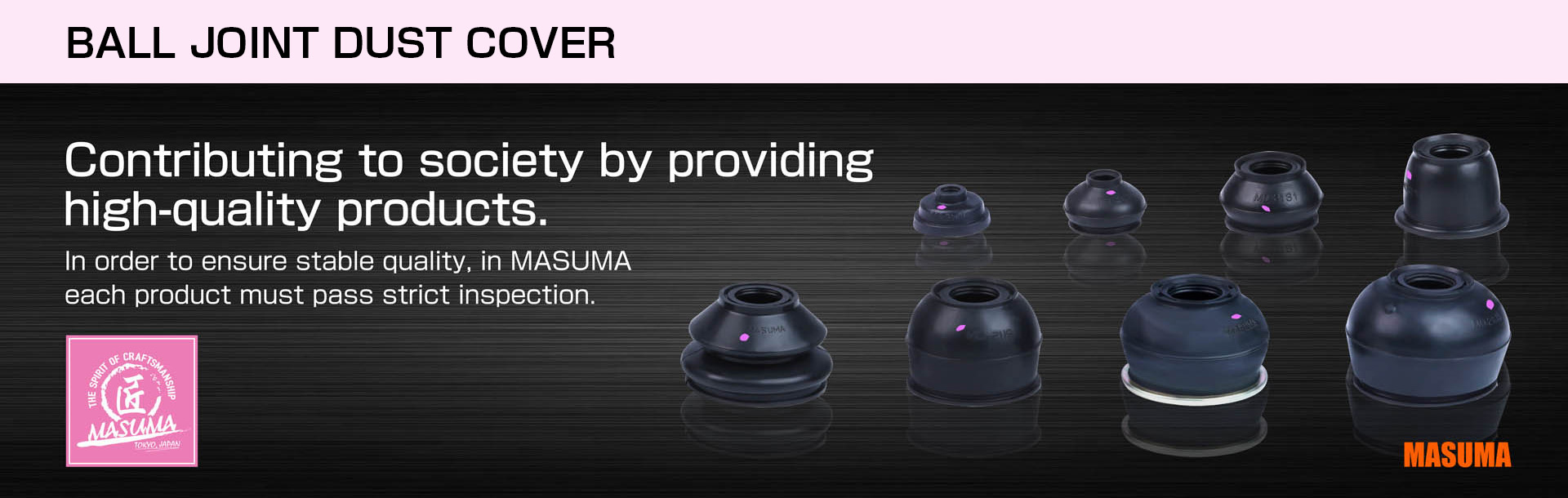
 BALL JOINT DUST COVER
■ The ball joint dust cover is utilized at the junction of the steering linkage and the steering knuckle, with a typical internal grease content of 3-4 grams. While the vehicle is in motion and steering, the ball stud on the tie rod continually rotates and swings. At this juncture, the dust cover installed at the joint prevents water, dust, sand, and other particles from entering the ball stud, simultaneously effectively reducing friction at the joint to prevent the tie rod from seizing or experiencing prolonged wear that could lead to fracture and result in steering failure and accidents.


■ The ball joint dust cover made of Masuma rubber utilizes Japanese Neoprene, renowned for its superior wear resistance and anti-aging properties. This material can effectively resist chemical substances, greases, and other corrosive agents, providing efficient dust protection. The advantages of the rubber ball joint dust cover include its excellent oxidation resistance, ensuring prolonged use without significant aging effects.
■ The ball joint dust cover must prevent both water ingress and internal grease egress, enduring frictional wear and tear over time due to the motion of the tie rod Ball stud.




1. It possesses characteristics such as resistance to high and low temperatures, ozone, oil, oxidation, and excellent adhesion.
2. Neoprene exhibits significant resistance to bending, twisting, and compression.
3. It can withstand long-term immersion in water or burial in soil.
4. Under appropriate formulations, it demonstrates excellent chemical resistance.
5. Neoprene has low permeability and strong adhesion.
6. Neoprene exhibits excellent flame retardancy.

■ The dust cover is a vital component in vehicles, which must be replaced in time in case of damages.
■ Regular inspections are necessary to detect aging, cracks and damages in various sections of the dust cover.
■ For typical passenger vehicles, the recommended replacement interval for original ball joint dust covers is approximately every 20,000 kilometers. In special environments like deserts or muddy terrains, timely replacements are essential.