





 English

New Arrivals












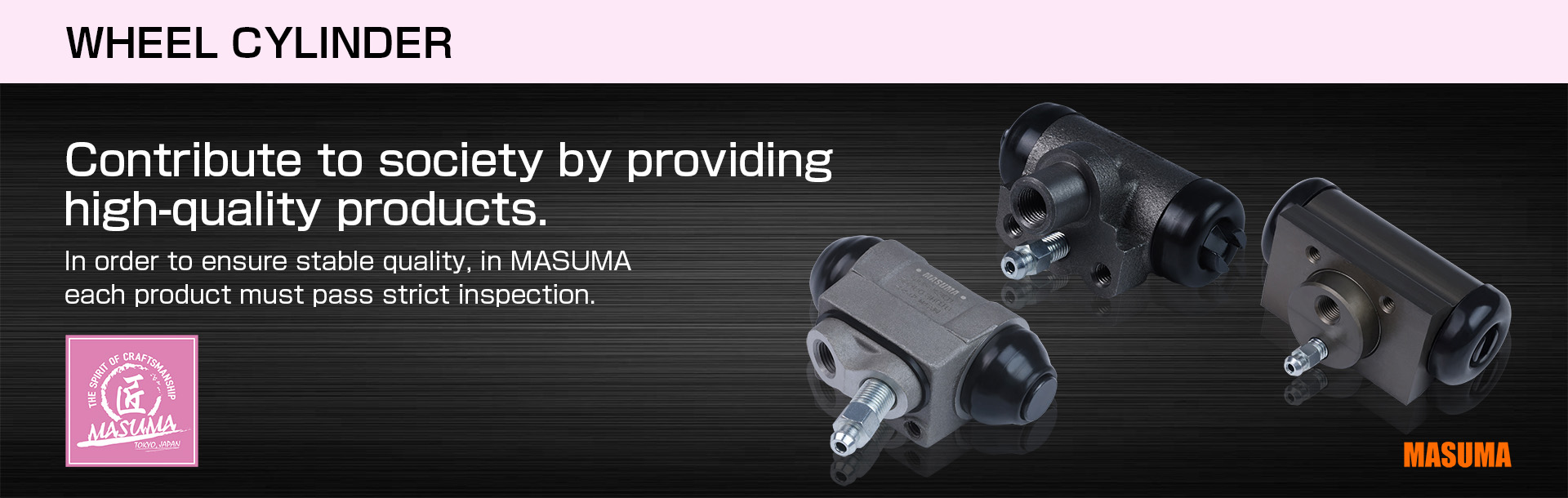
 WHEEL CYLINDER
■ The wheel cylinder, also commonly referred to as the wheel brake cylinder, is a core actuating component in a vehicle's hydraulic braking system. Installed inside the brake assembly at each wheel, it works in conjunction with the brake master cylinder.
■ Its primary function is to receive hydraulic pressure transmitted from the brake master cylinder, pushing the brake shoes (in drum brakes) or the caliper pistons (in disc brakes). This forces the friction components against the brake drum or brake disc, generating braking force to slow down or stop the wheel. It is the key component that converts hydraulic energy into mechanical braking force.


Principle of the Wheel Cylinder
■ When the brake pedal is depressed, the brake master cylinder generates thrust, pressurizing brake fluid and delivering it to the wheel cylinder. The piston(s) inside the wheel cylinder are then actuated by the hydraulic pressure, pushing the brake pads. The system, consisting of the master cylinder and brake fluid reservoir, connects the brake pedal to the brake lines. The master cylinder contains brake fluid and features both an outlet and an inlet port.
■ When the brakes are applied, the outlet port opens while the inlet port closes. Under the pressure from the master cylinder piston, brake fluid is forced through the brake lines to each wheel cylinder, engaging the brakes. When the brake pedal is released, the outlet port in the master cylinder closes, and the inlet port opens, allowing brake fluid to return from the wheel cylinders to the master cylinder, resetting the system to its original state.


1. Excellent comprehensive performance in high-pressure sealing, low-pressure sealing, durability, and air tightness; resistant to high/low temperatures, high/low pressure vacuum, and fatigue.
2. Core components are imported, ensuring stable and reliable system operation.
3. The electrical section features effective electromagnetic shielding, optoelectronic isolation, and reliable safety protection measures.
4. Utilizes pneumatic components from Japan SMC and CKD, complying with Japanese zero-leakage standards, ensuring system sealing integrity at the hardware level.
5. The system incorporates fault self-diagnosis, overload protection, and overpressure alarm functions.
6. Enables quick fixturing, automatic testing, automatic pass/fail judgment, and audible/visual alarms.
7. The fixture offers high versatility, suitable for testing various products; applicable for seal test benches, testing benches, inspection benches, and experimental benches.




Maintenance Tips
■ Always ensure that when using cleaning agents, corrosive types, especially carburetor cleaners, are avoided. Since the wheel cylinder contains numerous rubber seals, using corrosive cleaners can cause these rubber components to swell and significantly reduce their service life.
■ Furthermore, only high-temperature resistant grease should be used for lubrication. During braking, the wheel cylinder can reach very high temperatures. Standard grease has poor high-temperature resistance and may liquefy under such conditions, potentially flowing onto the brake pads or discs and causing brake failure.
■ During the cleaning process, use a suitable cleaner to thoroughly remove all rust and debris from inside the wheel cylinder. Pay special attention to the piston area, which is a common accumulation point for metallic dust. Meticulous cleaning is essential; any residue left can create surface resistance during brake application, preventing full retraction and leading to issues like uneven brake wear.
■ Additionally, when installing new brake components, apply a layer of anti-squeal paste to the backplate. This can help prevent the occurrence of abnormal noise.