





 English

New Arrivals















 FUEL PUMP ASSEMBLY
■ The fuel pump assembly is a critical component of the fuel injection system in electronic fuel-injected vehicles. Located inside the vehicle's fuel tank, the fuel pump operates during engine start-up and while the engine is running. If the engine stops but the ignition switch remains in the ON position, the HFM-SFI control module cuts power to the fuel pump to prevent accidental ignition.

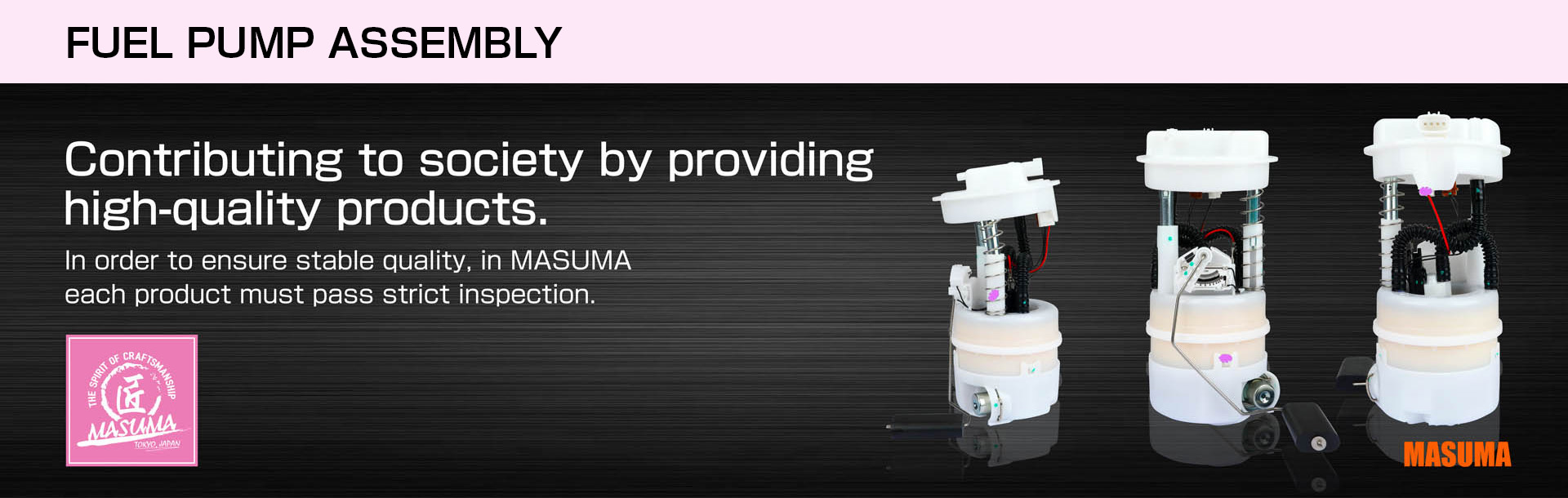
■ An automotive fuel pump primarily consists of a top cover assembly, a reservoir assembly + jet pump, a filter assembly + fuel pump, and a fuel level sensor assembly.
■ Among these, the flange is used to seal the fuel tank and connect the outlet and return fuel lines. The fuel level sensor measures the fuel quantity in the tank by detecting the rise and fall of the sensor float and measuring the corresponding resistance value. The fuel level sensor is also one of the components with a relatively high failure rate within the automotive fuel pump.
■ Furthermore, the function of the fuel pump is to draw fuel from the fuel tank, pressurize it, and deliver it to the supply line. In conjunction with the fuel pressure regulator, it establishes and maintains a specific fuel pressure, making it a crucial device in the vehicle's fuel supply system.

■ Since the fuel pump assembly is a pressure component, the commonly chosen modified PPS material is glass fiber reinforced PPS. PPS exhibits stability against most acids, esters, ketones, aldehydes, phenols, aliphatic hydrocarbons, aromatic hydrocarbons, and chlorinated hydrocarbons. Currently, no solvent has been found that can dissolve PPS below 200°C. It also possesses high resistance to inorganic acids, alkalis, and salts.

Reservoir Assembly


Bracket Assembly

Materials for Fuel Pump Assembly:
■ In the top cover assembly of the fuel pump assembly: the housing of the pressure sensor (which incorporates a micro-pressure sensing chip and a conditioning chip) is made of glass fiber-reinforced PPS. The Fuel Level Valve (FLV), Rollover Valve (ROV), Gravity Relief Valve (GRV), as well as the flange support rods and springs, are all of metal construction.
■ The filter assembly + fuel pump consists of: a filter screen made from micron-grade high-quality mesh fabric; a bellows made from PA11 without recycled material; a filter element made from anti-static Ahlstrom filter paper from Finland; a fuel pump using either copper or carbon commutators; and a pressure regulator valve featuring a dual-diaphragm structure made from metal.
■ The fuel level sensor assembly consists of: contacts using surface silver-plating/gold-plating processes; ceramic plates using a silver-palladium alloy coating; and a float block manufactured using a desulfurized NBR foam process.
■ The fuel pump delivers high-pressure fuel to the fuel rail, ensuring a continuous fuel supply to the injectors. The fuel pump comprises an electric motor, a pressure limiter, and a check valve. The electric motor actually operates submerged in fuel within the pump housing, which lubricates and cools the motor. A check valve is installed at the outlet. The pressure limiter is located on the pressure side of the pump housing and features a passage leading back to the inlet.
■ The ZYB ignition boost fuel pump is designed for pumping fluids such as diesel, heavy oil, residual oil, and fuel oil. It is particularly suitable for supplying fuel to burners in mixing stations for road and bridge construction, making it an ideal replacement for imported products. The ZYB boost fuel pump is not suitable for handling highly volatile or low-flash-point liquids, such as ammonia or benzene.
■ When the rotor disc rotates, the rollers are forced outward by centrifugal force, acting like a rotating seal. As the rotor spins, the pump operates, drawing fuel in through the inlet and forcing it out through the outlet into the fuel system. When the pump is turned off, the check valve at the outlet closes, preventing fuel from flowing back to the tank through the pump. The fuel line pressure maintained by the check valve is referred to as "residual pressure."
■ The maximum pumping pressure of the fuel pump depends on the specification of the pressure limiter. If the fuel pump pressure exceeds the predetermined limit, the pressure limiter opens a bypass, allowing fuel to return to the pump inlet.
■ The internal combustion engine is the heart of an automobile. Electronic fuel-injected combustion engines are widely adopted due to their superior power, fuel economy, and environmental performance compared to traditional engines. In these engines, the mechanical design of the fuel supply system significantly impacts overall performance. This document focuses on the mechanical design of the fuel pump within an automotive engine's fuel supply system.
■ The fuel pump is a vital component in the fuel supply system of an internal combustion engine. Its function is to draw gasoline from the fuel tank and deliver it under pressure through lines and the fuel filter to the carburetor's float chamber. It is precisely because of the fuel pump that the fuel tank can be positioned at the rear of the vehicle, away from and lower than the engine. The fuel pump operates under pressure and is constantly immersed in gasoline; therefore, it must possess sufficient structural strength and corrosion resistance. Additionally, due to the limited capacity of automotive fuel tanks, the design of the fuel pump must consider compact dimensions and lightweight construction.

Working Principle of Fuel Pump Assembly:
■ The electric fuel pump is composed of three primary components: the pump body, the DC motor, and the housing. Its fundamental working principle is as follows: when energized, the DC motor drives the rotor inside the pump housing to rotate at high speed. The cross-section at the lower end of the rotor shaft engages with the cross-section of the impeller's inner bore, causing the impeller to rotate in the same direction as the rotor shaft when the rotor turns. The high-speed rotation of the impeller creates a vacuum (low pressure) at the inlet, thereby drawing filtered fuel in through the inlet port on the pump cover. The fuel is then pressurized by the impeller, enters the interior of the pump housing, and is forced out through the outlet port to supply the fuel system with pressurized fuel.
■ The structure of the DC motor includes a permanent magnet fixed to the inner wall of the pump housing, a rotor that generates magnetic torque when energized, and a graphite brush assembly installed at the upper end of the pump housing.
■ The carbon brushes are in elastic contact with the commutator on the armature rotor. Their leads are connected to the electrical plug terminals on the outer casing. The external ends of the electric fuel pump housing are sealed via crimping, forming a non-disassemblable assembly.

■ The core components of the electronic fuel pump assembly utilize materials consistent with OE specifications, offering excellent impact resistance, mechanical properties, oil resistance, chemical resistance, corrosion resistance, dimensional stability, and ease of processing. Modified PPS plastic has minimal water absorption, typically only around 0.03%, and features low molding shrinkage, excellent dimensional stability, superior processing performance, and can be processed using various methods like injection molding, extrusion, and compression molding. PPS possesses inherent flame retardancy, achieving a high flame retardant rating of UL94 V-0 without the need for additives. After modification, PPS also exhibits excellent anti-static properties.
■ The fuel pump housing utilizes POM F20-03 from the globally renowned engineering plastics expert KEP. This material contains lubricants, offers good mechanical properties and stability, low viscosity, fast molding cycle times, and excellent wear resistance and hardness.
■ The fuel pump assembly possesses excellent air-tightness, and resistance to oil, solvents, combustion, chemicals, and weathering.




Failure Phenomena and Causes
■ When the pump core is damaged: During fuel system operation, when the ignition key is turned to ON, no operating sound from the fuel pump can be heard.
■ When the pump body is damaged: Due to pressure leakage, the fuel pressure cannot reach the specified value, leading to poor atomization and consequently preventing engine start.
■ Avoid waiting until the fuel warning light is on before refueling. The fuel pump relies on fuel for heat dissipation and cooling. An excessively low fuel level impairs this cooling function, which can lead to overheating and reduce its service life.
■ Frequent fuel pump failure can be attributed to factors such as fuel quality and refueling practices (including timing and amount). To ensure the longevity of the automotive fuel pump, it is crucial to consistently use high-quality fuel and adhere to proper refueling habits.


■ Choose reputable gas stations for refueling to ensure fuel quality, creating a clean working environment for the fuel pump and extending its service life. Avoid low fuel levels; maintain at least a quarter tank of fuel. This ensures the fuel pump operates at a suitable temperature, reducing the risk of overheating and wear. When the fuel warning light illuminates on the dashboard, refuel immediately. Insufficient fuel level leads to inadequate cooling and lubrication of the fuel pump motor, potentially causing motor damage.
■ Regular inspection and timely refueling are key to maintaining fuel pump health. During fuel pump installation, ensure accurate model and specification matching, remove anti-rust oil, select appropriate gaskets to avoid piston operation issues. Apply even torque when tightening bolts to prevent damaging the pump.
■ Avoid arbitrarily adding diesel to gear oil or baking, as these practices degrade the oil and impair its performance. In such cases, replace it with a suitable low-viscosity multi-grade gear oil.
■ When using oil pumps, always follow correct operating procedures. For example, remove substances containing solvents before starting vacuum pumping to ensure proper use of the vacuum pump and prevent backflow. After use, thoroughly clean the vacuum oven to ensure proper cleaning and maintenance of the oil pump.
■ Perform regular maintenance and inspection on the automotive fuel pump, especially before embarking on long-distance trips. Check if the fuel pump's supply pressure is normal, ensure its electrical connections are secure, and verify its seal integrity to confirm there are no leaks.
■ Avoid prolonged driving with low fuel levels to reduce the workload on the fuel pump. Replace the fuel filter regularly to prevent clogging by impurities. Use reliable quality fuel to avoid damage to the fuel pump from contaminants in the fuel.
■ By implementing the above maintenance measures, the service life of the automotive fuel pump can be effectively extended, ensuring vehicle driving safety.