





 English

New Arrivals















 ENGINE GASKET
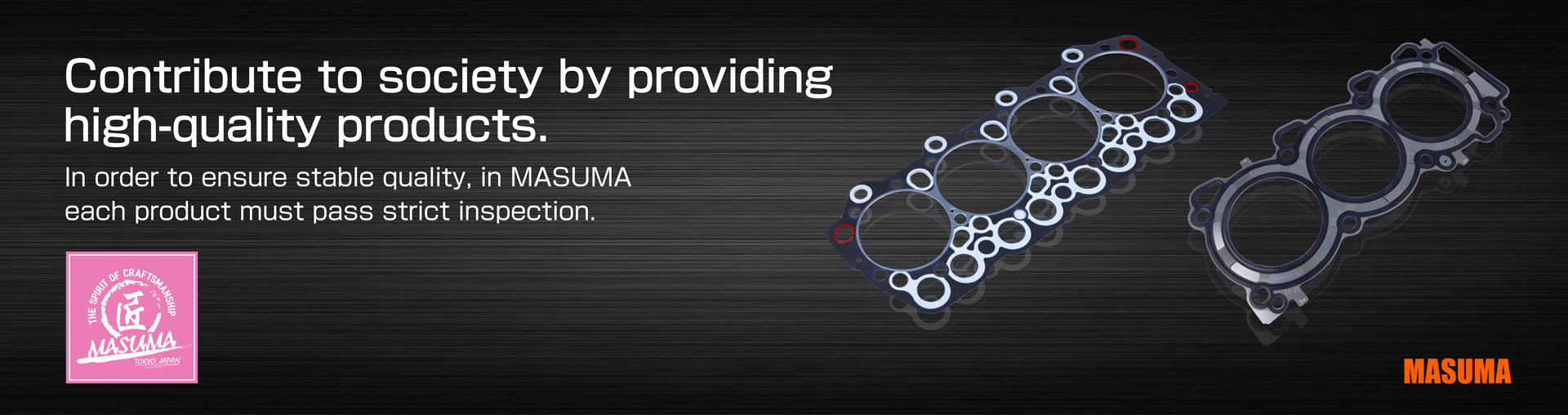
■ The engine cylinder gasket, also known as the gasket, is an elastic sealing component placed between the cylinder block and the cylinder head. As the surfaces between the cylinder block and the cylinder head cannot be perfectly flat, a gasket is needed to prevent high-pressure gas, lubricating oil, and coolant from escaping between them.
■ Gas leakage may also cause cylinder head bolts to overheat, reducing clamping force and lowering the sealing performance of the joint surface. This will soften the sealing surface material between the cylinder head, the cylinder block, and the cylinder liner shoulder, resulting in decreased pressure at the seal, creating a vicious cycle and causing a series of adverse consequences.
■ As internal combustion engines continue to be enhanced, with increasing thermal and mechanical loads, the sealing performance of gaskets becomes increasingly important. The structure and material shall have sufficient strength, heat resistance, corrosion resistance and necessary elasticity under high temperature, high pressure and strongly corrosive gases, to compensate for unevenness of the joint surface and ensure sealing.

The gaskets can be divided into three types based on their materials:
■ One type is the metal-asbestos gasket, which has metal wires or metal chips sandwiched in the asbestos and is covered with copper or steel skin. This type of gasket has a thickness of 1.2 to 2mm and has good elasticity and heat resistance.
■ Another type is made of solid metal sheets. They are often used in enhanced engines, and commonly found in passenger cars and racing cars. This type of gasket has embossed patterns of a certain height around the cylinder holes, water holes and oil holes that need to be sealed, utilizing the elastic deformation of the embossed patterns to achieve sealing.
■ The third type is a cylinder head gasket made of a steel wire mesh or perforated steel plate as the central framework, with asbestos and rubber adhesive pressed on both sides.

■ Types include asbestos-rubber composite gaskets, metal-clad (copper--clad iron--clad) gaskets, composite coating gaskets, metal composite gaskets, and metal rubber ring gaskets.
■ DAI-EL fluoroelastomer is coated on the surface of stainless steel sheets. DAI-EL has heat resistance that can withstand repeated heating and cooling, and excellent oil resistance and sealing properties. DAI-EL fluoroelastomer is a high-performance synthetic rubber that combines excellent heat resistance, oil resistance, high-temperature compression set resistance, acid resistance, solvent resistance and other characteristics.
■ The gasket material has certain elasticity, which can compensate for the unevenness of the joint surface to ensure sealing, while also having good heat resistance and pressure resistance, not burning or deforming under high temperature and high pressure. Currently, the most commonly used is the copper-skin cotton structure gasket. The copper-skin cotton gasket has three layers of copper skin at the edge, which is less likely to deform when compressed compared to asbestos.

Openings on the Gasket
■ Cylinder bore: The largest, with the upper part for the combustion chamber, valves, etc.
■ Cylinder head bolt holes: For cylinder head bolts to pass through during assembly.
■ Locating holes: For positioning when placing the gasket if there are locating pins on the cylinder block surface, preventing displacement.
■ Water passage holes: For connecting the cylinder block water passages and cylinder head water passages.
■ Oil passage holes: Oil from the oil pan is pressurized by the oil pump, some passing through the cylinder block oil passages and gasket holes into the cylinder head oil passages.
■ Oil return holes: Holes directly through the gasket and cylinder block from inside the valve cover (the reason why added oil flows back to the oil pan).
■ Valve push rod holes: For engines with overhead valves driven by pushrods, these holes allow the pushrods to pass through the cylinder gasket.


Fault Symptoms after Gasket Damage
Due to different burn locations of the cylinder gasket, symptoms and fault signs vary:
■ Gas leakage between two adjacent cylinders: Without engaging the decompression, when turning the crankshaft, both cylinders feel lacking in pressure. Black smoke appears when starting the engine, and engine speed noticeably decreases, manifesting as insufficient power.
■ Gas leakage of cylinder head: Compressed high-pressure gas rushes into the cylinder head bolt holes or leaks from the joint surface between the cylinder head and engine block. Pale yellow foam appears at the leak, which may bubble out in severe cases. Noise may sometimes be accompanied by water or oil leakage. During disassembly testing, obvious carbon deposits can be found on the corresponding cylinder head surface and around nearby cylinder head bolt holes.
■ In the oil passages of gas engines: High-pressure gas rushes into the lubricating oil channels connecting the engine block and the cylinder head. During engine operation, the oil pan temperature remains consistently high, oil viscosity decreases, pressure drops, and oil quality deteriorates quickly. The oil sent to the upper part of the cylinder head for lubricating the valve train noticeably contains air bubbles.
■ Gasket aging and cracking can cause high-pressure gas to rush into the cooling water jacket. When the engine coolant temperature is below 50°C, upon opening the radiator cap, noticeable bubbles can be seen rising and escaping in the radiator, along with a large amount of hot air discharged from the radiator opening. As the engine temperature gradually rises, the hot air discharged from the radiator opening also increases. In this situation, if the radiator overflow pipe is blocked and the radiator is filled with water to the cap, the bubble phenomenon becomes more pronounced, and in severe cases, it may appear like boiling.
■ When the engine cylinder communicates with the cooling water jacket or lubricating oil channels, yellow-black oil foam floats on the surface of the coolant in the radiator, or there is clear water in the oil in the oil pan. When this gas leakage phenomenon is severe, there may be water or oil in the exhaust gas.

■ When the gasket becomes unsealed, it can lead to engine oil leakage, affecting the normal operation of the engine, thus requiring gasket replacement.
■ As the gasket ages, its sealing performance will decrease, which can also cause oil leakage. If water is found in the engine oil, it indicates that the gasket is damaged and needs to be replaced promptly to ensure normal engine operation.
■ When the gasket exhibits any of the above conditions, it needs to be replaced to ensure normal engine operation and service life.