





 English

New Arrivals













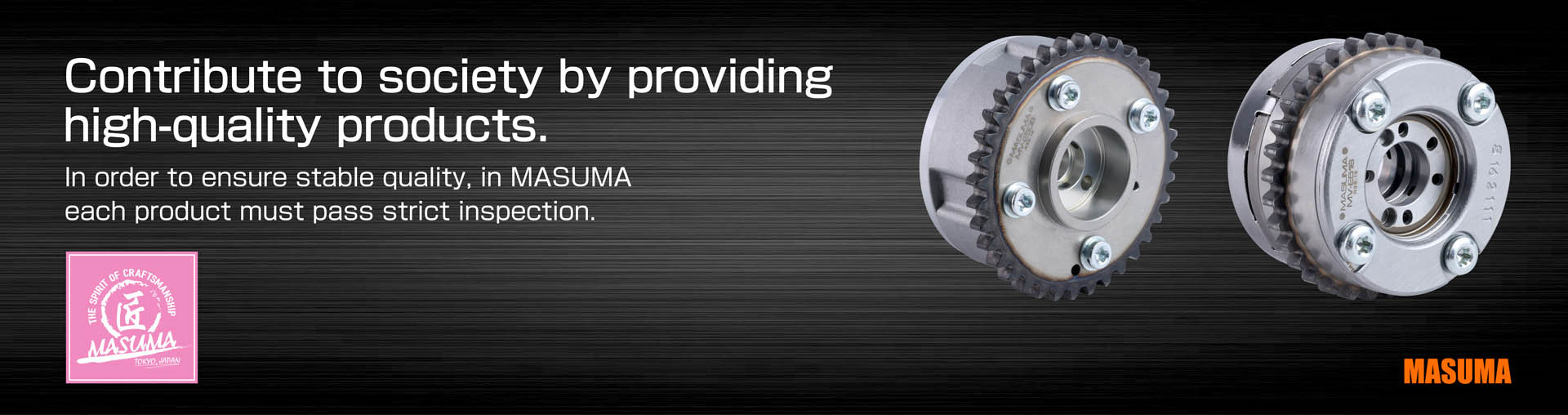
 CAM PHASER
■ The camshaft phaser is a component used to adjust the rotation of the engine's camshaft. It can adjust the timing of valve opening and closing according to the engine's operating conditions, thereby optimizing engine performance and fuel efficiency.
■ The main function of the camshaft phaser is to change the timing of valve opening and closing by adjusting the phase angle of the camshaft, i.e., the rotation angle of the camshaft, based on the engine's speed and load conditions. This adjustment helps improve the engine's intake efficiency, especially at low and high speeds. By advancing or delaying the opening and closing of valves, it enables the engine to perform optimally under different operating conditions. Moreover, the camshaft phaser helps reduce fuel consumption and exhaust emissions by enabling more efficient fuel combustion and reducing unnecessary energy loss.


■ The MASUMA camshaft phaser significantly improves engine performance through dynamic adjustment of valve timing.
■ By precisely controlling the opening and closing of valves, it can reduce fuel waste, especially during partial load and low-speed driving, thereby improving the engine's fuel economy.
■ The MASUMA camshaft phaser can also enhance the engine's power performance. When more power is needed, such as during acceleration or climbing, the phaser can quickly adjust valve timing to release more power. Additionally, the camshaft phaser helps reduce exhaust emissions by optimizing the combustion process, reducing the emission of unburned hydrocarbons and nitrogen oxides, which is crucial for environmental protection and meeting increasingly stringent emission standards.


Working principle
■ The working principle of the camshaft phaser is based on the adjustment of camshaft phase. By controlling the camshaft phase, it can adjust the opening time and amount of intake and exhaust valves, enabling the engine to achieve optimal cylinder charging and exhaust efficiency under different speed and load conditions.
1. Sensors collect various parameters (such as vehicle speed, load, rotation speed, etc.).
2. The control unit analyzes and calculates the collected parameters.
3. Control signals adjust the camshaft phase through electromagnetic or hydraulic elements.
4. The adjusted camshaft will affect the opening time and amount of engine cylinder’s charging and exhaust valves.

■ Optimize cylinder charging and exhaust efficiency, increase engine horsepower and torque.
■ Reduce engine energy loss, improve fuel economy.
■ Lower pollutant emissions, enhance environmental performance.
■ Reduce noise and vibration, improve driving comfort.


Fault manifestations
■ The main abnormal manifestations of the camshaft phaser include engine starting difficulties, insufficient power, engine vibration, increased noise, decreased fuel economy, increased emissions, and illumination of the engine fault light.
■ Decreased engine performance: Camshaft phaser failure leads to inaccurate valve timing, affecting the fuel and air mixture ratio, reducing engine output power, and making the vehicle accelerate weakly, especially when rapid acceleration is needed, such as overtaking or climbing.
■ Increased noise: When the camshaft phaser does not work properly, the opening and closing of valves may become irregular, leading to increased collision and friction between metal parts, producing abnormal noise.
■ Decreased fuel economy: Due to inaccurate valve timing, the engine may not effectively burn fuel, resulting in increased fuel consumption, faster fuel gauge drop, or more frequent refueling for the same driving distance.
■ Increased emissions: Decreased combustion efficiency leads to incompletely burned fuel and gases being discharged into the atmosphere through the exhaust system, increasing the content of harmful substances in the exhaust.
■ Engine fault light illumination: When the engine fault diagnosis system of modern cars detects an abnormality, it will illuminate the engine fault light, prompting the car owner and technicians to identify the problem and take repair measures in a timely manner.

■ Regularly check the quality and quantity of engine oil to ensure they are normal, as the quality and quantity of oil directly affect the normal operation of the camshaft phaser.
■ Check the wiring harness and seals to ensure the harness is not damaged and the seals are not leaking, to avoid faults caused by wiring problems or poor sealing.
■ Regularly replace the oil check valve, camshaft sprocket, and related seals, as wear or aging of these parts will affect the performance of the camshaft phaser.
■ Pay attention to the engine's starting, power, and vibration conditions. If problems such as starting difficulties, insufficient power, or vibration occur, it may be a sign of camshaft phaser failure and should be checked promptly.
■ Regularly inspect the camshaft and camshaft gear for abnormal wear and replace them if necessary.ill illuminate the engine fault light.